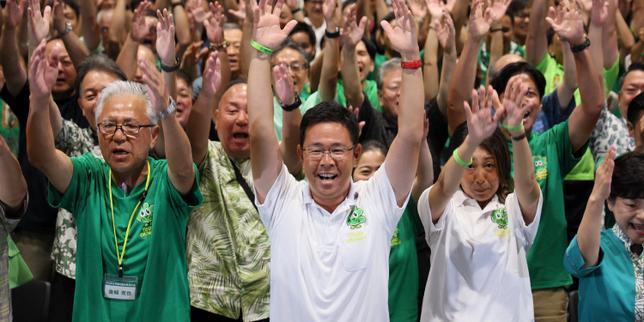
For twelve straight years, Okinawa stood as an unyielding wall against Tokyo’s security ambitions. That wall just crumbled. When voters elected newcomer Genta Koja to the governor's office, they didn't just pick a new face. They ended a decade-long era of anti-base leadership and greenlit a massive shift in Japan's strategic posture.
If you've been watching East Asian geopolitics from a distance, you might think this was purely about security. It wasn't. Okinawans are dealing with very real economic pressures, and voters ultimately prioritized cost-of-living concerns over the contentious relocation of the Futenma air base. But the political fallout remains identical. Tokyo's ruling Liberal Democratic Party finally has a compliant prefectural partner. The southwestern islands are about to become a heavily armed frontline.
The Economic Reality Behind the Political Shift
Let's address what most foreign analysts miss. Okinawa is routinely flagged as Japan's poorest prefecture, struggling with high consumer prices and sluggish wage growth. For years, outgoing governor Denny Tamaki focused heavily on halting the Henoko base construction, often treating economic development as secondary to the anti-base crusade.
Voters grew tired of that trade-off. Exit polls showed that nearly half of the electorate prioritized the economy, while only a fraction viewed base issues as their primary concern. Koja campaigned on closing the economic gap, leveraging state financial backing, and reopening stalled administrative councils with Tokyo.
When the central government dangles development funds and promises to listen, a struggling local economy listens back. The LDP didn't win solely on a pro-military ticket. They won by convincing everyday people that fighting Tokyo endlessly wasn't putting food on the table.
What Accelerated Militarization Means for the Nansei Islands
With Koja in office, the barriers standing in the way of Japan's southwestern defense buildup are disappearing. Tokyo views the Nansei island chain—stretching from Kyushu down toward Taiwan—as a vital strategic shield.
Over the past few years, the Self-Defense Forces have quietly deployed missile batteries, electronic warfare units, and rapid-response garrisons across Ishigaki, Yonaguni, and Miyako. Okinawa proper was the missing link in that defensive chain. Expect construction on the Henoko relocation project to speed up now that local obstruction tactics from the prefectural government are gone.
Critics argue this turns the prefecture into a primary target in any regional conflict. Supporters counter that deterrence is the only language understood in Beijing. Either way, the islands are transforming from tropical tourist havens into heavily fortified military outposts.
The Regional Ripple Effects
China's expanding naval footprint and frequent airspace incursions didn't help the progressive cause in Okinawa. While pacifist sentiments still run deep among older generations, younger voters surveyed during the election showed a pragmatic—and sometimes anxious—outlook regarding regional security.
When neighboring military drills edge closer to your doorstep, abstract peace slogans lose their punch. The alignment between Naha and Tokyo signals to Beijing that Japan's southern flank is tightening its defense cooperation with the United States.
Yet, local divisions haven't vanished overnight. Deep resentment remains among residents who feel shoulder-checked by a central government that treats their home as an expendable aircraft carrier. Koja faces a tightrope walk. He has to deliver the economic revitalization he promised while managing a population deeply scarred by its burden of hosting foreign troops.
The LDP got what it wanted. Now comes the hard part of governing a prefecture that just traded its political defiance for a promise of economic relief. Watch the speed of infrastructural approvals in the coming months; that will tell you everything you need to know about how fast Tokyo plans to fill those islands with hardware.