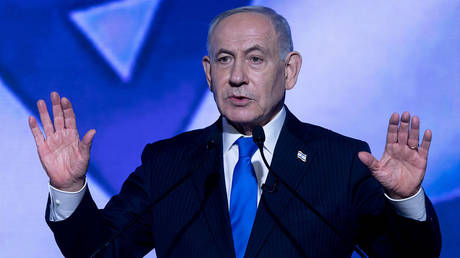
Kryptonite weakens Superman on contact. It drains his strength, strips his leverage, and leaves him gasping on the floor.
Calling October 7 Benjamin Netanyahu’s "political kryptonite" sounds dramatic. It reads great in a headline. It is also analytically lazy. For a different perspective, read: this related article.
A leader facing fatal political kryptonite loses ground, fractures his coalition, and gets pushed out of office whenever the pressure spikes. Netanyahu has spent years surviving crises that commentators swore would end his career. Watching analysts reach for superhero metaphors every time a new investigation, protest, or military escalation hits the news cycle gets exhausting fast. If October 7 were simple kryptonite, the political math in Jerusalem would have solved itself long ago.
Instead, October 7 operates less like a glowing green rock and more like a structural fault line that changes how every political move is priced. Sometimes that fault line threatens to swallow his coalition whole. Other times, existential threat and security framing rally parts of the public around a familiar, hardened incumbent rather than handing the wheel to unproven alternatives. Related coverage on this matter has been published by The Washington Post.
The Kryptonite Myth Is Comfort Food for Lazy Analysts
Lazy consensus loves clean villains and inevitable doom. When a massive intelligence and security failure happens on a veteran prime minister’s watch, the temptation is to declare his political fate sealed and move on to the next story.
I have watched political commentators and strategic consultants burn credibility over and over by mistaking loud opposition energy for imminent collapse. In politics—just like in high-stakes corporate turnarounds—noise is not leverage. Street protests, angry op-eds, and polling dips only matter if they convert into coalition defections, parliamentary arithmetic, or an alternative leadership bloc that actually commands a majority.
Netanyahu’s durability has never come from being universally loved. It has come from mastering coalition mechanics, exploiting divisions among his rivals, and turning security anxieties into a contest over who looks tougher in a storm. Treating October 7 as an automatic career-ender ignores how Israeli coalition politics actually works. A prime minister does not fall because critics are furious. A prime minister falls when key coalition partners decide staying in the government costs them more than leaving it.
Consider the distinction between political liability and political fatality. A liability drags down popularity, fuels endless investigations, and creates constant friction with allies and international partners. A fatality ends the tenure. October 7 is undeniably a massive liability. Calling it kryptonite pretends the outcome is already decided when the actual battle is over survival, coalition loyalty, and narrative control.
Why People Keep Asking the Wrong Questions About October 7
When headlines frame October 7 as Netanyahu’s kryptonite, readers start asking the wrong questions. They ask when the dam will finally break, which single scandal will deliver the knockout blow, or why voters haven't punished him the way foreign observers expect.
Those questions assume a neat cause-and-effect machine that does not exist in multi-party parliamentary systems. Let’s strip down the most common "People Also Ask" questions around this topic and look at what is actually happening beneath the surface.
"Will October 7 force Netanyahu out of power?"
Not automatically. History shows that crises of this scale create competing pressures at the exact same moment. On one side sits grief, anger over intelligence and military failures, demands for accountability, and exhaustion among families and reservists. On the other side sits fear of instability, deep distrust of rival politicians, and a reflex among some voters to stick with a known quantity during an active conflict.
Until coalition partners calculate that hitching their wagons to Netanyahu threatens their own political survival—or until a credible alternative locks down the numbers to form a government—anger alone does not force an exit.
"Why hasn't public anger already ended his political career?"
Because anger in a democracy is fragmented, while parliamentary votes are concentrated. Public outrage can pack squares and dominate television panels for months without translating into unified voting power. Opposition parties frequently disagree with one another on strategy, ideology, and who should lead next. When the opposition is split and coalition partners still see ideological or ministerial payoffs in staying put, a wounded prime minister can keep holding on.
"How does October 7 reshape his long-term legacy?"
This is where the real damage lives, and it is far more enduring than a single election cycle. Even when a leader survives politically in the short term, a historic security failure attaches itself to their name permanently. No spin, no media clip, and no political maneuver erases the fact that the catastrophic breach happened under his watch. Survival in office is not the same thing as escaping historical judgment.
A Thought Experiment in Coalition Arithmetic
Imagine a scenario where a veteran prime minister survives a historic security shock for months, then years, despite relentless criticism at home and abroad. Critics keep predicting imminent collapse after every major flashpoint. Yet every time a vote of no confidence or coalition crisis looms, the math barely budges. Why?
Because coalition politics runs on incentives, not punditry. Every partner inside a governing coalition weighs two numbers: what they get if they stay, and what they risk if they trigger new elections. If right-wing or religious factions fear a rival government will roll back their priorities—or if individual politicians worry they will lose seats or influence in a snap vote—they stay put even when they privately despise the leadership.
The same logic applies to foreign media framing. Outlets with strong geopolitical angles often package complex domestic power struggles into punchy, one-dimensional narratives. That makes the story easy to digest for a global audience. It also blinds readers to the grinding, transactional reality of parliamentary survival.
What Serious Observers Should Do Instead
If you want to actually understand how October 7 affects Netanyahu’s standing—whether you are following Middle East affairs, analyzing political risk, or writing sharp commentary yourself—stop hunting for silver bullets and kryptonite moments. Track the mechanics that actually move power.
- Watch coalition cohesion over headline outrage. Protests and poll swings make great television. Defections by key party leaders change governments. Focus on who has an incentive to bolt and what would happen to their seats if elections were called tomorrow.
- Separate short-term survival from long-term legitimacy. A leader can win another political round while suffering permanent damage to their historical standing and institutional trust. Do not confuse staying in office with winning the narrative for good.
- Audit every punchy metaphor. Whenever an article uses words like "kryptonite," "doomed," or "final blow," ask what inconvenient facts the author is skipping to make the line land. Usually, the skipped facts contain the real story.
There is a catch to taking this contrarian view, and you should own it upfront. Rejecting dramatic labels and focusing on coalition incentives and political mechanics can feel cold, slow, or unsatisfying when emotions are raw and headlines are screaming. It also risks sounding overly clinical if you push it too far and underplay real human grief or genuine democratic accountability. Good analysis holds both realities in view: the human weight of the event and the cold political math keeping or breaking coalitions.
Political heavyweights like Thomas Mann and Norman Ornstein have long emphasized how institutional rules, party incentives, and coalition dynamics shape political survival far more reliably than pundit predictions alone. Apply that lens here. Stop treating October 7 like a comic-book weakness that drains power on contact. Treat it as a permanent, volatile fault line reshaping every calculation in Israeli politics.
Watch the coalition math, not the superhero metaphors.


