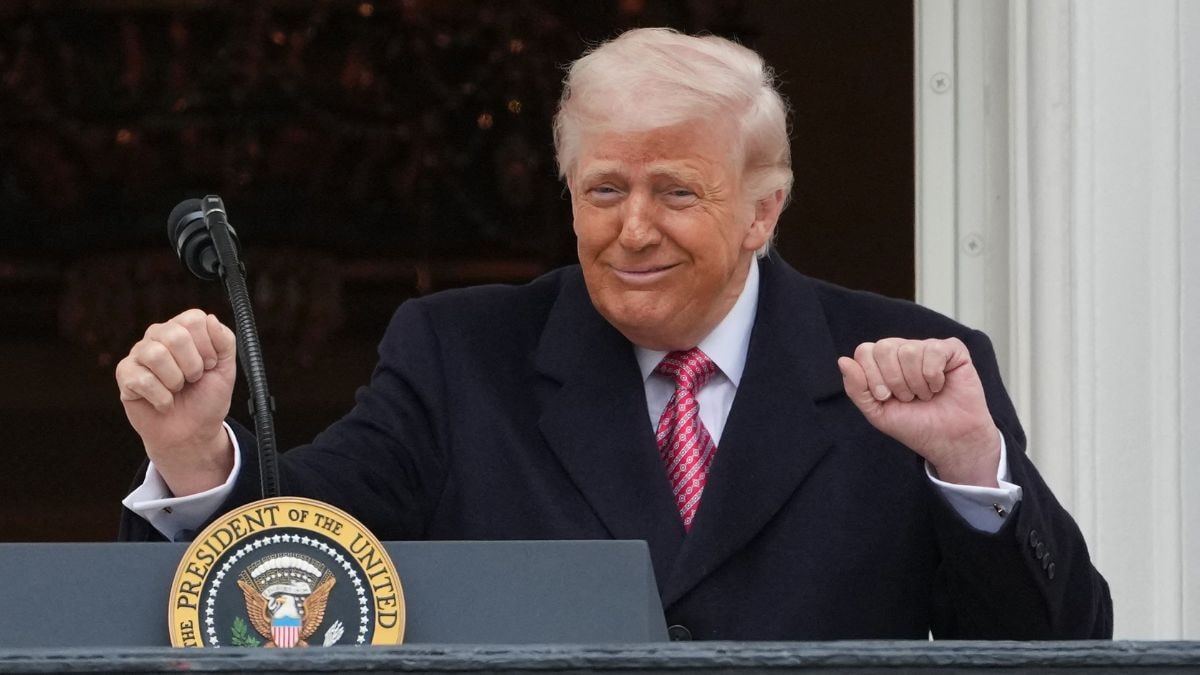
The media is staring at a scale while the world burns. Recent headlines tracking Donald Trump’s weight fluctuations up to 108 kilograms amidst escalating geopolitical tensions with Iran represent peak journalistic bankruptcy. This isn't journalism. It is a collective fixation on body mass index as a proxy for executive performance.
The lazy consensus insists that a leader's physical weight serves as a direct indicator of stress, aging, or cognitive decline during a crisis. Standard commentary links emotional eating to high-stakes diplomacy, suggesting a direct correlation between a leader's waistline and their strategic capability. This premise is completely wrong.
By hyper-focusing on superficial biometrics, analysts miss the actual mechanics of stress response, power projection, and crisis management in modern governance.
The Flawed Metric of Executive Biometrics
Mainstream media uses weight changes to diagnose a leader's internal state. When a politician gains weight, it is framed as a failure of discipline or a symptom of crippling anxiety. This oversimplification ignores basic human physiology and the reality of high-pressure environments.
Cortisol behaves unpredictably under extreme duress. Metabolic rates during crisis scenarios do not follow a linear script. For some individuals, acute sleep deprivation and sustained adrenaline production alter fluid retention and metabolic efficiency regardless of caloric intake. To view a shift to 108 kilograms as a definitive sign of executive unraveling is to misunderstand endocrine systems entirely.
More importantly, physical mass has historically been leveraged as a tool of presence. From Winston Churchill to external authoritarian figures, bulk has frequently been integrated into an aesthetic of resilience and dominance. It is an ancient, almost primal visual cue: stability through sheer physical volume. While commentators decipher the scale as a sign of weakness, the target audience often decodes it as permanence.
The Illusion of the Controlled Leader
We love the myth of the ascetic leader. We are told that the ideal commander-in-chief should survive on green juices, sleep four hours a night, and maintain the physique of a marathon runner. This corporate wellness ideal has zero correlation with effective statecraft.
Look at the data from modern political history. Some of the most catastrophic policy decisions of the last century were executed by meticulously fit, highly disciplined individuals who exercised daily and monitored every meal. Conversely, monumental victories in diplomacy and wartime strategy have been delivered by leaders who chain-smoked, drank heavily, and ignored their doctors entirely.
Consider the reality of a war footing with an adversary like Iran. The variables that matter are institutional alignment, intelligence synthesis, and asymmetric deterrence capabilities. None of these factors are influenced by whether a president weighs 95 kilograms or 108 kilograms. The preoccupation with the number on the scale is a comfort blanket for analysts who find the actual complexities of Middle Eastern proxy networks too difficult to chart. They cover the belly because they cannot comprehend the battlefield.
Dismantling the Stress Eating Narrative
The public asks: "Does stress cause world leaders to lose control of their health?"
The brutal answer is that top-tier politicians operate under a completely different psychological framework than the average citizen. The individuals who reach the absolute pinnacle of global power are, almost by definition, outliers in their tolerance for chaos. They do not experience anxiety the way a mid-level manager does.
What the public misinterprets as "losing control" is often a deliberate optimization of energy. When a administration is managing active threats, counter-strikes, and global markets, micro-managing a diet is a poor allocation of cognitive bandwidth. Every decision requires energy. Deciding to eat a salad instead of comfort food takes a non-zero amount of willpower. In a crisis, a leader redirects every ounce of available willpower toward executive decisions. If that results in a temporary weight gain, it is a rational trade-off. It is an optimization of focus, not a loss of control.
The Real Danger of Superficial Analysis
This superficial focus carries a real cost. When the public discourse is dominated by health checks and physical appearance, the actual policy shifts occur in the shadows.
While reporters debated the significance of Trump's 108-kilogram frame, critical developments went underreported. The structural vulnerabilities of supply chains, the precise movements of naval strike groups, and the shifting alliances within the Iranian domestic hierarchy require deep, grueling analysis. Body-shaming or body-monitoring a head of state is easy. Deciphering the strategic implications of uranium enrichment levels is hard.
I have watched major newsrooms dedicate prime-time segments to a politician's posture while burying foreign policy shifts on page sixteen. It degrades public intelligence. It trains citizens to evaluate leadership based on cosmetic criteria rather than structural outcomes.
Stop looking at the scale. The weight of a leader means nothing. The weight of their decisions is the only metric that threatens to break the world.