Barack Obama used to be the guy who stayed above the fray. For years, he stuck to the unwritten rule that former presidents don't publicly tear into their successors, keeping his critiques veiled in lofty rhetoric about democratic norms and "who we are as Americans."
Those days are completely gone.
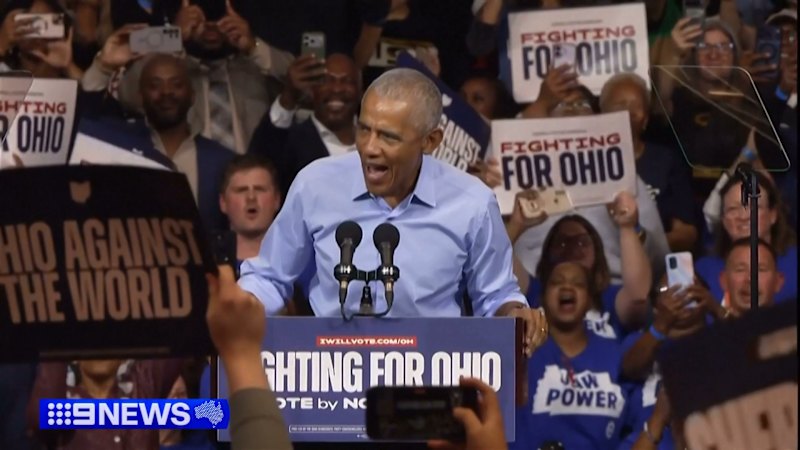
When Obama stepped up to the podium and flat-out accused Donald Trump of "cruelty and corruption," he didn't just drop a soundbite for the evening news. He signaled a total shift in how the Democratic Party's biggest star operates when the stakes feel existential. If you've been watching American politics over the last decade, you know Obama chooses his words with surgical precision. He doesn't do off-the-cuff rants. So when he uses words like "cruelty" and "corruption" in the same breath, it's worth looking closely at why he went there, what he actually said, and what it means for the political fight right now.
The Gloves Are Officially Off
Let's be honest about how Obama used to campaign. Back in 2008 and 2012, his brand was built on hope, unity, and cooling down the temperature in the room. Even during Trump's first term, Obama mostly held back, letting Joe Biden and congressional Democrats carry the water while he focused on his foundation and broad voter turnout efforts.
That restraint snapped.
In his scathing speech, Obama went straight for the jugular. He didn't just criticize policy disagreements over tax cuts or deregulation. He framed Trump's approach to governance as fundamentally mean-spirited and self-serving. By pairing cruelty with corruption, Obama hit on two distinct vulnerabilities that have plagued Trump's political brand for years.
Cruelty speaks to the human impact of hardline policies—things like aggressive immigration crackdowns, attempts to strip away healthcare protections, and rhetoric that targets marginalized groups or political opponents as "enemies." Corruption speaks to the transactional nature of Trump's orbit, the blurring of public office with private enrichment, and the constant testing of legal and ethical boundaries.
Obama's calculation is simple. Polite policy debates don't break through a fractured media environment anymore. Voters who are tuned out or exhausted by daily political chaos need plain English, not a constitutional law lecture.
What Obama Actually Said About Cruelty and Corruption
If you only saw a ten-second clip on social media, you missed the broader structure of Obama's argument. He wasn't just venting. He was building a specific case meant to reach two very different groups of voters: energized Democrats who want to see their leaders fight back, and exhausted independents who are tired of constant drama.
First, he zeroed in on the character of leadership. Obama argued that real strength isn't about bullying people who have less power than you. He pointed out that cruelty disguised as toughness is actually a sign of insecurity, a line that drew some of the loudest applause of the night. You could tell he had tested that framing. It flips Trump's "strongman" appeal on its head without sounding preachy.
Second, he tackled the corruption angle by connecting it directly to everyday kitchen-table issues. A lot of politicians make the mistake of talking about corruption like an abstract ethics violation. Nobody wakes up worrying about the Emoluments Clause. People care about whether the system is rigged against them while rich guys get favors. Obama hammered the idea that when leaders treat government like a personal business, regular working families end up footing the bill.
He also brought up the historical norm of presidents respecting institutions, noting how unusual it is for a former commander-in-chief to have to warn voters about basic standards of decency. It wasn't subtle. It was a direct indictment of Trump's entire political style.
Why Voters Respond to This Specific Framing
I've watched enough campaign cycles to know that most political attacks bounce right off Trump. His supporters see criticisms from the establishment as proof that he's fighting for them, while his critics already have their minds made up. So why does Obama's "cruelty and corruption" line actually land?
Because it targets the middle.
Think about the swing voter in Pennsylvania, Michigan, or Arizona. Many of these folks don't love everything Democrats do. They might worry about inflation, border security, or government spending. Some of them even liked parts of Trump's economic record. What pushes them away from Trump isn't usually his stance on corporate tax rates—it's the chaos, the personal attacks, and the feeling that he's only looking out for himself.
When Obama highlights cruelty, he reminds those voters of the moments that made them uncomfortable—the name-calling, the mockery of disabled reporters or veterans, the zero-sum attitude where somebody always has to lose. When he highlights corruption, he taps into a deep, bipartisan cynicism about Washington politicians enriching themselves and their friends.
Here's why that combination works so well together:
- It avoids policy jargon. You don't need to explain a 400-page bill to explain why targeting vulnerable people is cruel.
- It feels intuitive. Even people who don't follow daily news recognize bullying and self-dealing when they see it.
- It puts defenders on the back foot. Trump's allies love arguing about border numbers or GDP growth, because they can cherry-pick stats. Defending against accusations of basic cruelty is a much harder message to sell to suburban voters.
The Shift in Obama’s Political Strategy
To understand how big a deal this speech is, you have to look at Obama's post-presidency evolution. For a long time, he seemed genuinely reluctant to become a permanent fixture on the campaign trail. He wanted to pass the torch to a younger generation of leaders.
The problem? Nobody else in the Democratic Party commands the exact same combination of authority, media gravity, and grassroots enthusiasm.
When Obama speaks, networks cut away from regular programming. Clips rack up millions of views within hours. Even his critics can't ignore him, which means conservative media ends up amplifying his remarks just by trying to rebut them. Obama knows this, and over the past few election cycles—from the 2020 race to the 2022 midterms and right through the current political battles—he has steadily dialed up the sharpness of his rhetoric.
In earlier speeches, he might have said that certain policies "don't reflect our best values." Now, he calls it cruelty. He used to warn about "erosion of democratic norms." Now, he calls it corruption. That shift reflects a realization inside Democratic circles that softening the language only makes them look weak or out of touch with the urgency of the moment.
How Trump and Conservatives Pushed Back
Predictably, Trump and his allies didn't take the speech lying down. Within hours, conservative commentators and campaign surrogates fired back, accusing Obama of hypocrisy, elitism, and trying to distract from Democratic policy failures.
Their counterattack usually relies on three main arguments. First, they point to economic indicators and border numbers during Democratic administrations, arguing that real-world outcomes matter more than polished speeches. Second, they accuse Obama of lecturing everyday Americans from an ivory tower while cozying up to Hollywood celebrities and wealthy donors. Third, they flip the corruption label right back, bringing up investigations into Democratic figures and arguing that Washington's permanent bureaucracy—the so-called "deep state"—was weaponized against Trump.
There's a real debate here about what voters prioritize. For Trump's core base, his blunt, unapologetic style isn't a bug—it's the whole point. They see the political system as broken and view Trump as the wrecking ball needed to smash it. To them, when Obama complains about cruelty or corruption, it just sounds like an insider defending the status quo.
Acknowledging that divide is crucial if you want to understand why American politics feels so stuck. Both sides are watching the exact same speech and walking away with completely opposite conclusions about who is actually hurting the country.
What Most People Miss About Former Presidents Speaking Out
There's a common misconception that former presidents attacking each other is brand new. It's not. History is full of ugly post-presidential feuds. Theodore Roosevelt famously turned on his handpicked successor, William Howard Taft, calling him a "puzzlewit" and running against him in 1912. Herbert Hoover spent decades relentlessly bashing Franklin D. Roosevelt's New Deal policies.
What makes the Obama-Trump dynamic different is the sheer scale of modern media and the personal nature of their rivalry. Trump's political rise was literally fueled by promoting false theories about Obama's birth certificate, and he spent much of his presidency trying to undo Obama's signature achievements like the Affordable Care Act. Obama, in turn, has viewed Trump not just as a political rival, but as a direct threat to the multiracial democracy he spent his career trying to build.
When Obama delivers a speech like this, he isn't just helping out fellow Democrats on the ballot. He's also fighting to protect his own historical legacy. If Trump's brand of politics becomes the permanent norm in Washington, everything Obama stood for gets pushed to the margins.
Cutting Through the Noise When Watching Political Speeches
It's easy to get swept up in viral clips and hot takes whenever a heavy hitter like Obama goes after Trump. If you want to actually track what matters beyond the 24-hour outrage cycle, pay attention to a few concrete things next time a major speech drops:
- Watch the full remarks, not just the clipped soundbites. Cable news and social media algorithms reward the angriest ten seconds of any speech. Watching the ten minutes before and after the big headline line shows you who the speaker is actually trying to persuade.
- Track where the speech happens. Obama doesn't pick venues at random. When he delivers sharp attacks in battleground states or specific suburban districts, he's testing messages meant to move undecided voters in tight races.
- Look at how down-ballot candidates adopt the language. Within a week of a major Obama speech, watch whether Senate and House candidates start using the exact same phrases—like "cruelty and corruption"—in their own ads and town halls. That tells you whether the message is actually testing well in internal polling.
- Compare rhetoric to actual voting records and executive actions. Words grab headlines, but budgets, court appointments, and executive orders show what politicians actually do once the cameras turn off.
Obama's decision to drop the diplomatic filter and go straight at Trump's character marks a defining chapter in modern political messaging. Whether you view his speech as a necessary wake-up call or a partisan hit job, one thing is obvious: the era of former presidents biting their tongues is over, and the battle over America's political direction is only getting louder.