The desert wind does not care about portfolios. It blows across the vast, sun-baked expanse of Kazakhstan with a relentless, scouring fury, carrying the scent of ancient dust and the promise of absolute nothingness. For generations, people looked at this emptiness and saw a void. They saw miles of nothing to cross, heat to endure, and isolation to survive.
I remember standing out there years ago, watching the dust devils spin like dervishes across the horizon, feeling the sheer weight of the silence. It is a quiet that presses against your eardrums. But silence is changing.
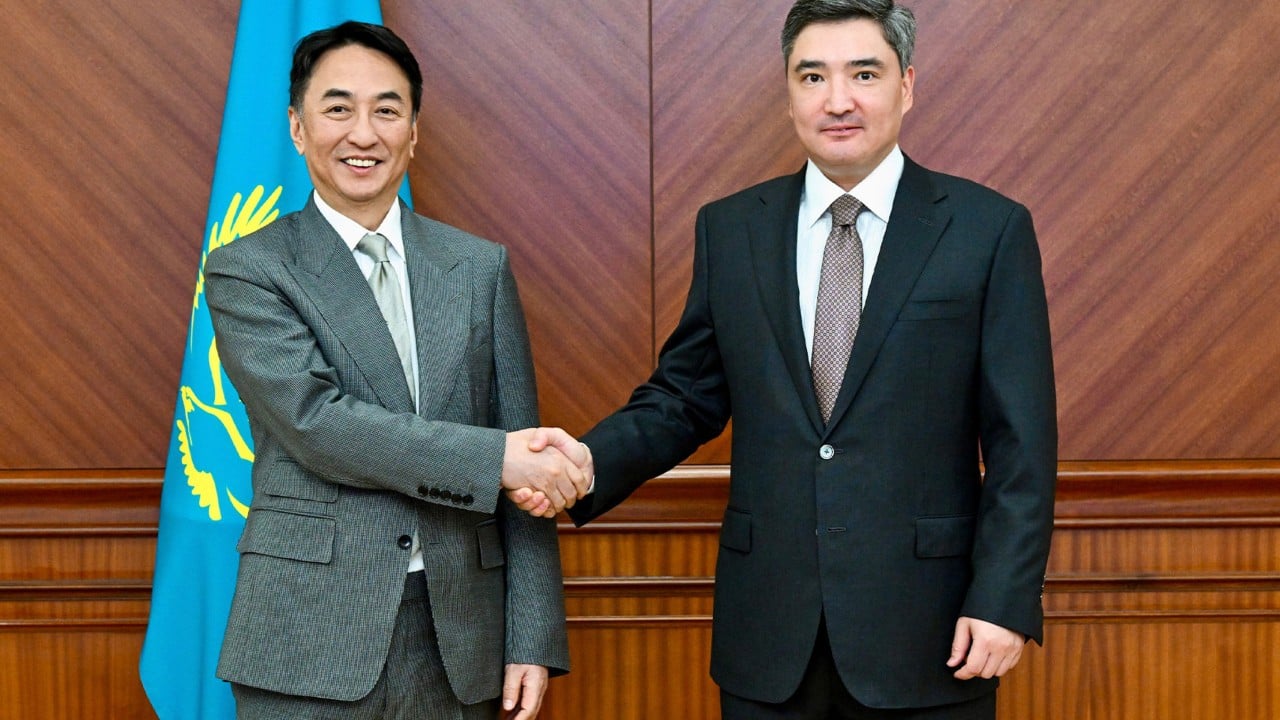
Peter Lee’s family office just signed a deal to rewrite that silence.
They are bringing green energy projects to the heart of Central Asia. On paper, it is a transaction. It is a signature on a corporate document, a movement of capital, an entry in a spreadsheet tracking megawatts and carbon offsets. But anyone who reduces this to numbers is missing the entire point of what is actually happening in the dirt.
Capital has a gravity of its own. For decades, it pooled in the same familiar valleys, circling Silicon Valley garages, Wall Street trading desks, and European capitals. It chased the obvious wins. It funded software that optimizes advertisements and apps that deliver lunch. Meanwhile, vast territories capable of powering entire civilizations sat ignored, waiting for someone brave enough or foolish enough to look past the horizon.
Money speaks. But sometimes it whispers in places you least expect.
Let us look at what this actually means on the ground. Kazakhstan is an energy giant, built on coal, oil, and gas. Its veins run black and thick with fossil fuels that built its cities and warmed its winters. Shifting a giant is not like turning a bicycle. It is like turning an oil tanker in a narrow strait. It takes time, immense force, and a stubborn refusal to accept that things must stay the way they have always been.
Enter the family office. Unlike venture capital funds with a five-year itch or public markets jittery over the next quarterly earnings report, family offices operate on a different clock. They think in generations. They plant trees whose shade they will never sit under. When a family office backs renewable energy infrastructure in a developing market, they are betting on the world their grandchildren will inherit.
Consider what happens next. Wind turbines do not just generate electricity. They anchor local economies. They demand roads, technicians, maintenance crews, and schools. They turn ghost towns into bustling hubs of engineering.
Imagine a hypothetical town three hours outside of Astana, let us call it Kaskelen Station. Right now, young people leave. They pack their bags because the local coal plant offers dirty air and limited futures, and the rest offers nothing at all. Now, picture those same young people wearing hard hats, climbing twenty-story steel towers, and troubleshooting computerized turbine blades that capture the very wind that used to drive travelers mad.
That is not a policy shift. That is a human rescue mission.
Yet, we must be honest about the friction. Transitions are messy. Energy transitions are brutal. You cannot simply flip a switch and replace a coal boiler with a wind farm without breaking a few habits along the way. Local politicians worry about jobs. Workers worry about their pensions. Investors worry about regulatory shifts and currency fluctuations. Bureaucracy moves like glacier ice, cold and heavy, threatening to freeze progress before it even begins.
I have sat in those tense rooms where multi-million-dollar deals hang by a thread over a single disputed clause in a power purchase agreement. The air smells stale. The coffee is terrible. Everyone is tired. In those moments, abstract concepts like sustainability feel like luxury items for people who do not have to worry about paying next month's heating bill.
This is where leadership matters. It requires a rare kind of stubborn optimism to walk into a room full of skeptics and convince them that the invisible air outside is worth more than the coal beneath their feet.
Peter Lee’s operation is making that bet. They are looking at the vast, untamed geography of Central Asia and seeing a blank canvas.
Wind. Sun. Space.
The math is compelling, sure. The return on investment matters. But the emotional core of this deal is about permanence. It is about proving that private capital can flow toward regions that have been historically sidelined in the global climate conversation. For too long, green energy has felt like a rich nation's club, a set of expensive toys for countries that could afford solar panels on every suburban roof.
When you bring those projects to Kazakhstan, the narrative flips. It stops being about charity and starts being about leadership. It shows that emerging economies can leapfrog the dirtiest phases of industrialization, moving straight from the age of soot into the age of clean electrons.
Think about the sheer scale of the engineering challenge. Transporting a single hundred-meter turbine blade across thousands of miles of steppe is a logistical ballet. One miscalculation, one weak bridge, one sudden spring thaw turning dirt roads into impassable mud swamps, and the multi-million-dollar component is stranded in the middle of nowhere.
It is high-stakes chess played on a massive, unforgiving board.
And yet, the wind keeps blowing. It is the one constant in the equation. Day and night, winter and summer, the air moves across the Eurasian steppe, kinetic energy waiting to be harnessed.
We are watching the architecture of the future being bolted into the earth, one massive steel pylon at a time. It is quiet work. It does not trend on social media. There are no red carpets or cheering crowds when a new substation goes live in the remote expanses of Central Asia.
There is just the hum of the transformer. The steady rotation of the blades against a pale blue sky. And the quiet, unstoppable realization that the world is changing, whether we are ready for it or not.
The wind is waiting. Someone finally decided to catch it.