Sound has weight.
In a hockey arena, that weight is usually measured in decibels of synthetic dread—the stadium horn blaring after a goal, the rhythmic thud of plastic thundersticks, the collective groan of four thousand partisans watching a puck slide astray. But on one particular evening, sound acquired an entirely different property. It acquired gravity. It stopped breathing.
Imagine standing on the polished sheet of ice inside a South Korean stadium. The air smells of damp rubber, spilled lukewarm lager, and the sharp, chemical bite of Zamboni exhaust. Your skates are locked into the frozen skin of the rink. Your breath fogs in the chill, illuminated by the blinding glare of overhead floods. You are waiting for the ritual. You are waiting for your country's anthem—that familiar, comforting swell of brass and percussion designed to anchor you, to remind you precisely who you are and where you stand.
Instead, the speakers open their throats and emit something forbidden.
It begins with a brass fanfare that feels wrong in the bone. It is an arrangement born of a completely different world, a composition written in the shadow of mountain monuments and absolute ideological control. For a second, your brain refuses to translate the input. It is like reaching for a glass of water in the dark and finding kerosene.
The crowd doesn't roar. The crowd implodes into silence.
To understand why a mere sequence of musical notes could turn a sporting arena into a vacuum of panic, you have to look past the box scores. You have to understand that sports, in its most elemental state, is not about the puck, the turf, or the stopwatch. It is a modern, sanitized proxy war for tribal belonging. We paint our faces, we buy the overpriced jerseys, and we scream into the void because we desperately need the boundary lines between us and them to remain razor-sharp.
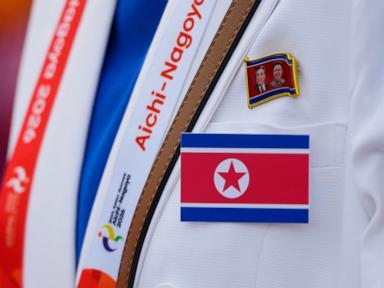
When the North Korean national anthem—Aegukka—blared from the loudspeakers ahead of a match involving South Korean athletes, those boundary lines didn't just blur. They evaporated.
The official explanation, when it finally limped out through the press channels hours later, was wonderfully bureaucratic. A clerical error. A tired audio technician working on autopilot. A misplaced file in a digital playlist loaded with thousands of tracks. It was treated as a software glitch in the grand theater of geopolitics.
But anyone who has ever sat in a stadium knows that technical malfunctions are never just technical. They are mirrors.
Consider the sheer psychological architecture of the Korean peninsula. For decades, the border between the North and the South has been defined by wire, mines, and silence. Families divided by ink and ideology. Entire generations raised to view the neighbor across the 38th parallel not as a person with a broken water heater or a favorite football team, but as an existential threat carved in granite.
And yet, sports have always been the strange, awkward laboratory where the two sides are forced to pretend otherwise. Joint marchers under a single Unification flag. Paddlers sharing a table tennis net. Hockey players sweating through the same drills, awkwardly blending dialects that have drifted apart over half a century of separation.
When the wrong anthem filled the rafters, the illusion shattered.
For the players standing on the blue line, the moment stretched out like pulled taffy. Every muscle memory tells an athlete at attention to stare straight ahead, to fix their eyes on an invisible horizon, to sing the words etched into their childhood. What do you do when the song that echoes back at you is the song your history books taught you to fear?
Do you stand still? Do you walk off? Do you smile at the absurdity of the universe playing a cruel practical joke on international television?
Silence.
That was the immediate reaction of the spectators. Not outrage, not riots, just a collective intake of breath so sharp you could hear it over the hum of the refrigeration units beneath the ice. In that split second, the invisible stakes of the match shifted. It was no longer about goals or penalty kills. It was about the terrifying proximity of the other.
We live in an era that pretends borders are absolute, neatly drawn lines on digital maps. We consume our news in neat, digestible bubbles that confirm our biases and reassure us of our righteousness. The "bad guys" live over there. The "good guys" live over here. The music plays accordingly.
Then an exhausted audio engineer clicks the wrong folder.
The mistake exposed the fragility of our constructed divisions. The notes of the North Korean anthem are not inherently radioactive. They are frequencies vibrating through copper wire and air molecules, no different from a pop song or a car horn. They only carry venom because we have poured decades of blood, tears, and rhetoric into them.
When those notes spilled out over the South Korean hockey players, something bizarre happened. The world didn't end. The stadium didn't catch fire. The players continued to lace their skates. The game was played. The score was tallied.
Yet the air in the room had changed.
There is an uncomfortable intimacy in realizing that your greatest enemy's song can be played on the same sound system as your own. It reminds you that the separation is artificial, maintained by daily acts of will and institutional memory. It strips away the myth of the monolith and replaces it with the mundane reality of human error.
We demand perfection from our institutions because we are terrified of what happens when the mask slips. We want our anthems queued up with military precision. We want our villains clearly labeled and our heroes standing tall in the spotlight.
But history is rarely so cooperative. More often than not, history is an intern clicking the wrong track on a laptop while four thousand people hold their breath in the dark.
As the final reverberations of the unexpected melody faded into the hum of the arena lights, the referee's whistle blew. The puck dropped. The sticks clashed against the ice in a frantic chorus of wood and fiberglass. The players chased the rubber into the corner, their bodies colliding with a dull thud against the Plexiglas.
The crowd exhaled, the tension snapping like a taut bowstring, and the noise rushed back in to fill the vacuum.
For the rest of the night, everyone cheered a little louder, skated a little faster, and laughed a little too quickly at the missed passes. They were trying to drown it out. They were trying to rebuild the wall of sound that the stray track had knocked down.
Because deep down, everyone in that arena knew the terrifying truth of the evening. The song had played. The sky hadn't fallen. And for one fleeting, sickening moment, the music of the other side had sounded hauntingly, uncomfortably familiar.


