Hospital air smells like bleach and old floor wax. If you have spent enough time sitting on those hard plastic chairs, waiting for a doctor to bring news that splits your life cleanly into a before and an after, you know the exact frequency of that fluorescent hum. It is a sound that strips the color out of the walls. It is a sound that makes time slow down until every second demands to be weighed.
A father sat in a room like that.
Outside, the city of Changsha moved with the frantic, indifferent rhythm of a Tuesday morning. Inside, the world had shrunk to the rhythmic beep of an infusion pump and the slow, heavy breathing of his son. Cancer does not care about rent, or grocery bills, or the price of fuel. It consumes everything in its path, feeding on hope and bank accounts with equal appetite.
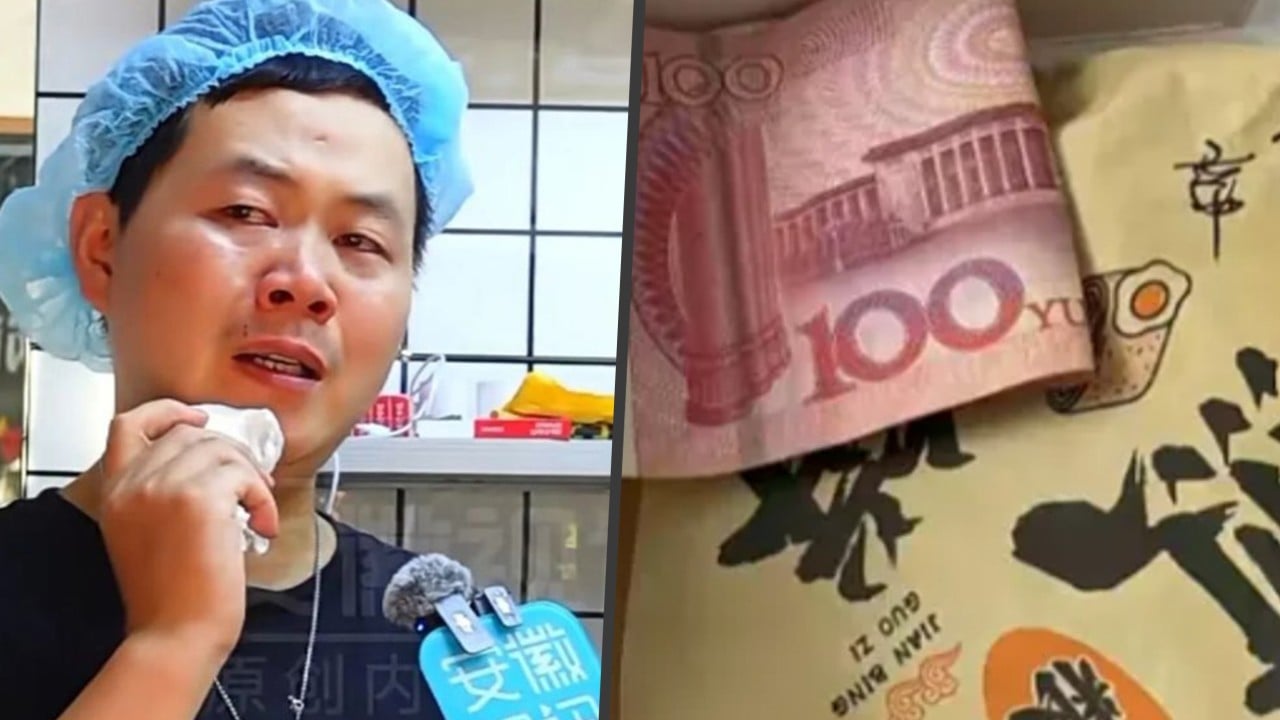
To pay for the treatments, the father did what millions of desperate people do when the safety nets fail. He opened a small street stall. He fired up a grill, chopped vegetables, and sold quick meals to passersby. He worked until his fingers blistered and his back locked up, trading every ounce of his remaining physical energy for small bills. Every coin dropped into his tin was a fraction of a day bought back for his child.
Then came the note.
It was written on a scrap of paper, tucked quietly among the coins on the food vendor's cart. It was not a grand gesture meant for cameras. It was a simple, scribbled testament left by a stranger who had read the father's story online. The note accompanied a modest donation of five dollars, or about thirty-five yuan.
Thirty-five yuan buys a bowl of noodles. It buys a cheap bus ticket. In the grand ledger of oncology bills that stretch into the hundreds of thousands, thirty-five yuan is mathematically invisible.
And yet, it changed everything.
Consider what happens next in the digital age. A quiet act of kindness rarely stays quiet for long. Someone takes a photograph. A local merchant notices the slip of paper. The image filters upward through social media algorithms, jumping from local chat groups to massive trending feeds, watched by millions across platforms like Weibo.
Viral fame is usually a harsh, glaring spotlight. It tears people apart, scrutinizes their flaws, and discards them by morning. But sometimes, very rarely, it acts like a magnifying glass focusing scattered sunlight into a single, burning point of warmth.
The story caught fire because it tapped into a universal terror. Every parent understands the primal urge to stand between their child and the dark. When we see a father cooking street food with hollow eyes, wrestling with an impossible debt while his son fights for breath, we do not see a stranger across an ocean. We see a mirror.
That is why the five-dollar donation mattered.
Scale is a deceptive thing. We live in an era obsessed with billion-dollar rescue packages, massive institutional grants, and headline-grabbing philanthropy. We have been trained to believe that if an action cannot solve an entire systemic crisis, it is not worth doing. We wait for heroes with deep pockets to fix broken worlds.
The street vendor proved the exact opposite.
That thirty-five yuan note was not about the money. It was about the witness. It was a way of tapping a broken man on the shoulder and saying: I see you. You are not invisible. You do not carry this alone.
Human empathy does not require a corporate budget. It requires attention. It requires the willingness to step out of our own insulated bubbles and acknowledge that another human being is drowning just down the street, or across a continent, connected to us only by the fragile thread of a shared vulnerability.
When the post went viral, the stall saw an influx of customers. People lined up down the block, not merely for food, but to cast their own small votes against despair. They bought meals they did not eat. They left larger bills and walked away without taking change. The digital ripple effect translated concrete financial relief into the real world, turning a solitary struggle into a community effort.
We talk endlessly about global connectivity, praising fiber optic cables and satellite networks for shrinking the planet. Yet, we often use those same networks to build walls of cynicism. We scroll past suffering with a flick of a thumb, numbed by the sheer volume of bad news. We convince ourselves that kindness is naive, that individual gestures are drops in an ocean.
The ocean is just a collection of drops.
The father did not ask for a movement. He asked for enough money to buy tomorrow. The stranger with the five-dollar bill did not expect to change national headlines. They simply acted on an impulse of pure, uncalculated grace.
We spend so much of our lives waiting for the right moment, the right resources, the right macro-solution to fix the broken places around us. We hold back our small offerings because we fear they are too insignificant to matter.
Look closer at the cart. Look at the scrap of paper folded next to the coins.
The fluorescent hum of the hospital room never truly stops for those who wait inside. But sometimes, when the door opens, the air smells less like bleach, and more like woodsmoke, carrying the faint, unmistakable scent of a world that has not entirely forgotten how to care.