The headlines write themselves because lazy journalism prefers easy fiction. Open any mainstream paper and you will read the exact same panic-driven script. North Korea sends a missile unit to Russia. Vladimir Putin is desperate. Kim Jong Un is propping up a collapsing Russian war machine with outdated artillery shells and desperate manpower.
It is a comforting narrative for Western defense analysts who love tidy boxes. It paints a picture of a pariah state acting as a desperate mercenary for an isolated superpower.
It is also entirely backwards.
I have spent the better part of two decades watching geopolitical intelligence feeds and defense procurement cycles. I have seen governments blow billions on assumptions built on yesterday's manuals. If you think Pyongyang is simply handing over inventory to help Moscow scrape by in Ukraine, you are missing the most dangerous military modernization program of the twenty-first century.
North Korea is not the supplicant here. They are the primary beneficiary. Moscow is giving Pyongyang the one thing the Kim regime could never buy, steal, or build on its own: real-world, high-intensity telemetry data on how Soviet-derived hardware performs against modern Western air defense systems.
The Myth of Desperate Mercenaries
Let us dismantle the core falsehood driving mainstream coverage. The lazy consensus states that North Korea is trading conventional munitions for cash, food, or oil to stave off domestic starvation. That perspective ignores how the modern North Korean economy actually operates and completely misreads Pyongyang's strategic ambitions.
North Korea has spent seventy years perfecting the art of militarized self-reliance, or Juche. They do not need cash handouts from a stretched Russian treasury as much as they need operational feedback.
Imagine a scenario where you design a high-end missile system in a vacuum, relying entirely on computer simulations, static test stands, and controlled desert ranges. No matter how advanced your engineering department claims to be, your software has never faced an active, networked electronic warfare environment. Your guidance systems have never had to counter a Patriot battery utilizing live NATO datalinks. Your materials science has never been tested against the chaotic thermal signatures of active combat over a contested urban grid.
Until now.
By embedding technical units and shipping ballistic hardware directly to the frontlines of Ukraine, North Korea just secured the ultimate live-fire testing range. They are trading surplus iron for priceless, uncompressed combat data.
Real-world telemetry cannot be simulated. Every missile fired over Kharkov or Kyiv sends raw performance metrics back to research bureaus in Pyongyang that would take fifty years of domestic testing to acquire.
What Moscow is Actually Paying For
To understand why the Kremlin accepted this arrangement, you have to look past the political theater of summit meetings and look closely at logistics deficits.
Russia's defense industrial base is running hot, but it suffers from a fatal bottleneck: basic chemistry and legacy calibers. Producing millions of 152mm artillery shells takes time, powder, and dedicated machining lines that are already strained to maximum capacity. North Korea possesses vast, underground, hardened manufacturing complexes purpose-built for mass-producing simple, brutal, highly reliable artillery and rocket systems.
Russia needed volume yesterday to sustain its attritional strategy. North Korea had mountains of it sitting in underground concrete bunkers.
The transaction is transactional, sure, but the currency is asymmetric. Moscow trades short-term ammunition relief for long-term strategic sovereignty. By taking North Korean munitions, Russia keeps its own lines open for high-end cruise and hypersonic missiles. Meanwhile, they pay the bill by granting North Korean technicians unprecedented access to battlefield data.
Let us be precise about the hardware involved. We are talking about systems like the KN-23 short-range ballistic missile. Before these units appeared in Eastern Europe, military experts dismissed them as crude knockoffs of Soviet Iskander technology with dubious accuracy.
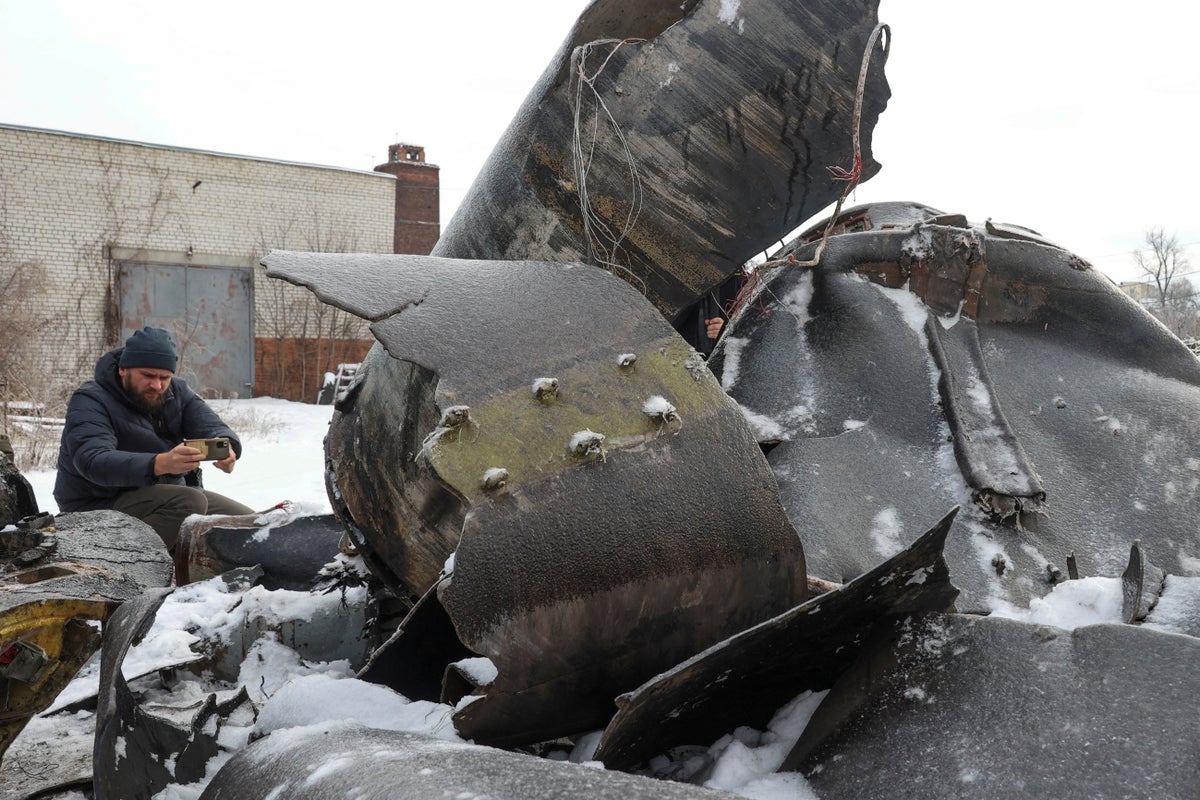
The operational reality on the ground in Ukraine tells a different story. These systems are being stress-tested against some of the densest air defense architectures on Earth. North Korean military observers are watching in real time how their guidance packages react to GPS jamming, kinetic interception attempts, and rapid repositioning under counter-battery fire.
The next iteration of North Korean missile technology will not be built on guesswork. It will be built on the smoking wreckage of European battlefields.
The Dangerous Complacency of Western Defense
Western capitals look at this axis of convenience and comfort themselves with the belief that both nations are international pariahs operating out of fiscal desperation. This arrogance is staggering.
When you treat your adversaries as desperate clowns, you fail to notice when they master modern warfare.
The partnership between Moscow and Pyongyang has fundamentally altered the technological ceiling of North Korea's military capabilities. For decades, the international community relied on economic sanctions to freeze their defense sector in the mid-twentieth century. Sanctions choked off advanced microchips, high-grade alloys, and precision machine tools.
Direct military cooperation with a major nuclear power bypasses those restrictions entirely. When Russian engineers collaborate with North Korean technicians on a shared battlefield objective, technology transfers happen through the back door. Aerospace know-how, submarine silencing techniques, and electronic countermeasures are flowing across that border faster than any diplomatic cable can track.
We keep waiting for the North Korean economy to collapse under the weight of its own isolation, forgetting that a totalitarian state can prioritize military research above all human cost. They do not care about consumer goods. They care about ballistic dominance. And every day their units operate in or alongside Russian logistics networks, that dominance grows.
The Counter-Intuitive Truth About Sanctions
If our policy goal is to deter rogue state militarization, our current playbook is achieving the exact opposite.
By driving Moscow and Pyongyang into an economic and military corner, we have eliminated their need to play by any remaining international rules. They no longer have to worry about maintaining a respectable veneer for potential trade partners in the West because those bridges are burned to ash.
This creates a terrifyingly efficient laboratory of war. North Korea gets to modernize its military doctrine using live targets without spending a drop of its own primary blood or treasure on large-scale offensive campaigns. They are getting a masterclass in modern drone integration, electronic warfare suppression, and integrated air defense from a nation currently fighting a peer-to-peer conflict.
The next time a foreign policy analyst tells you that North Korea's deployment to Russia is a sign of weakness, ask them a simple question: When was the last time your defense contractors got to test their newest guided munitions against active Western air defense systems in a real war?
Pyongyang is playing a multi-decade chess game while our experts are still arguing over the checkers rules.
Stop looking at North Korea as a beggar at Russia's door. Look at them as a ruthless venture capitalist buying up undervalued assets in a collapsing market, preparing for a future where their hardware is vastly more lethal than anyone currently dares to imagine.