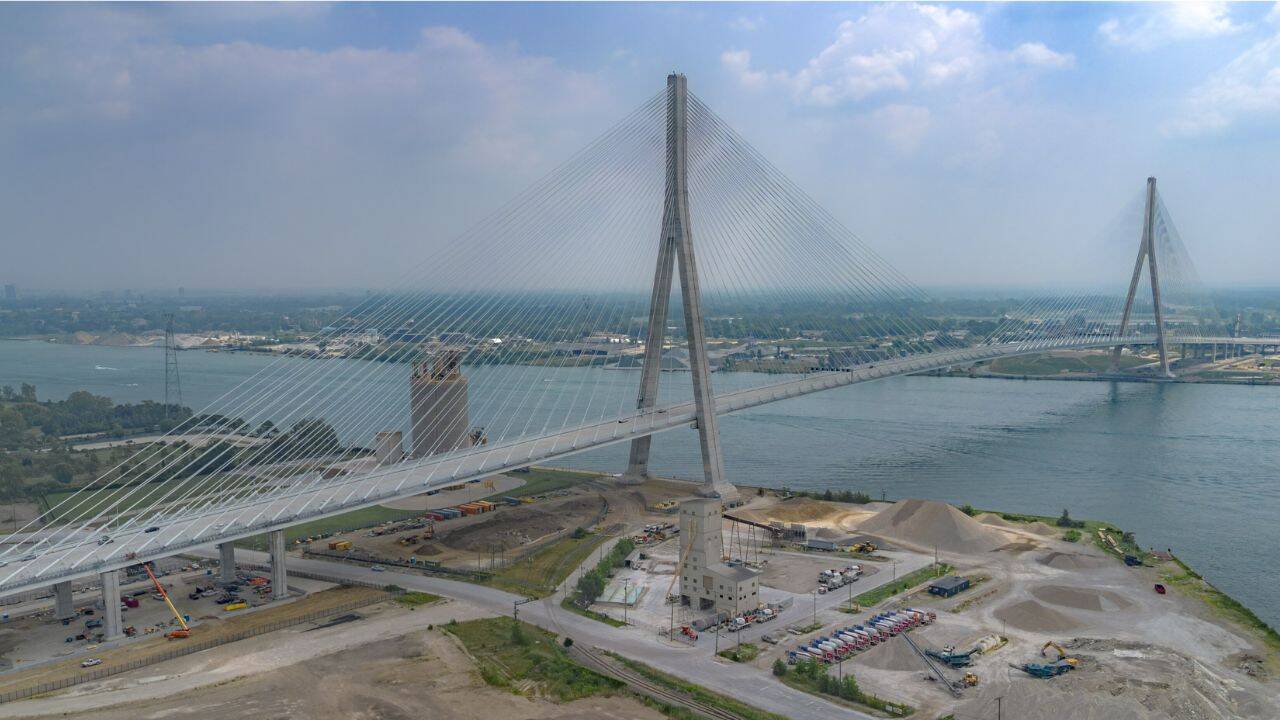
Traffic crawling across the Detroit River just hit a major turning point. The Gordie Howe International Bridge is officially open, and it brings a staggering 853-metre main span that changes the transit map between the United States and Canada. You are looking at the longest cable-stayed bridge in North America, and it is about time. For decades, the Windsor-Detroit corridor has acted as a massive bottleneck for commercial freight. Nearly thirty percent of all truck-hauled trade between the two nations funneled through an aging infrastructure. That era is over.
Building a colossal engineering marvel across an active international waterway is never simple. Spanning 2.5 kilometres in total length, this project took eight years of intense labor, involving over 15,000 workers and 20 million hours on the ground. The structure features two soaring towers rising 220 metres into the air, anchored firmly by massive shafts drilled deep into the bedrock. You do not just throw up a bridge of this scale overnight. Every single cable and deck segment had to account for extreme temperature shifts and local climate pressures along the Detroit River.
Inside the Engineering of a Giant
What makes an 853-metre main span work without piers cluttering the water below? Pure structural physics and smart design. The bridge utilizes 216 stay cables, each packed with dozens of heavy steel strands designed to withstand harsh weather and intense daily loads. AECOM and the construction consortium built a composite deck system sitting roughly 42 metres above the shipping lanes.
If you drive across it today, you will notice six wide traffic lanes flanked by modern multi-lane ports of entry on both the Michigan and Ontario sides. The architecture also includes over 6,000 programmable white LEDs that illuminate the entire span at night. It is functional, but it is also a striking visual anchor for the border.
The Economic Realities of the New Corridor
Infrastructure projects love to promise economic magic, but this one has actual numbers backing it up. The Windsor-Detroit crossing handles millions of commercial vehicles annually, acting as the lifeblood for automotive supply chains and manufacturing. When a truck gets stuck at the border for hours, supply chains bleed money. By connecting Ontario's Highway 401 directly to Michigan's Interstate 75, this new link cuts out local street navigation and streamlines customs processing through expansive inspection plazas.
Drivers and logistics managers should expect a transitional adjustment period as automated systems and traffic patterns settle into the new layout. If you regularly move goods across this border, check the updated port-of-entry guidelines before your next run to avoid unexpected routing delays. Take advantage of the dedicated commercial lanes, map out your connection to the Michigan Interchange ahead of time, and keep your documentation tight to experience the full speed of North America's premier transit upgrade.