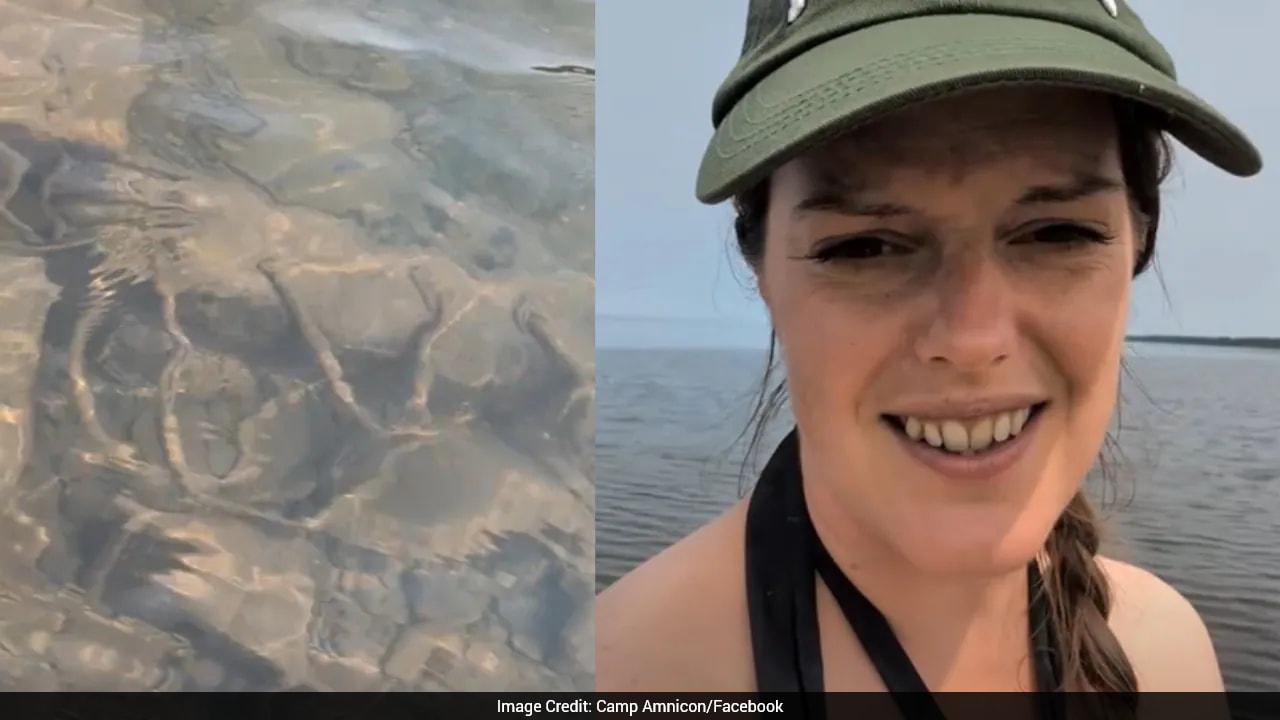
In August 2024, nine-year-old Nolan Wozniak and his mother, Jennifer, were skipping stones along the shoreline near Marquette, Michigan, when they spotted jagged timber ribs protruding from the shallow sand of Lake Superior. That accidental discovery turned out to be the George L. Colwell, a 154-foot wooden steam barge built in 1880 that had vanished beneath the waves during a violent autumn gale in 1921. While mainstream outlets treated the find as a heartwarming weekend human-interest story, maritime historians see something far more urgent: a rapidly accelerating crisis where shifting lake dynamics are exposing centuries-old wrecks faster than state agencies can document or protect them.
The discovery did not require sonar arrays, deep-sea submersibles, or a six-figure research grant. It required a child looking down at the right patch of shifting sand. Yet the very forces that handed the Wozniaks a piece of nineteenth-century history are now actively tearing hundreds of similar vessels apart.
How a Routine Beach Walk Uncovered the George L. Colwell
The mechanics of shallow-water shipwreck discovery rely almost entirely on sediment transport. For over a century, the remains of the George L. Colwell sat entombed beneath tons of shifting Lake Superior sand, shielded from oxygen, wave battering, and ice scour.
Built in Bay City, Michigan, by shipbuilder William Crosthwaite, the vessel spent four decades hauling lumber, coal, and iron ore across the Great Lakes. On October 21, 1921, caught in a ferocious storm off Marquette while carrying a load of coal, the aging wooden steamer began taking on water faster than its pumps could clear it. The crew abandoned ship safely, and the George L. Colwell settled onto the lakebed just offshore.
Then the sand swallowed it.
For decades, beachgoers walked directly over the hull without knowing it existed. What changed in the summer of 2024 was a combination of fluctuating water levels and fierce offshore currents that scoured away the protective overburden. When Nolan Wozniak noticed unusual wooden spikes and heavy oak framing poking through the wet sand near the waterline, his mother recognized the symmetry of a man-made structure rather than random driftwood.
Jennifer Wozniak did the one thing most accidental finders fail to do. She took photographs, noted the exact GPS coordinates, and contacted maritime archaeologists rather than trying to pry a souvenir loose from the sand.
Why Lake Superior Acts as an Imperfect Time Capsule
People routinely refer to Lake Superior as a cold-water preservative that keeps sunken ships intact forever. That is a half-truth.
The deep waters of Superior—where temperatures hover near 39 degrees Fahrenheit year-round and zebra and quagga mussels struggle to colonize due to low calcium levels—do preserve deep wrecks in near-mint condition. The Edmund Fitzgerald, resting at 530 feet, still shows its original paint.
Shallow-water wrecks face an entirely different reality. Vessels lying in less than twenty feet of water occupy the surf and ice zone, the most destructive environment on the Great Lakes.
- Wave energy pounds exposed timbers during every autumn gale, loosening iron fasteners and splitting waterlogged oak.
- Shoreline ice shoves act like bulldozers each spring, grinding massive sheets of pack ice directly across exposed hull ribs.
- Wet-dry cycles occur when water levels drop, allowing air to reach wood that has been saturated for a century, triggering rapid fungal rot and structural collapse.
Once a shallow wreck loses its protective blanket of sand, the clock starts ticking. Without intervention or reburial by natural currents, a hull that survived intact for a hundred years can be reduced to scattered splinters within three to five winters.
The Legal Trap Protecting Great Lakes Wrecks
Most visitors walking Michigan beaches assume that finding an old piece of ship timber makes it theirs to keep. Under federal and state law, touching it is a crime.
Under the Abandoned Shipwreck Act of 1987, the United States government asserted title to all abandoned shipwrecks embedded in submerged lands of a state and transferred that title to the respective states. In Michigan, all bottomlands of the Great Lakes—extending out to the international boundary—belong to the people of the state. Any shipwreck resting on those bottomlands is public property, managed jointly by the Michigan Department of Natural Resources and the State Historic Preservation Office.
Removing a single brass spike, a piece of coal, or a sliver of oak from a wreck like the George L. Colwell constitutes looting of state archaeological resources. Violators face heavy fines, confiscation of equipment, and criminal prosecution.
The law exists for a practical reason. A shipwreck is not just a pile of old wood; it is an archaeological context. When souvenir hunters strip artifacts or move timbers to get better photographs, they destroy the spatial data historians use to determine how a ship was built, how it was modified over its working life, and exactly how it broke apart during its final hours.
Why State Archaeologists Are Losing the Race
Here is the uncomfortable truth buried beneath the feel-good headlines about the Wozniak family: Michigan has roughly 1,500 documented shipwrecks in its waters, and potentially thousands more still buried, yet the state employs only a tiny handful of dedicated maritime archaeologists to oversee them.
The state's preservation budget was built for a slower era. When wrecks stayed buried in deep water or beneath stable sandbars, benign neglect functioned as a viable management strategy. Today, extreme weather swings and rapid lake-level fluctuations are uncovering dozens of coastal wrecks every few years across Lake Michigan, Lake Huron, and Lake Superior.
Consider what happens when a citizen reports a newly exposed wreck:
- State archaeologists must verify the identity of the vessel using historical construction records, keel dimensions, and fastener patterns.
- Divers or coastal surveyors must map the exposed structure using photogrammetry before the next major storm shifts the sand again.
- Officials must decide whether to leave the wreck exposed, attempt stabilization, or hope winter currents rebury it naturally.
In practice, funding constraints mean most shallow-water discoveries get a quick photographic survey and an entry in a state database before the lake reclaims them. Raising a 154-foot wooden steam barge like the George L. Colwell is out of the question. Waterlogged nineteenth-century oak collapses under its own weight the moment it leaves the buoyancy of water, requiring decades of expensive polyethylene glycol conservation treatments that cost millions of dollars.
The state relies almost entirely on an honor system—hoping that beachcombers like Jennifer and Nolan Wozniak will report their finds rather than haul them home in the back of a pickup truck.
What Makes Nineteenth-Century Steam Barges Historically Critical
To the untrained eye, the exposed ribs of the George L. Colwell look like a row of rotting fence posts jutting out of the beach. To a naval architect, those timbers represent a pivotal transitional technology that built the industrial Midwest.
During the 1870s and 1880s, Great Lakes shipping underwent a radical shift from pure sailing schooners to steam-powered bulk freighters. Shipbuilders like William Crosthwaite pioneered the steam barge—a hybrid design featuring a wooden hull reinforced with heavy iron strapping, a steam engine mounted far aft, and wide cargo holds designed to carry massive loads of white pine lumber or iron ore while towing one or two unpowered consort barges behind them.
These vessels were the heavy freight trucks of the Gilded Age. Without them, Chicago could not have been rebuilt after the Great Fire of 1871, and Pittsburgh's steel mills would have starved for Upper Peninsula iron ore.
Because steam barges were workhorses rather than glamorous passenger liners, almost none were preserved when their working lives ended. Most were stripped of their engines, burned for scrap metal, or abandoned in backwater sloughs. The only surviving blueprints of how nineteenth-century shipwrights actually fastened, caulked, and reinforced these hulls lie buried in the sand along the Great Lakes shoreline.
What You Should Do If You Spot Timber on a Great Lakes Beach
With water levels continuing to fluctuate across the basin, beachgoers from Duluth to Buffalo are going to stumble across more exposed hulls over the next decade. Knowing how to handle a discovery separates citizen science from irreversible damage.
- Do not dig around the timbers. Removing wet sand introduces oxygen and exposes fragile wood grain to immediate wave erosion.
- Never pull on spikes, bolts, or planking. Even gentle tugging can fracture waterlogged oak that has lost ninety percent of its structural strength.
- Place a recognizable object next to the site for scale—such as a shoe, a water bottle, or a coin—and take wide-angle photos showing the shoreline landmarks behind it alongside close-up shots of any metal fasteners or wooden joinery.
- Record the exact GPS coordinates using your phone's compass or map application before walking away.
- Report the location directly to the relevant state historic preservation office or maritime museum rather than posting exact coordinates on public social media groups, where relic hunters actively monitor geotags.
Nolan Wozniak spotted the George L. Colwell because he was paying attention to the ground beneath his feet, and the wreck survived his discovery because his mother knew enough to leave it untouched. Every exposed hull along the Great Lakes now depends on the next person walking down the beach having that exact same restraint.