The needle dropped, and a localized earthquake hit the Harlem blacktop. It was the summer of 1988. If you were standing on 125th Street, you didn't just hear the music; you felt it vibrate through the soles of your sneakers, rattling the windows of the parked Buicks and moving down the block like a heatwave.
Then came the vocal. “I wanna rock right now.”
It wasn't a request. It was an eviction notice for every boring record that had come before it. Within four seconds, a vocal sample from Lyn Collins’ 1972 funk track "Think (About It)" screamed into the mix, and hip-hop changed forever.
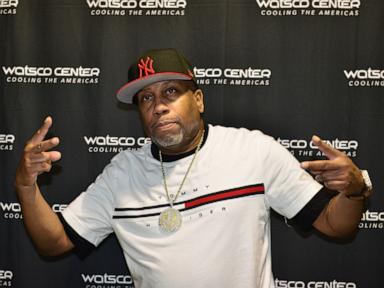
The man holding the microphone, steering that sonic hurricane with a cool, unbothered confidence, was Rob Base. Born Robert Ginyard, he was just a kid from New York who figured out how to bottle lightning. For decades, that lightning soundtracked weddings, bar mitzvahs, stadium half-time shows, and sweaty club nights across the globe.
Now, the music has paused. Rob Base has died at the age of 59.
The news hits with a quiet, heavy thud. To the casual observer reading a standard headline, it is another name from the nostalgia file passing into history. But to anyone who ever stood on a dance floor when that iconic siren-loop kicked in, it feels like losing a piece of our collective youth.
The Audacity of the Perfect Loop
To understand what Rob Base accomplished alongside his partner DJ E-Z Rock, you have to understand the sheer chaos of New York City in the late 1980s. Hip-hop was still fighting for its right to exist in the mainstream. The gatekeepers called it a fad. Radio programmers locked their doors to it.
The prevailing wisdom at the time was that rap had to be hard, abrasive, and strictly underground to be authentic. Or, conversely, it had to be squeaky-clean pop to cross over.
Rob Base looked at that divide and blew it to pieces.
He didn't do it with a massive budget or a team of high-priced corporate producers. He did it with an ear for what moved people. Think about the construction of "It Takes Two." It shouldn't work. It is a Frankenstein’s monster of musical genres. You have a furious hip-hop breakbeat, a sped-up James Brown-produced funk vocal, and a house-music sensibility that dared people to dance instead of just nod their heads.
Imagine sitting in a cramped, smoky studio, watching two young men manipulate vinyl records and primitive samplers. They didn't have digital audio workstations. They didn't have infinite tracks. They had limitations. Yet, they found a groove so deep it practically altered the rotation of the earth.
The song wasn't just a hit; it became a cultural utility. It became a permanent fixture of human celebration.
The Phantom in the Room
There is a strange tax that comes with creating a masterpiece so massive it eclipses your own name. Walk up to a stranger on the street and ask them if they know Robert Ginyard. You will likely get a blank stare. Ask them if they know Rob Base, and they might smile and mention the eighties.
But whistle those first three notes of the "Think" breakbeat, and watch their eyes light up.
That is the invisible burden of the mega-hit. The song becomes an entity that walks into the room before the artist does. It occupies its own space in the cultural lexicon. For thirty-five years, Rob Base carried that anthem on his back. He performed it thousands of times. He watched generations of fans, many of whom weren't even alive in 1988, scream his lyrics back at him.
He became a custodian of joy.
Think about the stamina required for that kind of life. Every time he stepped onto a stage, he was required to recreate the happiest moment of 1988 for a room full of strangers. He had to bring the energy of a twenty-something Harlem kid to crowds decade after decade. And he did it with a grace that many of his peers struggled to find. He never grew bitter about the song that defined him. He embraced it. He understood that "It Takes Two" belonged to the world now.
When the Duo Fractures
The tragedy of the Rob Base story doesn't begin with his passing at 59. It is woven through the very fabric of the music itself. The track is called "It Takes Two," an explicit celebration of partnership, camaraderie, and brotherhood.
“It takes two to make a thing go right. It takes two to make it outta sight.”
The man who provided the foundational scratches and the quiet stability behind the turntables was Rodney "DJ E-Z Rock" Bryce. He was the anchor to Rob’s sail. They were childhood friends who climbed the mountain together, navigating the predatory music industry of the eighties by relying on each other.
But the music industry is a meat grinder. Success distorts relationships. The duo split, reunited, and struggled to capture that same lightning a second time. Then, in 2014, DJ E-Z Rock passed away at the age of 46.
When E-Z Rock died, "It Takes Two" ceased to be just a party anthem. It became a monument. For the last twelve years of his life, Rob Base performed the song alone. Imagine the ghostly weight of that performance. Standing on a stage, looking to your left where your childhood friend used to stand, hearing his scratches ring out through the speakers, while thousands of people jump up and down, oblivious to the loneliness in the center of the spotlight.
He kept singing anyway. He kept the partnership alive through the music, ensuring that whenever Rob Base was on the marquee, E-Z Rock’s legacy was protected.
The Echo in the Concrete
We live in an era where music is disposable. Songs are manufactured to trend for fifteen seconds on an app and then vanish into the digital ether. They are optimized for algorithms, scrubbed of friction, and designed not to interrupt your day.
"It Takes Two" was the opposite of an algorithm. It was pure friction. It was the sound of New York asphalt, of cheap sneakers scuffing against linoleum dance floors, of sweat dripping from church basement ceilings during teenage parties.
It taught the music industry that hip-hop wasn't a subculture; it was the culture. The track laid the groundwork for the pop-rap explosions of the nineties and two-thousands. It proved that you could be credible, respected, and still make the entire world dance.
The loss of Rob Base at 59 is a stark reminder that the architects of our modern sonic world are slipping away. These aren't just names in an obituary. They are the people who built the rooms we all live in now.
Somewhere right now, a DJ is packing up their gear for a Saturday night wedding or a club gig. They are checking their crates, making sure they have the essentials. Deep in the playlist, sitting there like a loaded weapon, is a track recorded thirty-six years ago by two kids from Harlem.
The room will get hot. The lights will dim. The DJ will slide the fader.
And for three minutes and forty-five seconds, Robert Ginyard will live forever, making the thing go right one more time.