Every morning for twenty-three years, Maria’s day began with the sound of metal scraping against concrete.
She lives in La Línea de la Concepción, a sun-bleached Spanish border town where the laundry hangs over narrow balconies and the wind smells of salt and cheap tobacco. Just across a narrow strip of asphalt sits Gibraltar, the towering limestone monolith that has belonged to the British Crown since 1713.
To make her living, Maria—a hypothetical composite of the thousands of Spaniards who commute here daily—must cross from one world to the other. She cleans the homes of British expatriates. For decades, her morning commute was defined by La Verja, the physical border fence. It was a rusty, seven-foot-high eyesore of chain-link and barbed wire, erected in 1908. To Maria, that fence was not just a geopolitical boundary. It was an alarm clock. It was a queue that could stretch for two hours under a punishing Andalusian sun. It was the daily, exhausting reminder that she was an outsider, even though her family had lived within sight of the Rock for generations.
Then, at midnight on a warm Tuesday in July 2026, the metal stopped scraping.
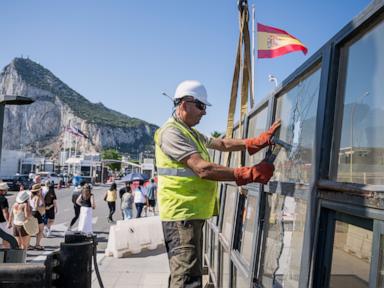
With the turn of a wrench and the quiet hum of construction cranes, the last physical border fence in continental Europe came down.
The Ghost of the Gate
To understand why people wept on the streets of La Línea as the steel was hauled away, you have to understand the ghosts that haunt this border.
In 1969, the Spanish dictator Francisco Franco ordered the gate entirely closed. He wanted to starve the Rock into submission after Gibraltar approved a new constitution asserting its British identity. Overnight, the border became a blank brick wall.
Families were severed. If you stood on the Spanish side of the fence, you could see your mother, your brother, or your cousin standing just a hundred yards away on the British side. But you could not touch them. People brought megaphones to the fence line just to shout family news across the neutral ground. “The baby was born!” “Grandfather passed away last night!”
For thirteen years, the only way to send a letter from La Línea to Gibraltar—a distance of less than a mile—was to post it to Madrid, which sent it to London, which flew it back to the Rock.
When the gate finally opened to pedestrians in 1982, the physical barrier remained. The trauma of that sudden separation lingered in the minds of every family in the region.
So, when the United Kingdom voted to leave the European Union in 2016, a cold panic gripped the region. Gibraltar, where ninety-six percent of the population voted to remain in the EU, found itself dragged out of the bloc by voters thousands of miles away in England.
The threat of a "hard border"—complete with full, agonizing passport checks, customs declarations, and commercial blockades—loomed like a storm cloud over the Mediterranean. It threatened to ruin Gibraltar’s economy and destroy the livelihoods of fifteen thousand Spaniards who cross the border every single day to keep the territory running.
The Midnight Union
For four years, diplomats in London, Madrid, Brussels, and Gibraltar argued in wood-paneled rooms. They traded drafts, argued over sovereignty, and walked away from tables.
But on a Tuesday night, the wrangling ended with a signed treaty.
Just past midnight, the atmosphere at the border resembled a street festival. Young men and women in Spanish soccer jerseys—fresh off celebrating a national team victory—joined British expatriates in the neutral zone. There were no passport officers demanding papers. There were no snarling drug-sniffing dogs.
Gibraltar’s Chief Minister, Fabian Picardo, stood in the warm night air and spoke of brotherhood. The mayor of La Línea looked on as the final posts of La Verja were lifted into the air.
Under the terms of the new agreement, Gibraltar has entered a unique legal space. It is still British. The Union Jack still flies proudly from the top of the Rock, and British military facilities remain fully operational. Yet, the territory has effectively joined the EU’s Schengen free-travel area.
If you are a Spanish citizen or a resident of Gibraltar, you can now walk across the old frontier as if you are walking from one room of your house to another. No stamps. No queues. No metal.
Consider the simplicity of what this means for a child living in La Línea who plays soccer for a Gibraltar youth league. Before, a simple practice session meant calculating border delays, checking passports, and waiting in exhaust-choked lanes. Now, it is just a walk across the tarmac.
The Digital Fortress
But every open door has a lock, even if that lock is invisible.
As the physical steel of the fence was loaded onto flatbed trucks, technicians were already busy installing high-definition cameras on the surrounding buildings.
The physical fence has not disappeared; it has merely gone digital.
To secure this new open border, Gibraltar has implemented live facial recognition cameras at key entry points. Because the land border is now open, the true frontier of the European Union has shifted. It now sits at Gibraltar’s airport and seaport.
If you are a traveler flying into Gibraltar from the United Kingdom—outside the Schengen zone—your experience is about to change dramatically. You will no longer receive a physical ink stamp in your passport. Instead, you will encounter the EU’s Entry-Exit System.
You will stand before a terminal. A camera will scan your face. A glass pane will read your fingerprints. Your digital profile will be logged in a European database, tracking exactly how many days you spend inside the Schengen zone. The ninety-day limit for non-EU travelers will be enforced not by a border guard squinting at faded ink, but by an algorithm that never sleeps.
It is a strange paradox of the modern world. To make our physical lives more fluid, we must make our digital lives more rigid.
A Quiet Walk Home
The morning after the fence fell, Maria walked to work.
She reached into her purse out of habit, her fingers searching for the familiar plastic of her national identity card. She stopped at the place where the rusted gate used to stand.
There was nothing there but a clean stretch of asphalt and the shadow of the Rock rising into the blue sky.
She kept walking. Nobody stopped her. Nobody asked her where she was going or how long she planned to stay. She felt a sudden, light sensation in her chest—a mixture of relief and a strange, lingering disbelief.
The steel was gone. The road was open. And for the first time in more than a century, the people of the Rock and the people of the plains shared nothing but the morning breeze.
:max_bytes(150000):strip_icc():focal(749x0:751x2)/auschwitz-2-691cb034ee9e43cfa45a0969012c6337.jpg)