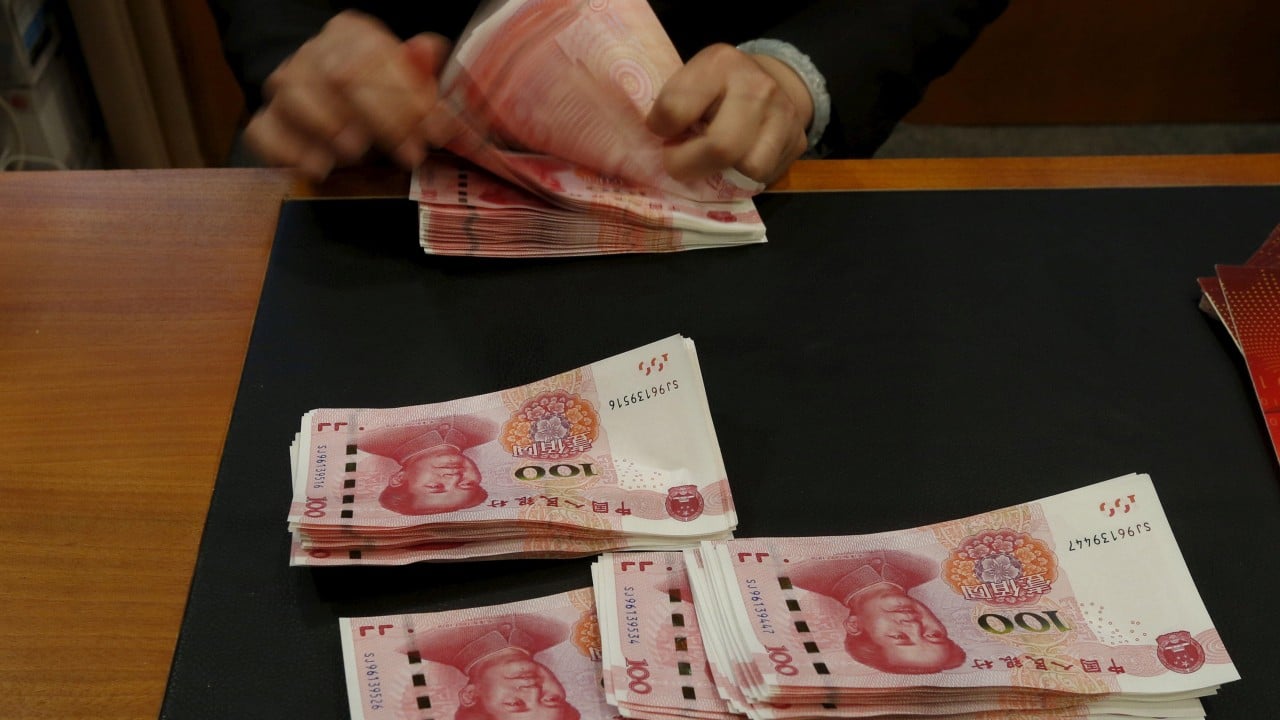
The air conditioning in the Central district office towers doesn't rest, even when the streetcars below have stopped clanging. At 2:00 AM, the glass structures look like giant, glowing columns of data frozen against the Victoria Peak skyline. Inside one of these offices, a trader named David rubs his eyes. On his left screen, the London markets are winding down. On his right, mainland China is asleep.
David is dealing in Renminbi (RMB). Specifically, he is trying to move a massive block of it across borders before the liquidity dries up for the night.
For decades, navigating the offshore RMB market felt like driving a high-performance sports car through a series of narrow, disconnected alleyways. You had the speed, and you certainly had the capital, but the infrastructure kept forcing you to brake. If a global bank in London or New York needed sudden, massive RMB liquidity outside of Asian business hours, the friction was palpable. The system worked, but it groaned under the pressure.
Then the Hong Kong Monetary Authority (HKMA) quietly introduced the RMB Business Facility.
To the casual observer scanning financial headlines, the announcement sounded like bureaucratic alphabet soup. It was dry. It was packed with terms like "bilateral swap lines" and "collateral optimization." But to the people who actually move the world’s money, it felt like someone had suddenly cleared the traffic from the highway.
The Architecture of Trust
Money is a ghost. It only becomes real when people agree on what it is worth and, more importantly, how fast it can move when panic sets in.
To understand why a specialized facility matters, we have to look at how Hong Kong became the world’s sandbox for the internationalization of the RMB. Think of the global financial system as an electrical grid. For a long time, mainland China operated on one voltage, and the rest of the world operated on another. Hong Kong built the transformer station. Today, the city handles over 75% of global offshore RMB settlement. It is a staggering concentration of financial power, but concentration brings vulnerability.
When a corporate treasurer in Frankfurt wants to settle a multi-billion RMB trade, they rely on a chain of intermediaries. If one link in that chain experiences a sudden liquidity squeeze—perhaps due to a sudden market shock or an unexpected holiday misalignment—the gears grind to a halt.
The RMB Business Facility changes the game by acting as an institutional backstop.
Under the upgraded arrangements, the HKMA effectively provides a dedicated, reliable stream of liquidity to participating banks. It utilizes the standing swap agreement with the People’s Bank of China, turning what was once a reactive emergency measure into a proactive, structural tool.
Consider a hypothetical scenario involving a major European institutional investor. Let’s call them Atlas Asset Management. Atlas wants to rebalance its portfolio by purchasing mainland Chinese green bonds through Hong Kong’s Bond Connect program. They need billions of RMB, and they need it within a tight execution window.
Before the facility's recent enhancements, Atlas’s clearing bank had to hold significant, idle buffers of cash just in case market liquidity tightened. That idle cash is expensive. It represents wasted opportunity. With the HKMA’s facility operating in the background, the clearing bank can operate with leaner, more efficient balances. They know that if a sudden spike in demand occurs, the facility is there to inject liquidity smoothly.
The friction vanishes. The trade executes. The investor moves on to the next deal without ever feeling the underlying machinery shift.
The Invisible Stakes
It is easy to view these developments purely through the lens of corporate efficiency. But finance at this level is rarely just about efficiency. It is about sovereignty, influence, and the shifting geography of global power.
The world is currently witnessing a quiet but determined diversification away from total reliance on a single dominant currency. Central banks across Asia, the Middle East, and South America are increasing their RMB reserves. Total trade settled in RMB has climbed steadily over the past decade, defying those who predicted the currency’s international growth would plateau.
Yet, a currency cannot become a global standard if it is difficult to access during a crisis.
Traders are risk-averse creatures by nature. They gravitate toward deep pools of liquidity because depth equals safety. If you throw a stone into a puddle, you create a splash; throw it into the ocean, and the water absorbs the impact. By strengthening the RMB Business Facility, Hong Kong is deliberately deepening its financial ocean.
The facility provides four specific tenors of liquidity: overnight, next-day, one-week, and one-month. This spectrum is crucial. It means banks aren't just getting a temporary patch to fix a morning shortfall. They can manage their balance sheets weeks in advance, knowing exactly what their funding costs will be.
This predictability is what attracts corporate treasurers. They don't want excitement. They want boredom. They want to know that when they press a button, the transaction settles at the expected price, every single time.
Beyond the Trading Desk
The ripple effects of this institutional upgrade extend far beyond the dealing rooms of Ice House Street. They touch the broader economy of the Greater Bay Area and alter how multinational corporations view their regional headquarters.
When a technology firm in Shenzhen plans its next phase of global expansion, it looks across the Shenzhen River to Hong Kong’s capital markets. The firm wants to issue "Dim Sum" bonds—RMB-denominated bonds issued outside mainland China. To get the best pricing, they need an ecosystem filled with international buyers.
Those international buyers are only present if they feel comfortable navigating the offshore ecosystem.
The enhanced facility serves as an open invitation. It signals to global capital that Hong Kong is not merely a passive conduit, but an active manager of the offshore market's stability. It reduces the systemic risk premium that investors typically demand when dealing in a currency that is still developing its offshore infrastructure.
The true metric of success for the RMB Business Facility isn't a dramatic surge in daily trading volume. The true metric is the absence of crises. It is the silence of a system working exactly as designed, absorbing shocks without making the evening news.
Back on Ice House Street, the night shift is nearing its end. The first hints of dawn are reflecting off the harbor, and the early morning ferry is cutting through the water. On David’s screens, the Asian markets are beginning to wake up. The data streams refresh, the numbers cascade downward, and billions of RMB change hands across the globe, moving effortlessly through channels that were built in the dark to sustain the light of day.