The steel plates of a merchant vessel don’t just carry cargo; they carry the weight of a thousand invisible anxieties. Below the waterline, the Strait of Hormuz is a narrow, jagged throat of water that swallows a third of the world’s seaborne oil. Above the waterline, it is a high-stakes poker game played with hulls the size of skyscrapers.
On a recent Tuesday, two Indian-flagged tankers were cutting through the Gulf of Oman, their bows pointed toward the Persian Gulf. They were part of a silent, relentless rhythm that keeps the lights on in Delhi and the factories humming in Mumbai. Then, without a public announcement or a flare in the sky, they stopped.
They didn’t just slow down. They turned around.
The Ghost in the Engine Room
Imagine a Captain standing on the bridge of a Very Large Crude Carrier. Let’s call him Rajesh. He has thirty years of salt in his pores and a crew of twenty-four men who rely on his intuition. To the world, his ship is a blip on a satellite tracker—a set of coordinates known as the MT Desh Vishal or the MT Swarna Mala. To Rajesh, it is a vibrating city of oil and adrenaline.
When the order comes to reverse course in one of the most volatile shipping lanes on Earth, it isn't a suggestion. It is a scream.
A ship of that magnitude does not "turn." It heaves. It groans against the current. The sheer physics of reversing a fully laden tanker requires miles of open water and hours of calculated maneuvering. Watching these ships on a digital map is like watching two giants suddenly realize they are walking into a trap. They pivoted 180 degrees, leaving a wake of questions that no official spokesperson has been willing to answer.
The Arithmetic of Fear
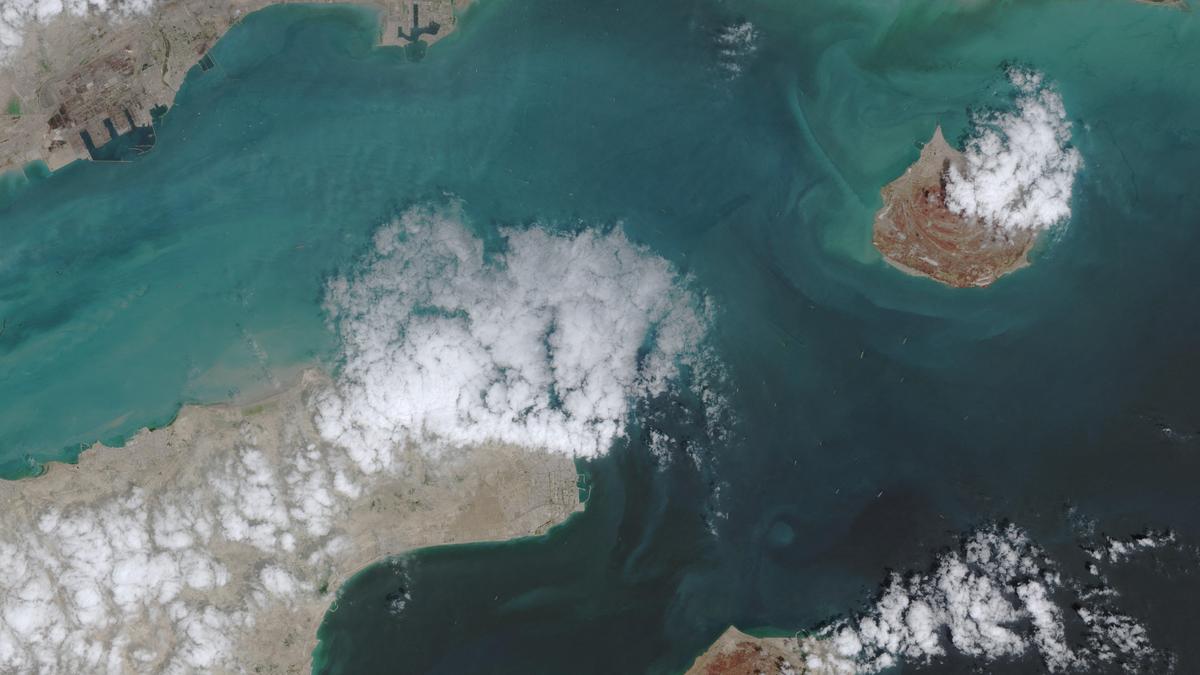
The Strait of Hormuz is only 21 miles wide at its narrowest point. It is a chokehold. When geopolitical tensions between regional powers and global players tighten, the first thing that loses its breath is the maritime supply chain.
We often think of global trade as a series of spreadsheets and delivery dates. In reality, it is a fragile web of insurance premiums and risk assessments. When those two Indian ships reversed course, they weren't just moving steel; they were reacting to an invisible shift in the cost of human life and corporate liability.
The math is brutal.
If a tanker is seized or struck by a drone, the loss isn't measured in millions. It is measured in decades of environmental cleanup, skyrocketing fuel prices at your local gas station, and the potential for a regional conflict to turn into a global firestorm. For these captains, the "stop" command was likely the result of a whisper from a naval intelligence officer or a sudden spike in war-risk insurance that made the journey mathematically impossible to justify.
The Invisible Border
There is a specific kind of silence that descends on a ship when the engines change pitch unexpectedly. The crew knows. They see the change in the GPS track. They feel the list of the ship as it leans into a turn it wasn't supposed to make.
In the world of shipping, "Safety of Life at Sea" is a holy trinity. But in the Strait of Hormuz, safety is a moving target. India has historically maintained a delicate balance in the Middle East, navigating the choppy waters of diplomacy with the same care its captains use to navigate the shoals. This sudden retreat suggests a crack in that balance.
Maybe it was a direct threat. Maybe it was a cautionary tale whispered through a radio frequency. Regardless, the sight of two major vessels retreating from the mouth of the Gulf sends a shockwave through the energy markets. It tells every other merchant sailor that the "safe" path is no longer a given.
Beyond the Satellite Pings
Data trackers like MarineTraffic or TankerTrackers provide us with a god-like view of the ocean, but they lack the smell of diesel and the sound of the wind. They show us the what, but they never show us the why.
When we see these ships reverse course, we are looking at the physical manifestation of a geopolitical heartbeat. The world is nervous. India, a rising giant with an insatiable thirst for energy, does not pull its ships back for minor reasons. This was a tactical withdrawal, a moment where the risk of the unknown outweighed the reward of the delivery.
Consider the ripple effect. A ship that turns back today is a refinery that runs low next week. It is a truck driver in Bangalore who finds the price of diesel has jumped five rupees overnight because the "risk premium" has been baked into every drop of oil. The ocean is far away, but its tides reach every doorstep.
The ocean has a long memory. It remembers the tanker wars of the 1980s, the mines, and the silent submarines. Today, the threats are different—loitering munitions, cyber-spoofing of GPS signals, and shadow fleets—but the terror is the same.
The two ships now sit in the open water of the Arabian Sea, drifting or anchored, waiting for a signal that the throat of the world is open once more. Their crews look back toward the horizon they just fled, watching the sunset over a coastline that looks peaceful from a distance, but feels like a tinderbox from the bridge.
The true story isn't found in the coordinates of a vessel tracker. It is found in the grip of a Captain’s hand on the railing, the sudden quiet of the mess hall, and the realization that the shortest distance between two points is no longer a straight line—it is whatever path the world’s anger allows you to take.