The rain in Seattle doesn’t fall; it hangs. It was 9:15 PM on a Tuesday, the kind of wet, freezing night that makes your bones ache. I was standing in line at a small, independent grocery store on the corner of 4th and Vine. My feet were soaked. In my basket was a single carton of whole milk, a box of generic flu medicine, and a tiny, plastic container of chicken soup. My seven-year-old daughter was home with a fever that was currently ticking past 102 degrees.
Ahead of me stood a man named Arthur. I knew his name because he was frantically repeating it to the cashier, trying to establish some shred of human connection as the situation deteriorated. Arthur was in his late seventies, wearing a faded veterans cap and a heavy wool coat that smelled of wet asphalt. He just wanted to buy a loaf of bread and some eggs.
The total came to $6.42.
Arthur slid a crisp, green ten-dollar bill across the sleek black counter.
The cashier, a teenager with tired eyes and a corporate vest, didn't touch it. Instead, she pointed a painted fingernail toward a small, laminated sign taped to the card reader. Card Only. No Cash.
"I don't have a card, dear," Arthur said, his voice dropping into a register of quiet desperation. "I’ve got this ten. It says right on it, 'This note is legal tender for all debts, public and private.' See?" He tapped the microscopic print beneath Abraham Lincoln's portrait.
"Management policy," the girl mumbled, looking past him. "We don't keep a till anymore. Insurance risks. I literally cannot open a drawer to give you change. There is no drawer."
I watched Arthur’s shoulders drop. It wasn't just about the bread. It was the sudden, cold realization that the world he had lived in for eight decades had quietly locked its doors against him while he wasn't looking. He was solvent. He had money. But in the eyes of the digital ledger, he was invisible.
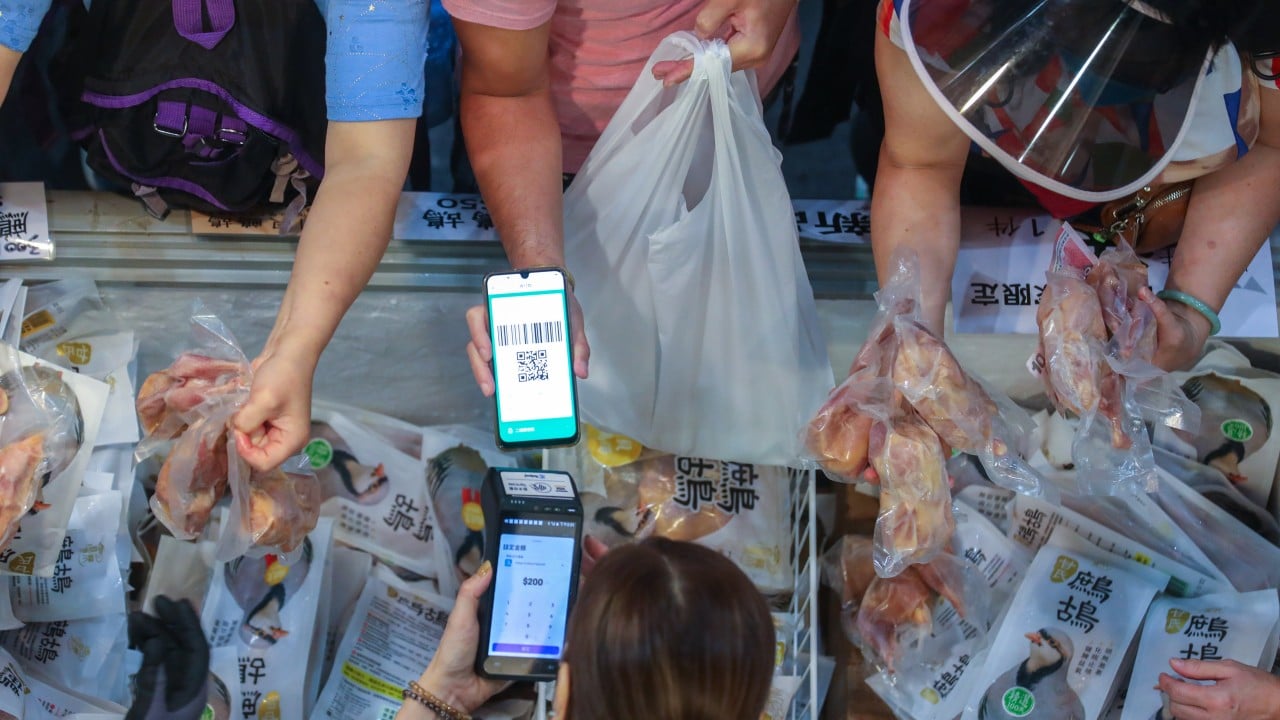
I stepped up and tapped my phone against the glass terminal. A cheerful beep signaled the transfer of $6.42 from my checking account to a corporate holding company. I handed Arthur the bread. He looked at me with a mixture of profound gratitude and deep, burning humiliation.
That was the night I realized the phrase "legal tender" is a ghost. We think it's a shield. We think it's a hard rule written into the concrete foundation of our society. It isn't. As we rapidly march toward a completely cashless ecosystem, a friction is developing between the law of the land and the convenience of the market. And regular people are getting caught in the gears.
The Great Misunderstanding of the Greenback
Most people believe that if you walk into a business in the United States and offer US currency, the business is legally obligated to take it. It feels like a constitutional right. We assume that because the government prints the money, the government guarantees its acceptance at the point of sale.
This is a complete illusion.
To understand why Arthur couldn't buy his bread, we have to look at what the law actually says. The Coinage Act of 1965 stipulates that US coins and currency are legal tender for all debts, public and private. The crucial word in that legal sentence isn't tender or currency. It’s debt.
Consider a hypothetical scenario to map out the difference. If you walk into a restaurant, sit down, order a steak, and eat it, you have created a debt. You have consumed a service and a product before paying for it. You now owe the establishment money. If you offer to pay that debt with cash at the end of the meal, the restaurant generally cannot refuse it without erasing the debt, because you are offering a federally recognized instrument to settle an existing liability.
But when you walk up to a grocery store counter, or a coffee shop register, no debt exists. You are proposing a transaction. You are saying, "I would like to trade this money for that coffee."
The business has the right to say, "We only accept trade in the form of digital tokens processed through Visa or Mastercard."
Federal law specifies that private businesses are free to develop their own policies on whether to accept cash unless there is a state or local law that says otherwise. The Federal Reserve itself states this explicitly on its tracking sites. There is no federal statute mandating that a private business, a person, or an organization must accept currency or coins for payment for goods or services.
We have traded the absolute certainty of physical currency for the efficiency of the cloud. But convenience is a predatory creditor. It extracts its fee in ways we don't notice until the system blinks.
The Invisible Tollbooths
When you pay with a twenty-dollar bill, that bill stays worth twenty dollars. If you hand it to a barber, it’s worth twenty dollars to him. When he uses it to buy a sandwich, it’s worth twenty dollars to the deli owner. It moves through the community like water, leaving its full value intact at every stop.
When you use a piece of plastic or a chip embedded in your watch, that transaction is not free. It feels free because your phone vibrates and the screen says Approved, but behind the scenes, an array of digital tollbooths swings open and shut in milliseconds.
Every time a card is dipped, tapped, or swiped, an interchange fee is scraped off the top. This fee, often ranging from 1.5% to 3.5% of the total purchase price, is split among the merchant’s bank, the card network, and the bank that issued the card.
Think about the math over time. If a twenty-dollar bill changes hands ten times in a week, it is still worth twenty dollars. If a digital twenty dollars moves through ten card transactions, subject to a 3% fee each time, nearly six dollars of that original value has been siphoned off into the financial sector.
For large corporations, these fees are a cost of doing business, easily absorbed or offset by bulk volume. For the corner bodega, the independent bookstore, or the local diner, these fees are a slow hemorrhage.
To survive, merchants are forced into a corner. They either raise their baseline prices across the board—meaning cash buyers subsidize the rewards points of credit card users—or they implement a cash discount, or a credit card surcharge. The system rewards the processors, not the producers.
Yet, businesses are rushing to eliminate cash anyway. Why? Because cash has hidden costs too. It must be counted. It must be stored in a safe. It must be transported to a bank via armored car or a nervous manager walking down an alley with a canvas bag. It can be stolen. It can be miscounted by a tired cashier.
From a purely cold, analytical business perspective, removing cash simplifies the balance sheet. It turns a physical logistical problem into a predictable utility bill paid to Silicon Valley and Wall Street.
But a balance sheet doesn't have a soul. It can't see the people it leaves behind in the dark.
The Unbanked and the Unseen
According to data from the Federal Deposit Insurance Corporation (FDIC), roughly 4.5% of households in the United States are "unbanked." That means approximately 5.9 million households have no one in the home with a checking or savings account at a bank or credit union.
These aren't abstract statistics. These are real people living on the margins of our shiny, digital dream.
They are teenagers working their first under-the-table jobs. They are undocumented immigrants washing dishes in the kitchens of the restaurants that refuse their paper money. They are elderly citizens like Arthur who find the modern banking apparatus baffling, predatory, or inaccessible. They are survivors of domestic abuse who use hidden cash as their only ticket to safety, because a shared bank account leaves a digital breadcrumb trail that can be tracked by a controlling partner.
When a city允许 its coffee shops, transit systems, and arenas to go completely cashless, it is effectively passing an ordinance of economic segregation. It is saying to a specific segment of the population: Your money is no good here. Which means you are not welcome here.
+------------------------------------------------------------+
|                THE COST OF DIGITAL EXCLUSION               |
+------------------------------------------------------------+
|                                                            |
|  [ 5.9 Million ] -> US Households with zero bank access    |
|                                                            |
|  [ 1.5% - 3.5% ] -> Average fee taken per digital tap      |
|                                                            |
|  [ Zero Federal] -> Laws protecting your right to use cash |
|                     at a private retail store              |
|                                                            |
+------------------------------------------------------------+
A few years ago, the backlash began to mount. Cities like Philadelphia, San Francisco, and New York looked at the data and realized that cashless stores were actively shutting out lower-income residents. They passed local laws making it illegal for food and retail establishments to refuse cash. New Jersey and Massachusetts followed with statewide bans.
The arguments against these bans from retail trade groups were always framed in the language of modernization. They argued that forcing stores to accept cash was an archaic intervention in free enterprise. They claimed it compromised worker safety by making stores targets for robberies.
There is truth in that concern. Security is important. But we have to ask ourselves what kind of society we are building when our solution to crime is to make it impossible for poor people to buy groceries.
The Freedom of the Analog Dollar
There is another layer to this shift, one that moves beyond economics and steps squarely into the territory of civil liberty. Cash is anonymous.
When you spend a dollar bill, you do not leave a data point. The network does not record that you bought a specific brand of pregnancy test, a particular political magazine, or a fast-food meal at 2:00 AM.
Digital currency is an immutable ledger of your behavior. Every transaction you make creates a permanent record of where you were, what you were doing, who you were with, and what your vulnerabilities are. This data is bought, sold, analyzed, and weaponized by data brokers to predict your future choices, calculate your insurance premiums, and target your psychological weak points with advertising.
We live with the comforting belief that our digital infrastructure is permanent and benevolent. We assume the electricity will always hum, the servers will always spin, and the networks will always approve our transactions.
But systems break.
Consider what happens when a cellular network suffers a major outage. Suddenly, the point-of-sale terminals stop communicating. The card readers throw error codes. The digital wallets spin endlessly on our screens, unable to connect to the mother ship.
In that moment of systemic failure, the entire illusion of the modern economy evaporates. The person with a phone full of banking apps becomes functionally broke. The person with a twenty-dollar bill in their pocket becomes the only solvent actor in the room. Cash isn't just an alternative; it is the ultimate redundancy system for civilization.
The Chilly Air of the Future
Two weeks after the incident at the grocery store, I was back in the same neighborhood. It was a brighter day, though the air still carried the sharp sting of the coming winter. I walked past the corner store. The Card Only sign was still taped to the glass, its edges curling slightly.
I thought about Arthur. I wondered where he went for his bread now. I wondered how many times a day he had to explain his life to a machine that didn't care.
The transformation of our monetary system isn't a conspiracy theory hatched in a smoke-filled room. It is something far more dangerous: a series of small, logical, convenient decisions made by millions of people every day, culminating in a reality that nobody actually voted for.
We are trading our autonomy for a fraction of a second saved at the register. We are trading our privacy for the luxury of not carrying a leather wallet. And in the process, we are quietly rewriting the social contract that holds us together.
Money is more than an economic tool. It is a shared language. It is a baseline agreement that says, We all value this thing equally, no matter who we are, where we came from, or whether we have a bank account. When we digitize that agreement completely, we hand the keys of the public square over to private gatekeepers.
The next time you reach for your phone to pay for a coffee, take a look at the coins in your pocket or the bills crumpled in your bag. They are heavy. They are dirty. They are old. But they represent an unconditional freedom that a piece of glass and silicon can never give you. They are the only things keeping us from a future where a corporate server can decide, with a single line of code, that you no longer have permission to exist in the marketplace.
The screen at the register will always look bright, clean, and inviting. But it is worth remembering that a screen can turn off in an instant, leaving you standing in the cold with nothing but an empty hand.