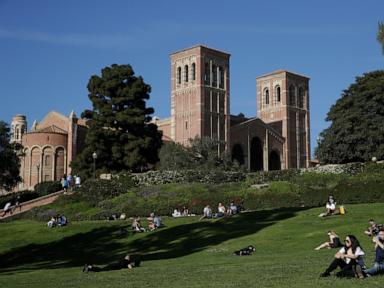
The fluorescent lights of the admissions office usually hum a steady, reassuring tune. For decades, that hum was the sound of a predictable machine. You filled out the forms, you calculated the financial aid, you weighed the standardized test scores, and you followed a dense, leather-bound playbook of federal regulations that hadn't fundamentally shifted in a generation.
Then the letters started arriving.
They did not arrive with a fanfare. They landed in digital inboxes and certified mail stacks, bearing the crisp, imposing letterhead of federal oversight. Across dozens of campuses, university presidents and compliance officers opened these documents to find their institutions suddenly under the microscope. The inquiries weren't standard audits. They were sharp, pointed interventions targeting everything from foreign funding transparency to campus free speech policies and the handling of civil rights complaints.
For the people sitting at those desks, the world tilted. Higher education, long accustomed to viewing itself as a self-governing ecosystem of intellect and tradition, suddenly faced an assertive, aggressive adversary in Washington. The initial wave felt like a series of isolated skirmishes. A university in the Midwest faced scrutiny over its ties to international research grants. An elite East Coast institution was pressed on its disciplinary procedures.
But these weren't isolated incidents. They were the opening salvos of a systematic campaign. Now, the dust from those initial battles is settling, revealing a stark new reality. The specific targets are no longer the main story. The true legacy of that aggressive oversight is a sweeping, fundamental rewrite of the rules governing every college and university in America. The invisible guardrails that dictate how billions of dollars flow, how campuses police themselves, and who gets access to higher education have been dismantled and rebuilt.
The Weight of the Pencil
To understand how a policy shift in Washington alters a life in Ohio or Oregon, consider a hypothetical student named Maya.
Maya is the first in her family to attend a four-year university. She doesn't read the Federal Register. She doesn't track the shifting directives of the Department of Education. Her relationship with the federal government is defined by a single, high-stakes document: her financial aid package.
When federal officials alter the compliance metrics for universities, the ripple effect travels down the bureaucracy until it lands squarely on Maya’s desk. If her university faces a sudden compliance investigation, resources shift. Money that used to fund late-night counseling services, tutoring centers, or streamlined financial aid advising is diverted. It goes to legal counsel. It goes to specialized compliance officers. It goes to building a defensive wall of paperwork.
Consider the sheer scale of the machinery. Higher education in the United States is a massive, multi-billion-dollar industry fueled by federal student loans and research grants. When the government decides to tighten the screws, it doesn't just change the law; it changes the institutional culture.
The administrators we talked to describe an atmosphere of profound anxiety. One veteran financial aid director, speaking on the condition of anonymity, described the shift as a transition from an educational mission to a defensive posture.
"We used to spend eighty percent of our time figuring out how to help students stay enrolled," they said. "Now, we spend eighty percent of our time proving to a distant auditor that we followed a checklist perfectly. The student becomes a secondary consideration to the paper trail."
This is the hidden cost of regulatory warfare. The public sees the headlines about high-profile investigations into elite universities. They see the political theater. What they miss is the quiet transformation of the regional public colleges, the community institutions, and the small liberal arts schools that lack the massive endowments required to weather a prolonged legal storm. For these schools, a single federal non-compliance finding is a catastrophic threat.
The New Architecture of Accountability
The strategy employed was brilliant in its bureaucratic execution. Rather than attempting to pass sweeping new legislation through a fractured Congress, officials used the existing leverage of the executive branch. They recognized that the federal government’s ultimate weapon is the purse string.
Every university depends on Title IV funding—the federal student aid program. By rewriting the administrative interpretations of these existing statutes, officials effectively changed the law without a single congressional vote.
Think of it as a structural renovation of an old house. The outer walls look exactly the same. The sign on the door hasn't changed. But inside, the load-bearing beams have been moved. The hallways have been narrowed. The people living inside have to change how they walk, how they talk, and where they can go just to avoid tripping the alarms.
This administrative restructuring focused heavily on several key areas:
- Foreign Influence and Funding: The enforcement of long-ignored reporting requirements for foreign gifts and contracts. This forced universities to scrutinize every international research partnership, chilling global academic collaboration.
- Civil Rights and Title IX: Radical shifts in how universities are required to investigate allegations of sexual misconduct and discrimination, creating a pendulum effect that leaves both victims and the accused in perpetual uncertainty.
- Accreditation Reform: Changing the rules for the independent bodies that accredit colleges, allowing the federal government more direct influence over what constitutes a valid educational program.
The result is a highly centralized system where Washington possesses unprecedented scrutiny over daily campus operations. The old norm of academic freedom—the idea that universities should be insulated from the political whims of the capital—has been replaced by a model of direct accountability.
The Illusion of the Ivory Tower
There is a temptation to view this clash as a purely partisan battle, a predictable chapter in the ongoing culture wars. That view is dangerously simplistic.
The reality is that the relationship between the state and the university has been fraying for a long time. For decades, higher education enjoyed a unique status in American life. It was viewed as an engine of upward mobility, a sanctuary for free inquiry, and a trusted arbiter of truth.
But that trust has eroded. Rising tuition costs, skyrocketing student debt, and a growing perception that universities are out of touch with the communities they serve have left higher education vulnerable. The aggressive oversight from federal officials didn't happen in a vacuum; it succeeded because the public's faith in the institution had already weakened.
When the government began investigating these institutions, it wasn't just policing technicalities. It was challenging the very concept of the university as an independent authority. By treating colleges like any other highly regulated industry—akin to banking or pharmaceuticals—the administration stripped away the mystique of the ivory tower.
This shift creates a profound dilemma for the future. When the rules of academia are rewritten by one administration, they can be rewritten again by the next. The guardrails are gone, replaced by a revolving door of regulatory mandates.
This leaves the entire system in a state of permanent instability. A university cannot plan a ten-year research initiative or design a new degree program when the fundamental legal requirements governing their operation might vanish with the next electoral cycle.
What Remains in the Classroom
Behind the policy papers, the legal briefs, and the partisan recriminations, there are the classrooms.
Imagine an adjunct professor of history preparing a syllabus for the upcoming semester. They are not a political activist. They are a scholar trying to teach nineteen-year-olds how to analyze historical texts. But they are acutely aware of the new environment. They know that an ill-phrased lecture or a controversial reading assignment could trigger a formal complaint under the newly tightened federal guidelines. They know their institution is terrified of an investigation.
So, they hesitate. They choose the safer text. They avoid the complicated, messy topic. They smooth down the sharp edges of history.
This is the ultimate, unquantifiable impact of the regulatory rewrite. It is not found in a court ruling or a compliance report. It is found in the quiet self-censorship of an instructor, in the cautious bureaucratic phrasing of a university policy, and in the subtle shift from an culture of open inquiry to a culture of risk mitigation.
The rules have indeed been rewritten. The machinery of higher education will continue to run, the forms will be filled out, and the federal funds will flow. But the spirit of the institution—the chaotic, brilliant, unpredictable friction of minds meeting without fear of a distant auditor—has been compromised. The ivy remains on the walls, but the structure beneath it has been permanently altered, and everyone inside is still learning how to breathe in the thinned air of the new regime.