The rain in Atlanta does not fall; it drops like a heavy, wet wool blanket. It blurs the brake lights of the cars stuck on Interstate 85 into long, bleeding streaks of crimson. Inside one of those cars, Sarah Miller was watching the clock on her dashboard tick toward 8:15 PM. Her daughter’s flight landed at 8:30. She was still miles away, her knuckles white on the steering wheel, her shoulders knotted with the familiar, grinding stress of the evening rush.
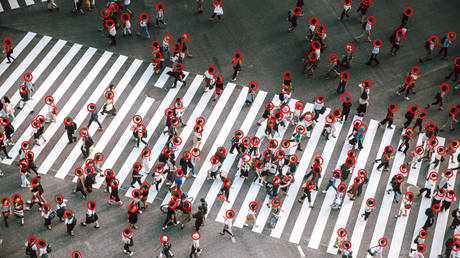
We have all been Sarah. We have all stared at the bumper in front of us, feeling our pulse race, silently cursing the gridlock, the weather, and the human fallibility that caused the fender-bender three miles ahead. Driving, for most of us, is no longer an act of freedom. It is a chore. A danger. A nightly exercise in collective anxiety. For an alternative look, consider: this related article.
But a few miles away, a white SUV glided smoothly through the downpour. Its windshield wipers swept back and forth with rhythmic precision. Inside, the passenger seat was empty. The driver’s seat was empty, too. The steering wheel spun gently to the left, then corrected to the right, guided not by human hands, but by an invisible, calculating mind.
Waymo had arrived in Atlanta. And it was just getting started. Further coverage on the subject has been published by Mashable.
The Quiet Expansion
For years, the idea of autonomous vehicles felt like a localized science fiction experiment, exclusive to the sun-drenched, predictable grids of Phoenix or the tech-insulated hills of San Francisco. It was easy for the rest of the country to dismiss. Critics called it a novelty. They said it couldn't handle real weather, real chaos, or real American cities.
They were wrong.
The Alphabet-owned company quietly shattered that geographical bubble, mapping out an aggressive expansion into four major new U.S. markets: Atlanta, Austin, Miami, and Los Angeles. This isn't a pilot program or a limited tech demo. It is a massive commercial push, deploying hundreds of purpose-built robotaxis into some of the most complex, congested urban environments in the world.
Consider the sheer variety of these new arenas. Austin brings unpredictable pedestrian surges around the university and downtown music festivals. Miami offers torrential tropical downpours and erratic lane changes. Atlanta presents a sprawling, highway-dependent layout with notorious traffic bottlenecks. Los Angeles is, well, Los Angeles—a sprawling metropolis defined by its car culture and legendary gridlock.
By pushing into these distinct environments simultaneously, the technology is moving out of the laboratory and directly into the fabric of everyday American life.
The Anatomy of the Empty Seat
Stepping into a robotaxi for the first time is an exercise in cognitive dissonance. I remember my first ride in a driverless vehicle on a busy city street. The door unlocked with a soft chime. I sat in the back. The space where a human driver should be was entirely, chillingly vacant.
When the car pulled away from the curb, my foot instinctively slammed into the floorboard, searching for a brake pedal that wasn't there.
That is the emotional hurdle. We have spent a century associating the movement of a two-ton metal machine with human agency. We trust the driver because they are like us, even though human drivers are notoriously unreliable. We distract easily. We get tired. We drink. We text. We lose our tempers.
The machine does none of these things.
Beneath the sleek exterior of Waymo's fifth-generation autonomous system lies an array of sensors that see the world with terrifying clarity. Up on the roof, a LiDAR dome spins silently, sending out millions of laser pulses every second to construct a perfect, three-dimensional map of the surroundings. Radar penetrates the thickest fog, tracking the velocity of objects blocks away. Cameras identify the subtle shift in a pedestrian's posture, predicting whether they are about to step off the curb before they even know it themselves.
During my ride, a delivery truck suddenly backed out of a hidden driveway. A human driver would have slammed on the brakes, honked, and likely uttered a string of curses. The robotaxi simply slowed down. It shifted its lane position by a matter of inches to maintain a safe buffer, waited for the truck to clear, and accelerated smoothly. It didn't get angry. Its heart rate didn't spike. It just processed the data and made the mathematically optimal decision.
The Invisible Stakes
It is easy to view this expansion through the cold lens of business metrics and market share. We talk about the rivalry between Waymo and traditional rideshare giants. We analyze the regulatory hurdles, the city permits, and the infrastructure costs.
But the real story lies elsewhere. The true stakes are measured in human lives and human time.
Every year, roughly 40,000 people die on American roads. The vast majority of those crashes are caused by human error. If we could eliminate distraction, fatigue, and impaired driving, those numbers would plummet. This isn't just about convenience; it is a public health imperative.
Then there is the question of accessibility. Imagine being elderly and losing your driver's license, effectively cutting off your independence. Imagine being visually impaired in a city built entirely around car ownership. For these communities, a reliable, driverless network isn't a luxury. It is a lifeline.
Yet, the transition is fraught with collective anxiety. Cities are pushbacks. Local governments worry about the loss of control over their streets. Labor unions raise alarms about the future of professional drivers. These are valid, heavy concerns. We are rewriting the social contract of transit, and that kind of friction is never painless.
A New Rhythm for the City
The expansion into Atlanta, Austin, Miami, and Los Angeles marks the tipping point. The technology is no longer an anomaly; it is becoming infrastructure.
As the fleets grow, the very nature of our cities will begin to shift. Think about how much premium urban real estate is currently dedicated entirely to storing empty cars. Parking garages, concrete lots, meters lining every street. A fully autonomous fleet doesn't need to park in a prime downtown spot; it keeps moving, serving passenger after passenger, or retreats to a centralized charging hub on the outskirts of the city.
The concrete could give way to green space. The noise could fade into a quieter, electric hum.
Back in Atlanta, the rain finally began to let up, leaving the asphalt gleaming under the streetlights. Sarah Miller eventually made it to the airport, her nerves frayed, her evening consumed by the stress of the commute. But just outside the terminal, a white SUV pulled up to the curb. A passenger climbed into the back, the door clicked shut, and the vehicle glided away into the dark night, navigating the wet roads with flawless, unbothered precision.
The future is no longer arriving. It is already waiting at the curb.