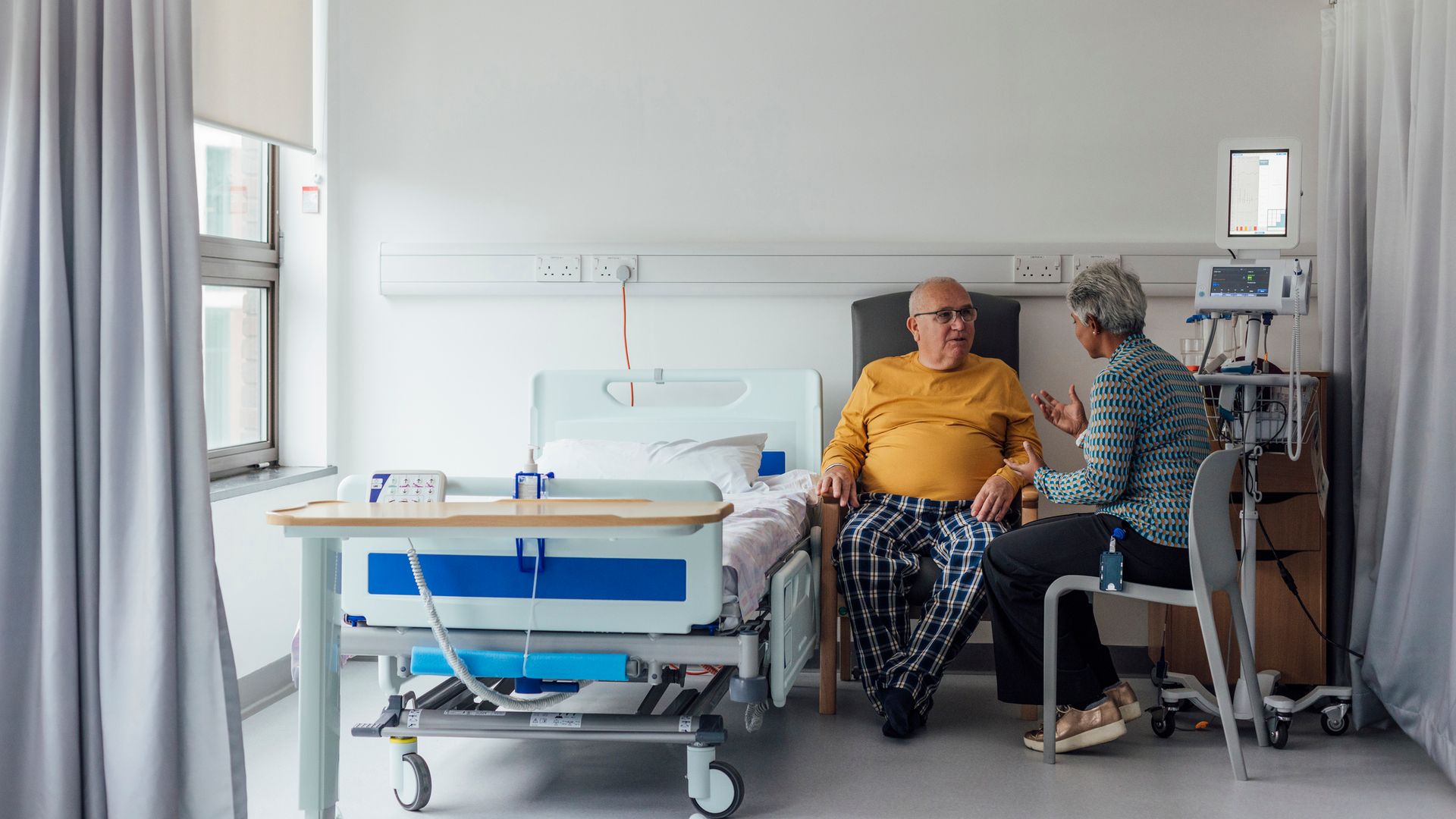
The NHS was built on a simple, beautiful promise. Free healthcare at the point of use, regardless of your ability to pay. It was meant to be the ultimate social equalizer.
But today, that promise is broken.
If you live in a deprived neighborhood in the UK, you will wait longer for vital surgery than someone living in an affluent suburb. It is a quiet, systemic injustice that gets buried under national statistics. We look at the headline figure of millions waiting for treatment, but we ignore who is suffering the most. The reality is stark. Your postcode dictates how long you live in pain.
The Brutal Reality of the Postcode Waiting Gap
Data from the Health Foundation and NHS England shows a persistent, widening gap in waiting times between the richest and poorest parts of the country. Patients from the most deprived areas are consistently overrepresented on long-term waiting lists.
They are waiting longer for orthopedic surgery, ophthalmology, and general surgery. This is not a minor inconvenience. We are talking about months of extra waiting time while living with debilitating pain, restricted mobility, or deteriorating vision.
Why does this happen?
It is not because doctors in poorer areas are lazy. It is the result of a compounding series of systemic failures that make navigating the NHS significantly harder if you do not have money.
First, consider the sheer volume of need. Decades of social inequality mean that people living in deprived areas suffer from poorer health overall. They are more likely to have multiple chronic conditions, often referred to as multimorbidity.
When a surgeon reviews a patient who needs a hip replacement but also has poorly managed diabetes, high blood pressure, and respiratory issues, the risk profile changes completely. The surgery cannot just be booked on a standard, high-volume pathway. It requires extra planning, pre-operative optimization, and sometimes intensive care backup.
All of this adds friction. It slows things down. A healthy 60-year-old in a wealthy county gets scheduled quickly. A complex 60-year-old in a deprived borough gets delayed while doctors try to stabilize their other conditions first.
The Private Healthcare Escape Hatch
The rise of the self-pay private healthcare market has quietly created a two-tier system by stealth.
When NHS waiting times ballooned, those who could afford it simply opted out. They paid out of pocket for a private consultation and private surgery. Every time a wealthy patient pays £15,000 for a private hip replacement, they leave the NHS waiting list.
This relieves a tiny bit of pressure on the local NHS trusts in affluent areas. Patients in those areas who cannot afford private care still benefit from a slightly shorter list.
In contrast, patients in deprived communities do not have this escape hatch. They cannot afford to self-pay. They do not have private health insurance through their jobs.
This leaves them entirely dependent on their local NHS trusts, which are already buckling under the weight of immense local demand. The queues in these areas remain desperately long because nobody can afford to pay their way out of them. It is a brutal sorting mechanism that leaves the poorest patients stranded at the back of the line.
Why GP Shortages Make Things Worse
You cannot get onto a hospital waiting list without a referral. That process starts at your local GP surgery, and that is where the inequality begins.
Deprived areas struggle to recruit and retain GPs. The workload is intense, the funding formulas do not sufficiently reward doctors for managing complex social and physical needs, and the burnout rate is high. As a result, GP-to-patient ratios are far worse in poorer areas.
Getting a GP appointment in a deprived neighborhood can feel like winning the lottery.
When you cannot get an appointment, your diagnosis is delayed. By the time you finally see a GP and get referred to a specialist, your condition has progressed. What could have been managed early has now become a complex, chronic issue. You enter the hospital waiting list later, sicker, and harder to treat.
The Administrative Trap
The administrative processes of the NHS are unconsciously designed for middle-class lives.
Consider the strict "did not attend" (DNA) policies. If you miss a hospital appointment, many trusts will automatically discharge you back to your GP. You have to start the whole referral process over again.
But why do patients in deprived areas miss appointments?
- Transport poverty: Public transport in poorer areas can be slow, unreliable, and expensive. If you have to take three buses to get to a regional hospital, a single delayed bus ruins your appointment.
- Employment insecurity: If you work on a zero-hours contract or get paid hourly, taking half a day off work to go to a hospital appointment means losing wages you cannot afford to lose. You might not have a boss who understands or accommodates medical appointments.
- Childcare and caregiving: Paying for childcare to attend a mid-morning outpatient appointment is a luxury many do not have.
The system treats a missed appointment as a lack of compliance. In reality, it is often a lack of resources. The result is the same: poorer patients are repeatedly pushed back to the starting line.
Taking Back Control of Your Care
If you are stuck in this system, you cannot wait for the government to fix these structural issues. You have to navigate the system actively.
Use Your Right to Choose
Many patients do not realize they have the legal right to choose which hospital trust they are referred to for elective care. If the waiting list at your local hospital is two years, you can ask your GP to refer you to a hospital in another area where the list is shorter.
Use the NHS My Planned Care platform to compare waiting times across different trusts before your GP submits your referral.
Push for a Clinical Review
If your condition deteriorates while you are waiting, do not just suffer in silence. Contact your GP or the consultant’s secretary.
Explain exactly how your worsening symptoms are affecting your daily life, your ability to work, or your mental health. Ask for a clinical review of your urgency. This can sometimes move you up the prioritization list.
Get Help from PALS
The Patient Advice and Liaison Service (PALS) is there to help you navigate hospital systems and resolve issues. If your appointments are being repeatedly cancelled, or if you feel you are being unfairly discharged from a list due to a missed appointment, get PALS involved. They can act as an advocate when you feel powerless against a massive bureaucracy.