When an Antarctic polar blast pushes raw ice straight up the eastern side of New Zealand, city streets transform overnight.
You wake up, look out the window, and see white. Not a light frost. Proper snow, sitting right at sea level. In Dunedin, the South Island's second-largest city, a fierce cold snap in August 2026 brought everything to a screeching halt. Schools closed. State highways shut down. Buses stopped running entirely.
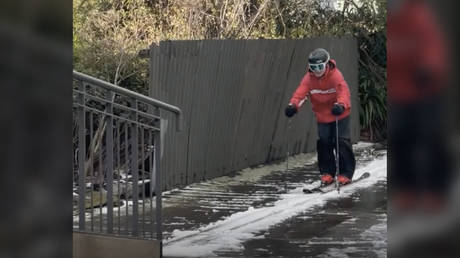
Yet, when nature throws a wrench into urban infrastructure, some people see an opportunity. Instead of staying indoors, daring locals grabbed their gear and hit the urban asphalt.
The Chaos Behind the Urban Slopes
Behind the viral videos of people skiing and snowboarding down city roads lies a genuinely severe weather event. MetService, New Zealand's official weather bureau, tracked an airmass that travelled directly off the Antarctic ice sheet rather than warming up over the ocean on its journey north.
That distinction matters. Direct polar paths bring biting, sub-zero temperatures that catch communities off guard.
By Tuesday morning, Dunedin was effectively cut off to the north. State Highway 1 closed between Pine Hill and Waitati. Other crucial routes like State Highway 87 and State Highway 85 shut down overnight. Police issued urgent warnings telling residents across the lower South Island to stay off the roads completely.
Vehicle crashes piled up quickly. Cars slid off icy asphalt on Moray Place, Smith Street, and High Street. A bus jackknifed at the Stuart Street intersection, bringing city-bound traffic from Kaikorai Valley Road to a total standstill. In one dramatic incident on Clyde Hill, a car slid over a bank and came to rest right against a house.
When Baldwin Street Becomes a Ski Run
Despite the travel warnings and closed schools, the local reaction was pure Kiwi pragmatism mixed with adrenaline.
Footage shared widely across local media and social platforms showed residents taking full advantage of the whiteout. Skiers and snowboarders carved lines down neighborhood hills. One daring individual even flew down Baldwin Street—officially recognized by Guinness World Records as the steepest residential street in the world.
Further north, the weather system spread its reach. Christchurch woke up to snow dusting the sand at New Brighton Beach. Even Wellington experienced a rare treat, seeing snow and sleet fall to sea level for the first time in 15 years. Office workers rushed to windows, staring in disbelief at the flurries outside.
Dealing With Direct Polar Outbreaks
Living through a sudden Antarctic blast requires more than just a good camera for social media. When temperatures plunge to minus nine degrees Celsius in parts of the South Island, basic survival and preparation take center stage.
If you live in regions prone to these rare weather drops, you need a practical checklist:
- Check regional forecasts daily: Monitor alerts from MetService and Waka Kotahi NZ Transport Agency before even thinking about driving.
- Drive to conditions: If you must travel, slow your speed drastically, increase your following distance, and expect major delays.
- Secure your property: High winds gusting up to 90 kilometers per hour can snap power lines and damage coastal structures.
The storm didn't last forever. Forecasters warned that the coldest mornings would peak later in the week, bringing the lowest temperatures of the year to multiple regions. But for a brief, chaotic moment, city streets belonged to the skiers. Pack your gear, watch the ice, and respect the cold.