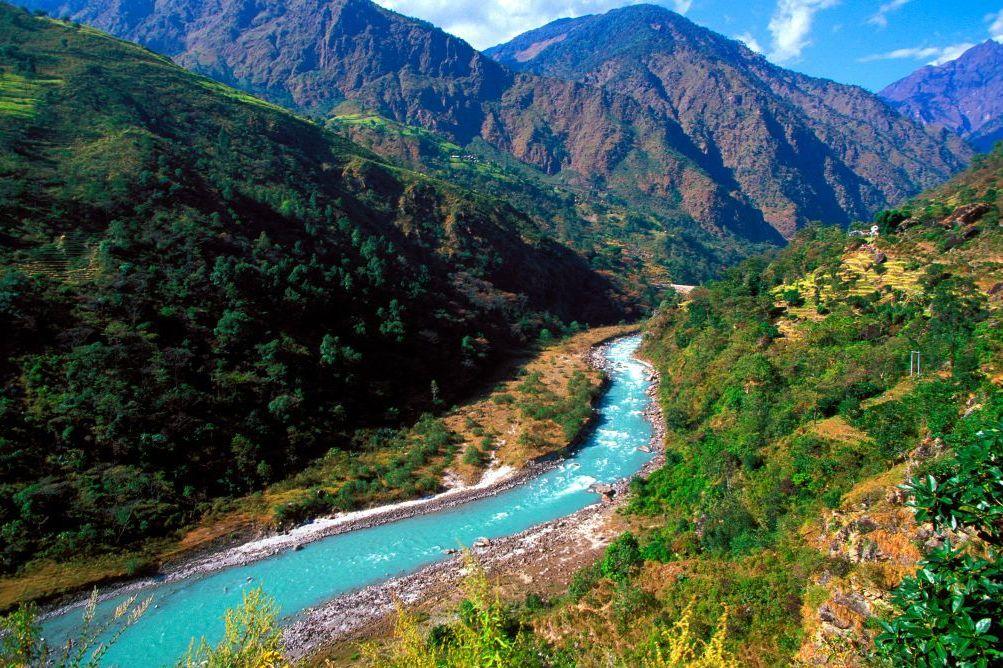
The official numbers arrive in sterile bureaucratic bursts. In the wake of catastrophic monsoon flash floods across Nepal, the death toll climbs past 1,252 while more than 4,200 individuals remain unaccounted for, buried under thick blankets of grey silt and obliterated infrastructure. Yet, reducing this catastrophe to weather metrics is a dangerous evasion. Monsoons are an annual certainty in the Himalayas, a predictable meteorological rhythm that has sustained agrarian life for millennia. What changed is not the sky, but the ground below it. Decades of unmitigated road expansion, unregulated hillside excavation, and hollow environmental oversight have transformed seasonal rains into mechanical executioners.
When hillsides are shaved down with heavy machinery to lay the groundwork for poorly planned rural roads—locally termed "dozer tracks"—the natural load-bearing architecture of the mountains collapses. Heavy precipitation does not merely drain down valleys; it triggers catastrophic debris flows that carry entire settlements away in minutes.
The Anatomy of Man-Made Catastrophe
Government reports consistently point toward climate anomalies as the primary driver behind these unprecedented casualty figures. Meteorologists record higher concentrations of rainfall over shorter temporal windows, a signature of planetary warming. However, seasoned observers on the ground point away from the clouds and toward the local government offices where political expediency routinely overrides geological reality.
Rural municipalities receive block grants for local infrastructure development, measured almost exclusively by the number of kilometers of road cut into hillsides. Local politicians hire excavator operators whose primary qualification is moving earth quickly, not safely. No geotechnical surveys are conducted. No retaining walls are engineered. Loose debris is simply pushed down the slope, resting at a precarious angle just waiting for the monsoon's trigger.
When the cloudbursts arrive, this loose spoil acts as a catalyst.
[Unregulated Excavation] -> [Loose Soil Accumulation] -> [Monsoon Cloudburst] -> [Catastrophic Debris Flow]
This mechanical sequence bypasses natural resistance. Entire villages situated on ancient alluvial fans—historically recognized as high-risk flood zones—have expanded rapidly due to population growth and economic migration. People build where land is cheap, and land is cheap where nature eventually reclaims its territory.
Economic Dislocation and the Missing Millions
Statistics abstract the human cost behind sterile aggregates. Over 4,200 missing people implies thousands of families suspended in bureaucratic limbo, unable to claim death certificates, access emergency relief funds, or settle ancestral land titles. In rural districts like Sindhupalchok and Manang, local economies have ground to a halt. Farable terraces are buried under boulders and gravel that will take generations to clear by hand.
The immediate humanitarian response relies on the Nepal Army and local volunteers wading through chest-high torrents with rudimentary tools. Heavy rescue equipment remains trapped in urban centers due to washed-out bridges on the primary arterial highways.
Why Relief Fails the Periphery
- Logistical Bottlenecks: Primary trade routes like the Prithvi and Araniko highways routinely fracture at multiple points, isolating mountain districts from air-dropped or truck-borne aid.
- Communication Blackouts: Power grids and cellular towers collapse simultaneously, leaving rescue coordinators blind to which communities require triage first.
- Bureaucratic Friction: Emergency fund disbursement requires multi-tiered authorization, delaying immediate cash transfers to displaced households living in makeshift tarpaulin camps.
International aid organizations arrive with grand pledges, but the structural vulnerability remains unaddressed. Tents and rice bags are temporary salves for a terminal wound. Until the central government enforces strict zoning laws and halts unscientific earth-moving practices in fragile mountain zones, every subsequent monsoon will reset the national trauma counter.
The Cost of Inaction
Accountability in the capital remains elusive. Planners hide behind the shield of natural disaster declarations, treating human error as acts of God. If the state continues to subsidize the destruction of its own watersheds, the casualty counts from future monsoons will dwarf current tallies. The mountains do not negotiate with political timelines, and the soil remembers every cut made without a plan.