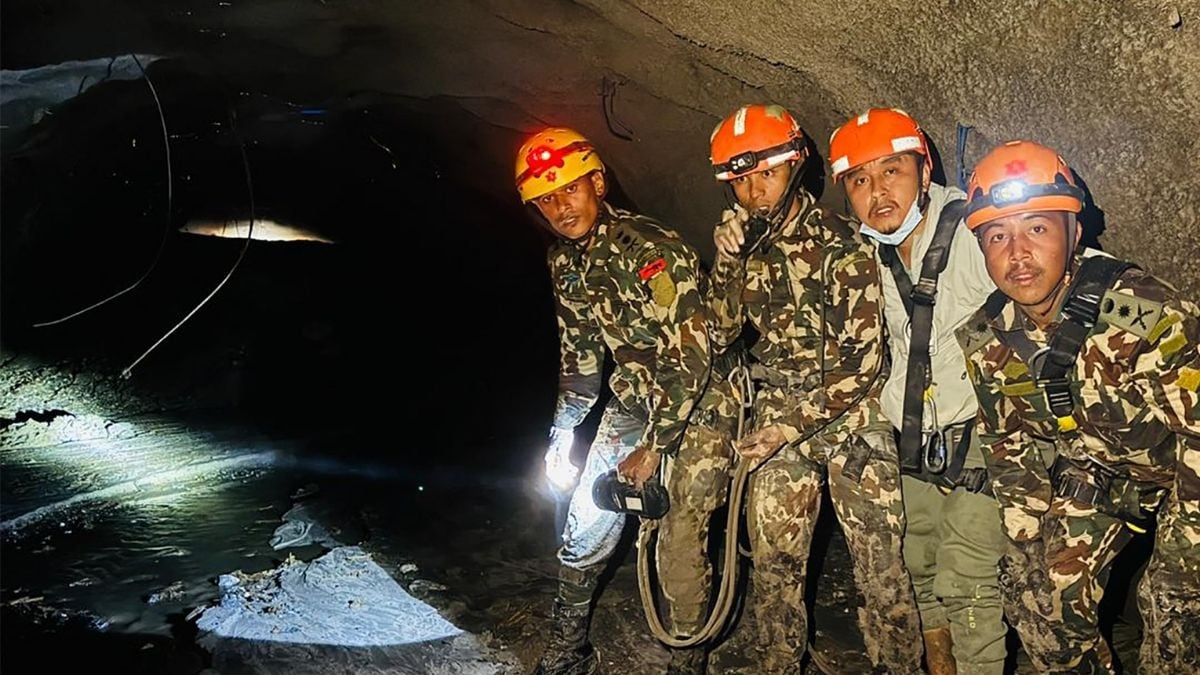
When flash floods sweep hundreds of people away, the horror doesn't stop when the water recedes. For families searching for missing loved ones in Nepal, the nightmare shifted from raging rivers to overcrowded hospital morgues and makeshift forest graves.
Catastrophic monsoons and landslides left hundreds dead and thousands missing. Rivers like the Trishuli and Narayani carried victims for miles downstream, depositing bloated, unrecognisable remains in the Chitwan district. With mortuaries completely overwhelmed and decomposition accelerating in the tropical heat, authorities faced an impossible choice: let bodies rot in the open or bury them temporarily while racing to save DNA records. Building on this topic, you can find more in: The Empty Chair at the Table Where No One Eats.
The Logistics of Mass Burials in Chitwan
You can't just dig a hole and toss bodies in, even during a crisis. Officials in Chitwan set up strict protocols along the forest clearings to ensure every single person could theoretically be found later.
Excavators carved deep trenches while workers took meticulous steps to protect local Sal trees. Every body recovered from riverbanks between Fisling and Triveni received a unique tracking sequence, such as BHF-01 or BHF-02. Workers attached indelible identification tags directly to remaining limbs, like a hand or foot, before placing the bodies in separate, individual plots. Experts at The New York Times have provided expertise on this trend.
It is a grim operational reality. To prevent lost graves, teams mapped the exact locations using GPS coordinates, recorded video and photographic evidence, and built concrete markers beside the plots rather than directly on top. The entire site was fenced off. It looks less like a traditional cemetery and more like a forensic grid designed for future exhumation.
Why DNA is the Only Last Resort
Identification visually was mostly impossible. Days spent submerged in rushing water meant faces and features were wiped away. Local forensic infrastructure simply wasn't built for a disaster of this magnitude.
Before any burial trench was sealed, medical workers extracted DNA samples from every unidentified victim. The National Disaster Risk Reduction and Management Authority established a pipeline where relatives of the thousands still missing can visit district hospitals to provide their own DNA.
If those biological markers match later, families retain the legal right to exhume the remains. According to officials following international International Committee of the Red Cross guidelines, these graves are temporary holding spots, not final resting places.
The Clash Between Public Health and Cultural Tradition
Not everyone agrees with how authorities handled the crisis. In Nepal, Hindu traditions demand immediate cremation on riverbanks surrounded by close family members. Burying bodies instead of burning them sparked intense public outcry and protests from grieving relatives.
Critics, including former prime ministers and families with missing kin, argued that the state moved far too fast. They claimed the government should have shipped in mobile cold-storage units or expanded emergency morgue spaces rather than bypassing centuries-old death rituals.
Officials defended the choice strictly through the lens of public sanitation and decomposing hazards. When twenty-one hospitals run out of freezer space and bodies line riverbanks, public health rules dictate immediate action.
If you are tracking a missing relative in the region, your immediate step is to visit your nearest district hospital to log your DNA profile so it can be cross-referenced against the Chitwan registry. Match confirmations will allow families to reclaim their dead and perform proper final rites.