The neon glow of Mong Kok never truly dims. It pulses. It vibrates against the pavement, reflecting off rain-slicked streets in hues of electric pink and toxic green. For many, this is the sensory backdrop of a weekend stroll. But for a teenager we will call Ka-ho, it is the lighting of a digital battlefield.
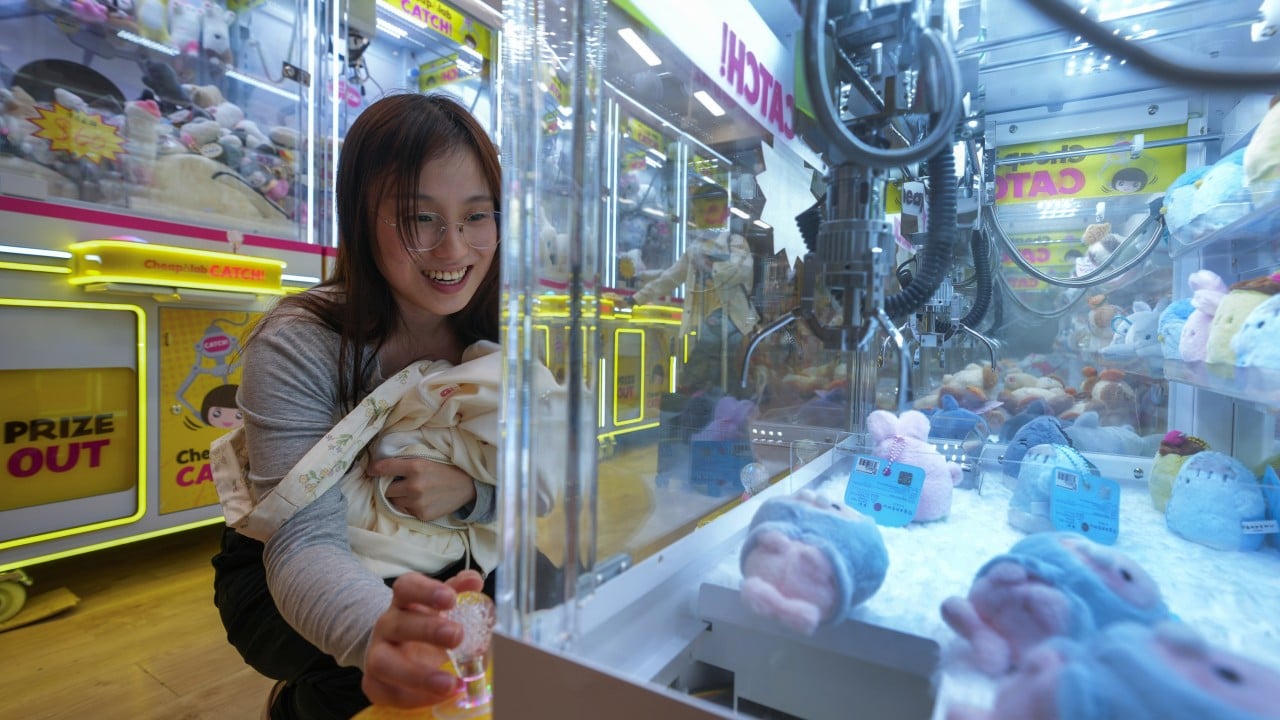
He stands before a glass box, his face illuminated by the flickering LED strips bordering a metal claw. Inside, a mountain of soft, oversized stuffed bears—licensed characters with wide, unblinking eyes—stare back. Ka-ho slides a coin into the slot. The machine chirps a jaunty, high-pitched melody. He maneuvers the joystick. Left. Right. A millimeter forward. He presses the button. The claw descends with a mechanical whir, grazes the velvet ear of a yellow duck, and snaps shut on empty air.
He frowns. He reaches for his wallet.
This isn't just a game of skill. It is a billion-dollar industry sitting at the intersection of entertainment, psychology, and unregulated gambling. As Hong Kong officials move to tighten the leash on these ubiquitous "crane machines," the city is forced to confront a difficult question: When does a childhood pastime become a predatory trap?
The Illusion of Control
The magnetism of the claw machine lies in a psychological quirk known as the "near-miss effect." When the claw touches the prize but fails to grip it, the brain doesn't register a loss. Instead, it registers a "nearly won." This triggers a surge of dopamine similar to what a gambler feels at a slot machine when two cherries line up and the third sits just a hair above the payline.
For the operator, the machine is a master of mathematics. Most people assume the strength of the claw is consistent. It isn't. Owners can program the "grab strength" to fluctuate. The claw might only exert full pressure once every fifteen, twenty, or thirty attempts. The rest of the time, it is designed to "limp-grip"—picking up the item just high enough to tease the player before dropping it.
Consider the financial reality hidden behind the glass. A plush toy might cost the operator twenty Hong Kong dollars. If the machine is set to pay out once every twenty-five tries at five dollars a pop, the machine generates one hundred and twenty-five dollars for a twenty-dollar investment.
The problem is that the player has no way of knowing the odds. In a regulated casino, the house edge is declared, or at least monitored. In the neon-lit aisles of a Hong Kong shopping mall, it is a black box. This lack of transparency is exactly what the Home and Youth Affairs Bureau is now targeting. By reclassifying these machines under stricter licensing, the government aims to bridge the gap between "amusement with prizes" and "illegal gambling."
The Neighborhood Arcade
Walk into any residential district like Sham Shui Po or Tsuen Wan, and you will see the explosion of "unmanned" arcades. These are small storefronts packed with machines but devoid of staff. They are open twenty-four hours a day.
These spaces have become the de facto community centers for the youth. But they lack the oversight of traditional arcades. Without a physical gatekeeper, children as young as seven or eight can spend their lunch money on machines that are essentially training wheels for a gambling addiction.
Let’s look at a hypothetical scenario involving a parent, Mrs. Wong. She sees her son spending an hour at the machines every afternoon. To her, it looks like harmless fun. He isn't at a betting shop. He isn't on a suspicious website. He’s just trying to win a toy. But the behavioral patterns being etched into his brain are identical to those of a heavy bettor. He is learning to chase losses. He is learning that if he just puts in one more coin, the machine will eventually "owe" him a win.
The proposed regulations would require these venues to obtain a Public Entertainment Precinct License. This isn't just about paperwork. It’s about forcing operators to adhere to safety standards, fire codes, and, most importantly, age-related restrictions.
The Fine Line Between Skill and Luck
The legal debate in Hong Kong hinges on the definition of a "game of chance." For decades, claw machines avoided the "gambling" label because they supposedly required skill. You have to aim the claw, right?
But when the mechanical grip is programmed to fail regardless of your aim, the element of skill vanishes. It becomes a lottery.
The government’s new stance suggests that if the outcome is predominantly determined by the machine's settings rather than the player's dexterity, it falls under the Gambling Ordinance. This shift is a massive blow to the "landlords" of these machines—often small-time investors who rent a single box in a larger shop.
They argue that these regulations will kill a vibrant, low-cost entrepreneurship model. They see themselves as providers of joy in a high-stress city. To them, the "hidden cost" is the loss of a local culture. But the counter-argument is stark: how much is a child’s healthy relationship with risk worth?
A City Built on Odds
Hong Kong has a complicated relationship with gambling. From the glitz of the horse racing tracks in Happy Valley to the mahjong parlors tucked away in old tenement buildings, the thrill of the wager is woven into the city’s DNA.
However, those forms of gambling are strictly controlled. You know when you are entering a space where money is at risk. The claw machine is different because it wears a mask. It uses the visual language of childhood—soft fur, bright colors, catchy tunes—to obscure a sophisticated predatory algorithm.
The proposed curbs are not just about limiting the number of machines. They are about deconstructing the "gamification" of addiction. By requiring licenses, the government can limit the locations of these machines, ensuring they aren't clustered near schools or in areas where vulnerable populations might be exploited.
The Cost of the Win
Back in Mong Kok, Ka-ho finally wins. On his fourteenth attempt, the claw holds. The yellow duck tumbles into the chute. He reaches in, grabs the prize, and holds it up. He spent seventy dollars on a toy that retails for fifteen.
He feels a rush of triumph. But as he walks away, he isn't looking at the toy. He is already looking at the next machine, the one with the blue dinosaur. The win didn't satisfy the urge; it validated the process.
The regulations may soon dim the lights on some of these arcades. They might make it harder for a teenager to spend his entire allowance in a single afternoon. Critics will call it the "nanny state" interfering with business. But for those watching the quiet rise of gambling behaviors in the next generation, the intervention feels less like interference and more like a long-overdue rescue.
The metal claw hangs still for a moment before the next coin drops. It swings, ready to descend again into the pile of unblinking eyes, waiting for someone else to believe that this time, they are the ones in control.