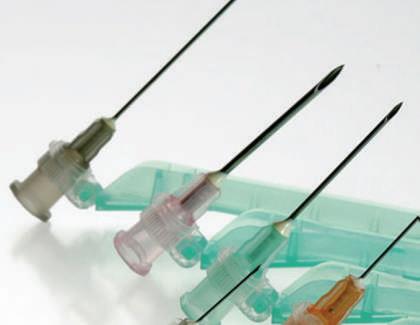
The plastic barrel of a syringe is designed to be transparent so a doctor can see the medicine clearly. It is also designed to be thrown away. In the public and private clinics of Sindh, Pakistan’s southern province, that second design feature has long been treated as an expensive suggestion rather than a medical law.
In a quiet village near Ratodero, a father named Tariq holds his three-year-old daughter, Sana. Her skin is warm—too warm. She has had a fever that refuses to break for three weeks. Her small body is leaning against his shoulder, limp as a wet cloth. Tariq does not know what a virus is. He does not know how the immune system works. What he knows is that when a child in Sindh is sick, you take them to the local clinic, and the doctor gives them an injection or attaches an intravenous drip. In this part of the world, a needle is synonymous with healing. If a doctor does not puncture the skin, the parents feel cheated. They believe the medicine has not truly entered the body.
This cultural demand for the needle met a catastrophic reality: a healthcare system where basic infection control had eroded to the point of collapse.
When Sana was finally tested at a makeshift government screening camp, the result came back positive for HIV. Tariq’s world shattered. He and his wife were immediately tested, certain they must have passed it to her. Both were negative. Sana was one of hundreds of children in her district diagnosed with a virus usually associated with adult behaviors.
This is not a story about a localized mistake. It is a story about how a healthcare system itself became the primary vector for a devastating, slow-motion pediatric epidemic.
The Illusion of Healing
To understand how hundreds of children end up with a life-altering chronic illness, one has to look at the economics of local medicine. In the rural parts of Sindh, formal, highly trained doctors are scarce. Instead, the market is filled by private practitioners, some licensed, many others unlicensed, operating out of tiny, storefront clinics.
To keep costs down and satisfy the high patient volume, shortcuts became standard practice. Imagine a single syringe. In a wealthy hospital, it is unwrapped from sterile plastic, used once, and discarded into a puncture-proof biohazard bin. In a cash-strapped clinic in Ratodero, that same syringe might be used on five, ten, or fifteen children in a row. The needle might be dipped in antiseptic, or perhaps just wiped with a piece of cotton, before being plunged into the next child’s arm.
The physical reality of a syringe makes this practice lethal. When the plunger of a syringe is depressed, a tiny amount of blood is drawn back into the nozzle of the needle by capillary action. If that needle is used again, even with a fresh dose of medicine, the microscopic droplets of blood from the previous patient are injected directly into the next child's bloodstream.
It is a perfect mechanical transmission system for blood-borne pathogens.
By the time the alarm was raised in 2019, more than nine hundred children in the Larkana district had tested positive. The World Health Organization declared it a Grade 2 Emergency. But the tragedy did not stop there. The virus did not respect geographical borders, and it did not stop when the cameras left. By late 2025 and into the first half of 2026, the crisis flared again, this time in the sprawling, industrial SITE Town area of Karachi, the province’s largest city.
The Tip of the Iceberg
At Karachi's Kulsum Bai Valika Hospital, a facility run by the Sindh Employees’ Social Security Institution, the story repeated itself with chilling familiarity. What began as a handful of unexplained fevers in late 2025 escalated into a full-scale screening drive. By mid-2026, at least 130 people—the vast majority of them children—had tested positive.
When the provincial government investigated, they found the same systemic failures. It wasn't always a direct reuse of syringes; the failures were systemic. Staff ignored infection prevention protocols. They handled
The Dust of Ratodero and the Children Who Stopped Playing
health, news
The heat in Sindh does not just sit on the skin. It weighs on the chest. In the spring of 2019, in the small, dust-choked city of Ratodero, Pakistan, the air was particularly heavy.
Kulsoom sat on a low wooden charpoy, watching her two-year-old son, Ali. He was shrinking. His collarbones stood out like small, fragile branches under his faded shirt. For weeks, a persistent fever had been burning through his tiny body. Every few days, Kulsoom would wrap him in her dupatta, walk through the suffocating heat to the local clinic, and wait.
Every visit ended the same way. The doctor would reach into a drawer, pull out a syringe, and plunge a cocktail of antibiotics into Ali’s thigh. The child would scream, the fever would retreat for a day or two, and then the cycle would begin again.
Kulsoom did not think to look at the plastic wrapper of the syringe. In Ratodero, you do not question the man with the stethoscope. Injections were medicine. Injections were cure.
Then came the day the fever refused to leave, and the local clinic ran out of answers. Kulsoom took Ali to a larger hospital in Larkana. There, a doctor ordered a blood test. When the results came back, the doctor did not look Kulsoom in the eye. He spoke a three-letter acronym that belonged to a different world, a world of distant cities and adult transgressions.
HIV.
Kulsoom did not know what it meant. She only knew, from the horror on the doctor’s face, that her baby had been handed a death sentence. And she was not alone.
The Day the Clinic Became a Ghost Town
What happened in Ratodero was not a slow burn. It was an explosion.
Within weeks of Ali’s diagnosis, hundreds of parents were lining up outside makeshift testing camps set up in the dust. The queues stretched down the unpaved streets, mothers clutching shivering infants, fathers holding crumpled medical receipts. The panic was infectious, spreading faster than any virus.
By the end of the year, more than one thousand people had tested positive. The most terrifying detail was the demographic. Over eighty percent of the infected were children under the age of twelve. Some were mere infants, barely old enough to walk, yet their blood carried a pathogen usually associated with intravenous drug use or unprotected sex.
To understand how this happened, you have to look past the biological virus and examine the systemic rot of a broken healthcare infrastructure.
The world media descended on Sindh. Journalists wrote about the "outbreak" with a sense of clinical detachment, listing statistics and quoting government officials who promised immediate action. But statistics do not capture the sound of a father crying behind a brick wall because he cannot afford the formula his infected wife is now forbidden to breastfeed her baby. They do not capture the sudden, eerie silence of a neighborhood where children no longer play outside because their playmates’ parents fear they are cursed.
The Economics of a Five-Cent Needle
The search for a culprit led directly to the door of a local pediatrician, Dr. Muzaffar Ghanghro. He was one of the cheapest doctors in town, charging just a few rupees per visit. To the impoverished laborers of Ratodero, he was a savior.
But Ghanghro’s low prices relied on a lethal economy of scale.
Imagine a single plastic syringe. It costs less than five cents to manufacture. Yet, in the hands of a practitioner desperate to keep overheads low, that five-cent piece of plastic became a permanent tool. Investigators found that Ghanghro, who was himself later diagnosed with HIV, routinely reused syringes. He would pull a needle from a drawer of used medical waste, dip it in a bowl of questionable water, and plunge it into the next child in line.
He denied doing it on purpose. He claimed he was being scapegoated. But the truth was far larger than one doctor.
Ghanghro was merely a symptom of a unregulated, feral medical market. In Pakistan, there are an estimated six hundred thousand unregistered, unqualified medical practitioners—commonly known as "quacks." They operate in the shadows of rural provinces, offering cheap, immediate relief to people who cannot afford the journey or the fees of a real hospital.
In these informal clinics, the syringe is king.
There is a profound cultural belief in rural Pakistan that an oral pill is weak, but an injection is powerful. Patients do not feel they have been properly treated unless they receive a shot or an intravenous drip. If a doctor refuses to give an injection, the patient simply goes to another clinic down the street.
The quacks gave the people what they wanted. They delivered thousands of injections a day, using a terrifyingly small pool of needles. The virus did not have to fight to survive. It was hand-delivered from vein to vein, day after day, year after year.
The Heavy Shadow of the Unspoken
In a deeply conservative society like Pakistan, HIV is not just a medical diagnosis. It is a social execution.
When the news of the outbreak broke, the stigma fell like a guillotine. Families who had lived next to each other for generations stopped speaking. Husbands accused their wives of infidelity. In some villages, infected children were forced to eat from separate plates, their schoolbooks burned, their very presence treated as an act of biological warfare.
Consider the reality of a mother who has just learned her toddler is positive. She cannot tell her mother-in-law. She cannot tell her neighbors. If she does, her husband might divorce her, leaving her destitute. She must nurse her sick child in absolute secrecy, hiding the antiretroviral pills in spice jars, praying the rattle of the plastic bottle does not betray her.
The government did establish a clinic in Larkana to distribute free antiretroviral drugs. But getting the drugs is only half the battle.
For a family living on less than two dollars a day, the cost of the bus ride to the clinic is a barrier. If they make the journey, they must face the stares of the ticket collectors, the whispers of the passengers who know exactly where that specific bus route ends.
Many parents simply stopped going. They watched their children fade, choosing the quiet certainty of death over the public humiliation of survival.
The Broken Promises of Tomorrow
Years have passed since the headlines faded. The international film crews have packed up their cameras and moved on to other crises. But in Ratodero, the dust has not settled.
The government promised to crack down on illegal clinics. They sealed hundreds of shops and arrested unlicensed practitioners. But look closely at those same streets today. The seals on the doors are broken. The clinics have reopened under different names. The demand for cheap, instant medical care has not changed, because the poverty that drives it remains untouched.
The children who survived the initial wave of the outbreak are growing up now. They are adolescents who must take a handful of bitter pills every single day, without truly understanding why. They are reaching the age of marriage, of career building, of adulthood, in a society that still views them as untouchable.
We often think of medical progress as a straight line, a march toward better technology and cleaner facilities. But Ratodero is a warning. It shows what happens when the tools of modern medicine—the miracle of the disposable syringe—are introduced into a system stripped of basic education and regulation.
The tragedy was not a failure of science. It was a failure of empathy.
The next time you walk into a clean, sterile doctor's office, look at the plastic wrapper of the syringe before it is opened. That tiny pop of tearing paper is the sound of safety. It is a sound that the children of Sindh never got to hear. And until the structural rot of rural healthcare is addressed, the needles will keep clicking against the glass vials, and the dust of Ratodero will continue to claim the innocent.