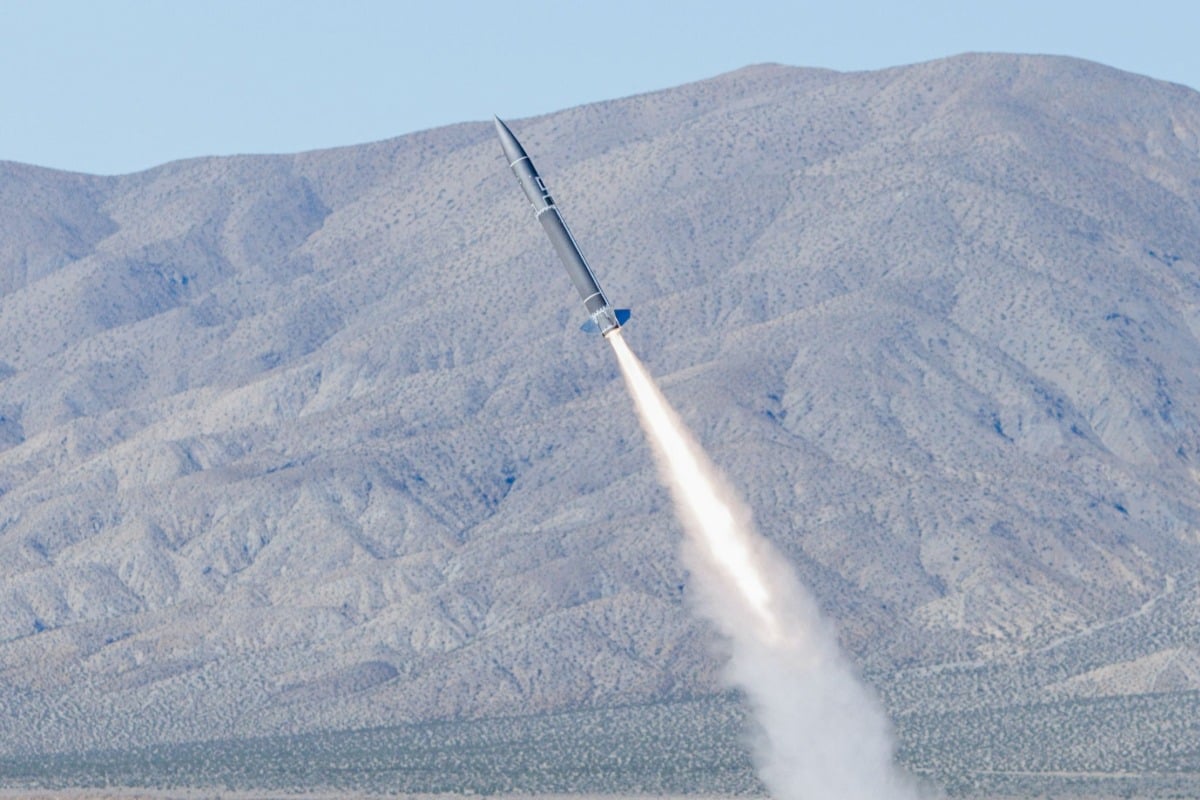
The Pentagon is chasing a ghost, and the defense tech press is happily playing stenographer.
Every headlines-driven analyst is currently swooning over the US Navy ordering 50 prototypes of its supposedly cheap new hypersonic weapon. The narrative is comforting. It tells us that Washington has finally figured out how to counter asymmetric threats without bankrupting the treasury. It promises a world where we can mass-produce mach-five missiles like we are churning out Honda Civics.
It is a lie.
The "lazy consensus" here is dangerous. It assumes that the primary barrier to hypersonic deployment is manufacturing scale, and that lowering the unit cost solves the strategic bottleneck. In reality, building a cheap hypersonic missile is an engineering oxymoron. When you try to force high-end aerothermodynamics into a low-cost budget, you do not get an affordable super-weapon. You get an expensive firework that fails the moment it hits the upper atmosphere.
We need to stop celebrating procurement press releases and start looking at the brutal physics of high-speed flight.
The Myth of Affordable Hypersonic Physics
Let us dismantle the core premise of the "cheap hypersonic" narrative. The media loves to talk about unit cost as if a missile is just a collection of machined aluminum and solid rocket propellant. It isn't. At Mach 5 and above, the atmosphere ceases to be air and starts acting like a brick wall made of plasma.
Imagine a scenario where an object travels through the air at 3,800 miles per hour. The friction alone generates temperatures exceeding 3,000 degrees Fahrenheit.
Standard aerospace materials like titanium or advanced aluminum alloys soften and deform under these conditions. To survive, a hypersonic weapon requires specialized carbon-carbon composites, ultra-high-temperature ceramics (UHTCs), and complex active cooling systems. None of these materials are cheap. None of them can be mass-produced in a standard commercial factory.
When defense contractors promise a low-cost hypersonic option, they are doing one of two things:
- Redefining "Hypersonic": They are often pitching high-supersonic weapons (Mach 3.5 to 4.5) that do not face the same extreme thermal barriers but lack the evasive capability of true hypersonics.
- Stripping the Guidance Systems: They cut costs by removing the expensive, hardened seeker heads. A hypersonic missile that cannot steer itself at extreme speeds is just a very fast, incredibly expensive unguided rocket.
I have spent years analyzing defense acquisition pipelines, watching program managers blow hundreds of millions of dollars trying to optimize components that are fundamentally un-optimizable. You cannot negotiate with thermodynamics.
The Logistics Chain That Does Not Exist
Even if a defense contractor manages to build a missile body for a fraction of the traditional cost, the weapon is useless without a specialized supply chain. This is where the "cheap" argument completely falls apart.
True hypersonic weapons rely on advanced scramjet engines or highly specialized solid rocket boosters. The global supply chain for high-grade ammonium perchlorate (the oxidizer used in solid rocket motors) is notoriously fragile and concentrated. The precision machining required for scramjet fuel injectors has zero tolerance for error.
[Traditional Missile Logistics] -> Scalable, mature components -> High volume
[Hypersonic Logistics] ----------> Exotic materials, single-source suppliers -> Severe bottleneck
If you order 50 prototypes of a cheap weapon, you are not proving scalability. You are merely buying 50 bespoke, hand-crafted tech demonstrators disguised as a production run. The moment you try to scale that order to 5,000 units to achieve actual strategic deterrence, you run headfirst into a wall of material shortages and specialized labor deficits.
Dismantling the People Also Ask Premise
If you look at public forums or congressional testimonies, the same naive questions pop up repeatedly. The premises of these questions are fundamentally broken, and they deserve honest deconstruction.
Can cheap hypersonics counter swarm tactics?
No. This question misunderstands the geometry of modern naval warfare. Hypersonic weapons are designed for high-value, time-critical targets—like an enemy aircraft carrier or a hardened land-based radar installation. Using a hypersonic missile, even a "cheap" one, to counter a swarm of low-cost maritime drones is an economic failure.
If an adversary launches a wave of $20,000 exploding speedboats, firing a $2 million "affordable" hypersonic missile at them means you lose the economic war of attrition by default.
Why can't the US just copy foreign low-cost missile designs?
Because the adversarial systems frequently cited in the press are not actually low-cost, nor are they truly hypersonic in the way Western military doctrine requires.
Many foreign systems are simply air-launched ballistic missiles. They achieve high speeds during their descent phase but follow a predictable, parabolic trajectory. A true hypersonic weapon must maintain maneuverability within the atmosphere. That maneuverability requires real-time computational processing inside a plasma sheath—a feat that demands multi-million-dollar sensor arrays, not budget electronics.
The Operational Reality: The Missing Sensor Architecture
A missile is only as good as the data feeding it. This is the glaring omission in every article celebrating the Navy's new prototype order.
To launch a hypersonic weapon at a moving target thousands of miles away, you need an unbroken chain of real-time target acquisition. This requires a dense constellation of low-Earth orbit (LEO) tracking satellites, advanced over-the-horizon radars, and survivable airborne sensor platforms.
- The Missile Cost: $2,000,000 (Optimistic estimate)
- The Targeting Architecture Cost: $15,000,000,000+
When you buy the "cheap" missile, you are buying the printer without buying the ink. The actual cost of making that missile effective is buried in classified space architecture budgets. Calling the weapon system cheap is an exercise in creative government accounting.
The Vulnerability of the Defensive Pivot
There is a distinct downside to pointing out these flaws: it plays into the hands of defeatists who argue the US should abandon hypersonic research altogether. That is not the solution.
The alternative to the "cheap hypersonic" delusion is not giving up; it is accepting that high-end deterrence is inherently expensive. We must stop trying to force square strategic pegs into round fiscal holes. If the United States needs a conventional prompt strike capability to deter peer adversaries, it must be willing to pay the premium for survivable, highly guided, exquisitely engineered systems.
Trying to build a budget version only results in a fleet of weapons that cannot survive the thermal stresses of combat, leaving naval commanders with a false sense of security and an empty arsenal when the shooting starts.
The Actionable Pivot for Naval Procurement
The Navy needs to cancel the pursuit of mass-market hypersonic novelties immediately. Instead, the procurement strategy should shift toward a stratified high-low mix that respects the laws of physics.
- Fund High-End Exquisiteness: Accept that true hypersonic weapons will cost upwards of $5 million to $10 million per unit. Buy them in limited quantities for high-value target interdiction where nothing else can survive.
- Maximize High-Supersonic Mass: Invest heavily in Mach 3 to Mach 4.5 ramjet technologies. These weapons can utilize existing aerospace manufacturing lines, use standard titanium alloys, and be produced by the thousands at a fraction of the cost.
- Fix the Industrial Base First: Direct the capital currently wasted on aspirational prototype contracts into subsidizing domestic solid rocket motor production and UHTC casting facilities.
Stop buying prototypes that look good in a PowerPoint deck to a congressional committee. Stop pretending that thermodynamics cares about your budget constraints. If a weapon system sounds too cheap to be true at Mach 5, it is because it isn't flying at Mach 5 when it matters.