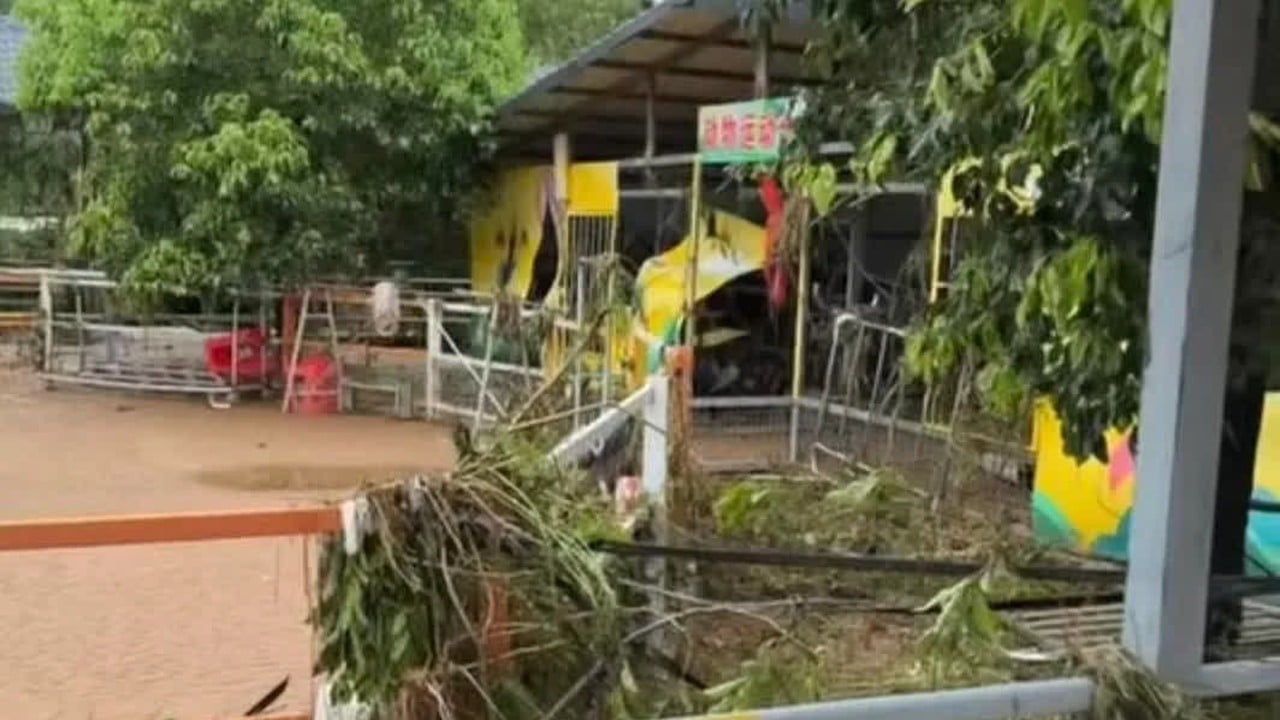
The media wants you to believe that a flooded zoo is a chaotic, apocalyptic death trap where apex predators drown and prey animals scatter in blind panic. When heavy rains hit southern China and submerging a regional wildlife park, headlines practically wrote themselves: "Lions dead, zebras on the run." It painting a picture of systemic failure and helpless beasts.
It is a gripping narrative. It is also completely wrong.
As someone who has spent two decades consulting on zoological disaster management and engineering captive habitats across Asia, I am exhausted by this lazy sensationalism. The mainstream press covers zoo flooding as if it is a sudden, unpredictable act of God that instantly breaks the spirit of wild animals.
Here is the inconvenient truth the clickbait articles ignore: animals are not helpless infants, and modern zoological architecture is a masterclass in hidden hydrology. The real tragedy in these scenarios is rarely a failure of engineering or animal instinct. It is a failure of public understanding.
The Myth of the Drowned Apex Predator
Let's dismantle the headline immediately. Lions do not simply sit in a puddle and wait to drown because the water rose a few feet.
Felids, including lions and tigers, are incredibly strong swimmers when forced into the water. More importantly, they possess an innate survival drive that forces them to seek the highest available ground long before a human keeper even checks the radar. When a zoo enclosure floods, big cats do not panic. They climb. They utilize the artificial rock kopjes, the heavy timber platforms, and the concrete night quarters specifically designed to sit above the 100-year flood line.
If an animal dies during a flash flood in a modern facility, it is almost never because they lacked a place to go. It is because of two specific, manageable human errors:
- Locked shifting gates: The animal was trapped in a low-lying holding pen because a keeper failed to execute an evacuation protocol.
- Sedation panic: Well-meaning staff attempted to tranquilize a stressed animal in standing water, causing it to lose consciousness and drown in a pool it could have easily waded through.
We need to stop blaming "devastating floodwaters" for what is inherently a failure of operational execution.
The Zebra Escaped Because the System Worked
Then we have the panicked accounts of zebras "on the run." The media frames an escaped exotic animal as the ultimate sign of a broken system. In reality, an animal breaking perimeter during a catastrophic weather event is often a sign that emergency safety valves operated exactly as intended.
When floodwaters compromise a primary barrier—like a moat or a glass viewing panel—the priority shifts from containment to survival. Good zoo design incorporates sacrificial barriers. These are fences designed to fail under specific hydraulic pressure to prevent water from backing up and drowning an entire sector.
[Primary Enclosure Moat]
       │ (Fills with floodwater)
       ▼
[Sacrificial Barrier Fails] ──► [Water Dissipates into Secondary Zone]
                                       │
                                       ▼
                       [Animal Moves to Higher External Ground]
When those barriers give way, animals do what any sensible organism does: they move away from the water. A zebra trotting down a flooded road in China is not a crisis; it is a temporary relocation. Herbivores are remarkably resilient to short-term displacement. They are built to run. The danger to the public is negligible because a zebra in a flood is entirely focused on finding dry footing and grass, not attacking bystanders.
The real danger is the frantic, uncoordinated recapture effort launched by panicked local authorities who treat a displaced herbivore like an active shooter.
The Lazy Consensus on Zoo Infrastructure
The average person looks at a zoo and sees cages. They see artificial trees and glass windows. They do not see the massive civil engineering project buried beneath their feet.
I have reviewed facility blueprints where municipal planners tried to cut corners by routing city stormwater bypasses directly adjacent to zoological parks. This is where the real culpability lies. When a city’s concrete infrastructure fails, it uses the local zoo as a retention basin.
Consider the mechanics of a standard paddock:
| Feature | Surface Purpose | Hydrological Reality |
|---|---|---|
| Moats | Visual barrier for guests | Secondary drainage channels with integrated sump pumps. |
| Topography | Aesthetic landscape | Graded slopes designed to shed water toward French drains. |
| Subgrade | Substrate for plants | Geo-textile membranes over structural gravel to maximize infiltration. |
When these systems are overwhelmed, it is not because the zoo was poorly built. It is because the surrounding municipality ballooned in size, replaced thousands of acres of natural soil with non-permeable concrete, and forced millions of gallons of excess runoff into the nearest low-lying green space—which happens to house the lions.
Stop Asking if Zoos Should Exist in Flood Zones
Whenever a story like this breaks, the internet floods with a predictable question: Why do we even keep animals in areas prone to natural disasters?
This is the wrong question entirely. It assumes that wild habitats are magical, static sanctuaries free from peril. The Serengeti floods. The rivers of India overflow regularly, drowning hundreds of wild rhinos and tigers in places like Kaziranga National Park every single year.
The alternative to a managed, engineered zoo environment during a flood is not a pristine paradise; it is a wild habitat where the animals have absolutely no backup plan, no medical team, and no post-disaster food supply.
Instead of asking if zoos should exist in these regions, we should be asking why city councils are allowed to approve massive commercial developments upstream from wildlife parks without forcing those developers to pay for the necessary stormwater upgrades.
The Uncomfortable Truth About Zoo Evacuations
If you want a real insider perspective, look at the brutal logistics of a mass animal evacuation. It is easy for an armchair critic to say, "They should have moved the animals before the storm hit."
Imagine a scenario where you have forty-eight hours to evacuate two hundred exotic species, many of which weigh over a ton and require specialized crate transport.
- You cannot put a giraffe in a standard box truck.
- You cannot load five adult male lions into the same trailer without them tearing each other apart.
- Chemical restraint (darting) carries a massive mortality risk under ideal conditions; doing it during a torrential downpour is a suicide mission for the animal.
An evacuation is often far more dangerous than letting the animals ride out the storm on elevated ground within their familiar territory. The choices made by zoo directors during a crisis are not between "safe" and "unsafe." They are choices between competing probabilities of death.
Remaining in place with a 5% risk of flood-related injury is infinitely better than initiating a chaotic evacuation with a 30% risk of stress-induced capture myopathy.
Fix the Grid, Not the Fences
If we want to protect captive wildlife from the realities of changing weather patterns, we need to stop obsessing over the animals themselves during a crisis and start focusing on the boring, unglamorous mechanics of industrial utility grids.
The single greatest threat to a zoo during a flood is not rising water. It is the loss of electrical power.
When the grid goes down, the life support systems go down. The water filtration loops for marine mammals stop circulating, causing toxic ammonia spikes within hours. The electric fences that keep top-tier predators segregated lose their bite, forcing staff to rely on physical locks that may be submerged or inaccessible. The automated pumps designed to clear low-lying paddocks turn into useless lumps of metal.
We do not need prettier exhibits or bigger moats. We need mandatory, elevated, industrial-grade backup generators that can run an entire park’s life-support infrastructure for two weeks without human intervention. We need dedicated floodwalls built around the utility sectors of these parks, not just the guest pathways.
The next time you see a sensational headline about animals fleeing a flooded zoo, look past the dramatic footage of a wet tiger or a wandering zebra. Look at the surrounding topography. Look at the concrete jungle encroaching on the park's borders. Stop blaming the keepers, stop blaming the animals, and start blaming the municipal engineers who treated a sanctuary like a storm drain.