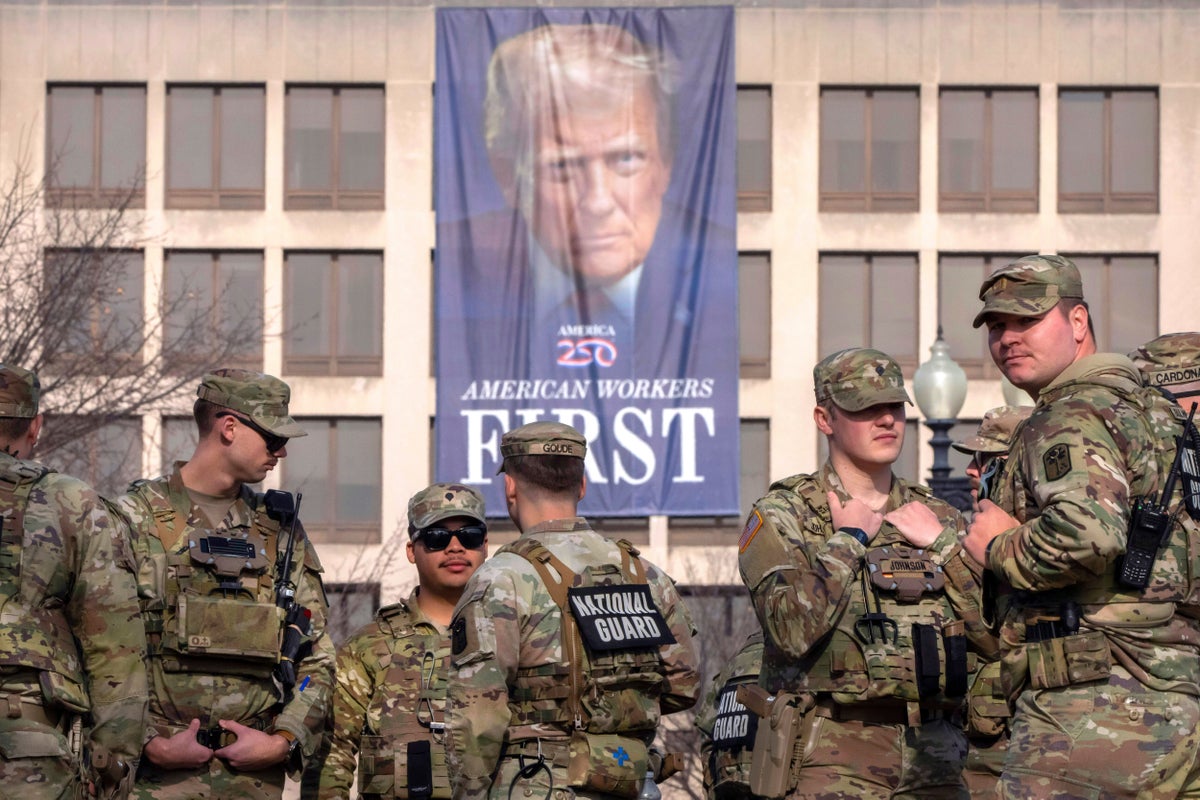
The narrative writes itself. Turn on any cable news broadcast or open any legacy paper, and you are fed a single, unchallenged line: Washington DC under an extended National Guard presence is a demoralizing police state suffocating the soul of the nation's capital. Residents are crying foul. Activists are staging protests. The consensus is smooth, predictable, and completely divorced from the economic reality on the ground.
I have watched commentators who have never run a payroll in the District weep over imaginary civil liberties violations while completely ignoring the actual bleeding happening behind closed storefronts.
Let us strip away the high-minded rhetoric and look at what is actually keeping the lights on.
The Lazy Consensus Of Urban Policing
The lazy argument is simple. Uniforms equal oppression. Armed personnel equal fear. Therefore, the presence of the National Guard in DC translates directly to a plummeting quality of life.
It sounds noble. It plays well on social media. But it ignores the fundamental prerequisite of any civil society or functioning economy: physical security.
You cannot have a thriving community when property crime and retail theft treat local businesses like open-source supply chains. Before the federal intervention, independent shop owners in neighborhoods like Chinatown, U Street, and Adams Morgan were locking their doors at four in the afternoon. Insurance premiums had spiked to extortionate rates. Foot traffic was evaporating because patrons simply did not feel safe walking down blocks plagued by open lawlessness and chaotic street disorder.
When safety vanishes, commerce dies. And when commerce dies, the workers, the immigrants, the local entrepreneurs, and the neighborhood economies take the hit while wealthy pundits pontificate from safe distances about theoretical authoritarianism.
The Economic Reality Check
Let us look at the numbers the narrative makers conveniently forget.
Retail shrinkage, smash-and-grabs, and property vandalism cost DC businesses tens of millions of dollars annually over the past few years. For a massive corporate chain, a five-thousand-dollar inventory wipeout is a rounding error. For a family-owned restaurant or a boutique clothing store operating on razor-thin margins, it is a death sentence.
I have spoken with merchants who were one broken window away from bankruptcy. They were not crying about a police state. They were crying because their windows were smashed three weekends in a row with zero recourse from an overstretched municipal police force.
When the Guard rolled in, something remarkable happened. The chaos recedded. Vandalism dropped. Shoppers returned. The extended presence is not an occupation; it is a stabilization mechanism for an economy that was bleeding out from administrative neglect.
Security is the ultimate social program. Without it, every other right you claim to protect becomes meaningless.
The Nuance The Critics Miss
Critics love to frame this as an issue of militarization versus civil freedom. That is a false dichotomy designed to generate outrage clicks.
The real issue is state capacity. When local governance fails to maintain basic public order, higher levels of government must step in to prevent systemic collapse. Call it whatever buzzword you want, but reliable security provides predictability. Predictability allows business owners to invest, hire, and plan for the next quarter instead of boarding up their glass windows with plywood every Friday night.
Does the presence of armed service members look jarring to people accustomed to idyllic suburban life? Sure. But Washington DC is not a sleepy college town. It is the seat of global power, a dense urban center, and a target-rich environment that requires a baseline of stability that local authorities, frankly, failed to guarantee.
The Uncomfortable Trade-Off
Let us be completely transparent about the downside, because an honest argument demands it.
No one wants armed guards on street corners permanently. It alters the aesthetic of a city. It creates a psychological tension, and for marginalized communities carrying historical baggage regarding law enforcement, seeing military fatigues can trigger valid anxieties. That friction is real, and it hurts.
- The Aesthetic Cost: Urban vibrancy takes a hit when streets feel militarized.
- The Psychological Toll: Constant vigilance wears down community trust.
- The Precedent: Relying on federal troops highlights systemic failures in municipal governance.
These are legitimate grievances. But they must be weighed against the alternative: a hollowed-out downtown core where businesses abandon the city entirely, leaving behind unemployed workers, decaying neighborhoods, and a fiscal death spiral.
You cannot protect a community's rights by letting its economic foundation burn to the ground.
Stop Asking The Wrong Question
The media keeps asking: "How do we remove the troops to restore our civil liberties?"
That is the wrong question.
The question you should be asking is: "How do we rebuild municipal competence so that small businesses never have to rely on federal intervention to stay safe?"
Until local leadership proves it can protect property, enforce laws, and maintain order without ideological interference, the National Guard isn't the problem. It is the only thing keeping the city from eating itself alive.
Stop mourning a fictional utopia and start looking at the balance sheet.