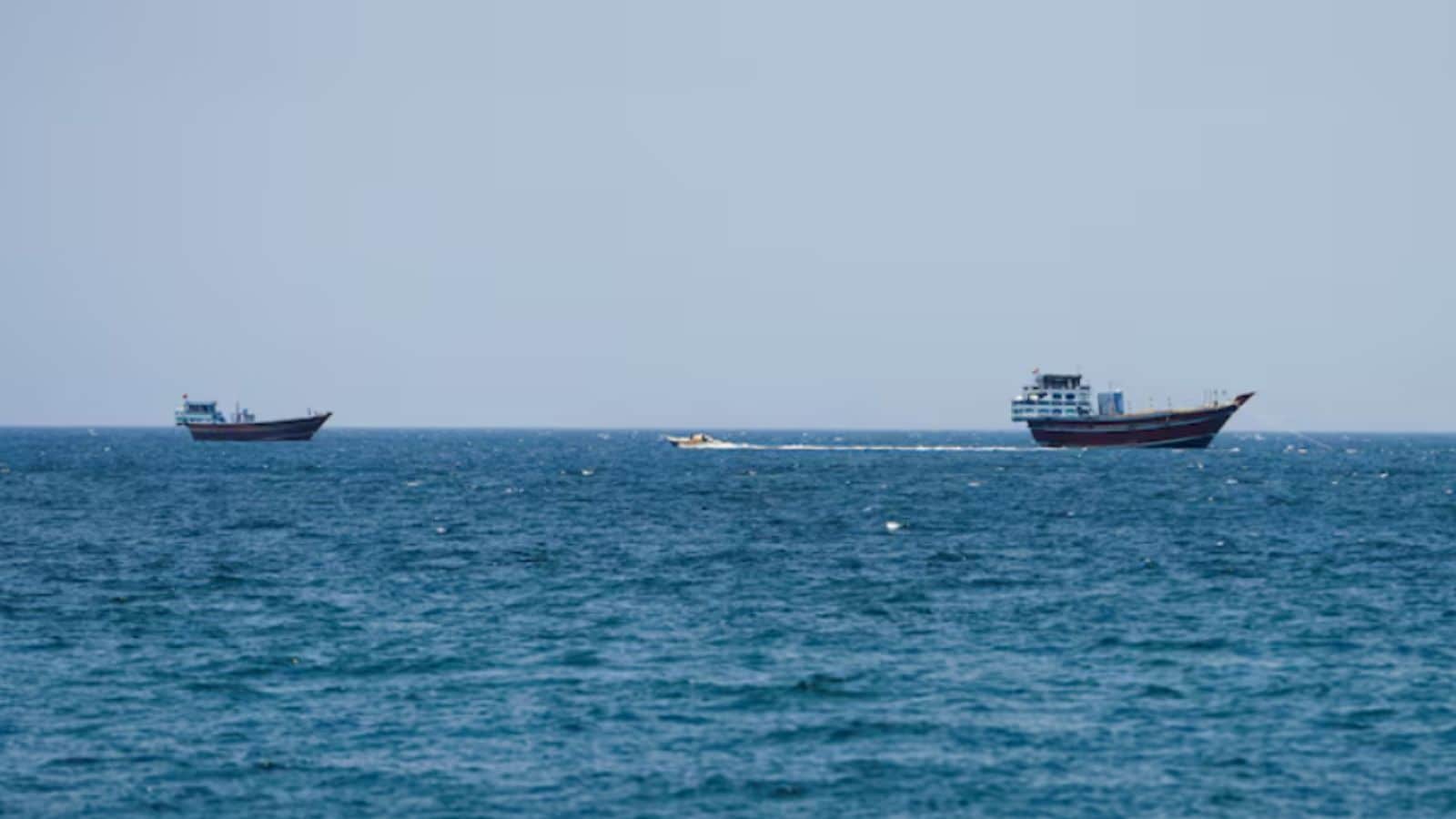
The coffee in the bridge of a modern supertanker goes cold a long time before the vessel ever clears the bottleneck. Out on the water, the horizon is a brassy glare, sliced by the gray silhouettes of warships and the constant, nervous chatter of VHF radios.
For months, the sea lane that carries roughly one-fifth of the planet's oil and liquefied natural gas has felt less like a commercial highway and more like a tripwire. Captains stare at their radar screens watching for shadows that do not belong. They listen to static-filled warnings echoing across the Persian Gulf.
Everyone down here knows the geometry of the crisis. On the northern shore sits Iran, its coast curving around the deep-water channels. On the southern shore lies Oman, watching quietly from the opposite side. Between them lies the Strait of Hormuz, a narrow throat of blue water just twenty-one miles wide at its absolute tightest point.
When the bombs began falling earlier this year, first in late February and then in a relentless renewed campaign this month, that narrow throat squeezed shut. To understand the panic in global energy markets, you do not need an economics degree. You only need to stand on the wing of a bridge and realize that a single closed channel can starve power plants across continents.
Washington wanted a return to the old days. Before the war, ships slipped through these waters unmolested, paying nothing, acknowledging no authority save international maritime law. But war shreds old arrangements beyond recognition. After American and Israeli strikes hit Iranian targets, Tehran responded by slamming the door shut on foreign vessels, permitting only its own ships to move through the gloom. A tentative deal last month flickered briefly to life, only to shatter in early July when gunfire cracked across an unapproved shipping lane.
Force had failed to clear the bottleneck. Bombing campaigns were paused over the weekend after commanders realized air power alone could not permanently pry open a maritime choke point guarded by geography and grievance.
So the diplomats went to work in the quiet rooms of Muscat and Riyadh.
A compromise has now taken shape, born out of exhaustion and the desperate need to keep the global economy from flatlining. According to regional sources, Oman has won crucial backing from neighboring Gulf states for a diplomatic off-ramp.
The proposal is subtle, perhaps radical enough to work. Instead of granting Iran sole, unbridled control over the strait—a nightmare scenario for Western capitals—or demanding a return to a pre-war status quo that no longer exists, the plan introduces the concept of shared supervision and voluntary contributions.
Under the Omani framework, Iran would help manage the waterway alongside Oman, which controls the opposite shore. More critically, Tehran would be allowed to collect voluntary service fees from ships passing through.
Think of it as a tollbooth on an ocean highway where the currency is not just money, but a face-saving acknowledgment of sovereignty.
Washington has long argued that mandatory fees would violate international law, maintaining that free transit is non-negotiable. But the Omani blueprint sidesteps that legal tripwire by making the payments voluntary. It mirrors a system already operating thousands of miles away in Asia. In the Strait of Malacca, nations like Indonesia, Malaysia, and Singapore ask passing commercial ships to make voluntary contributions to fund critical navigation services, environmental protection, and search-and-rescue operations.
It is a functional fiction, but functional is precisely what the world economy requires right now.
Iranian Foreign Minister Abbas Araqchi carried these discussions forward in meetings with his Omani and Saudi counterparts, emphasizing a sudden, pragmatic hunger for regional cooperation. Yet the diplomatic tightrope remains agonizingly thin. President Trump noted that talks were moving forward, yet warned that American air strikes could instantly restart if negotiations stalled. Meanwhile, Iranian officials deny that new talks are even underway, highlighting the profound distrust poisoning every layer of the process.
The stakes could not be higher. Four American service members are already dead, victims of retaliatory strikes on regional bases. Civilian infrastructure across the Gulf has tasted the smoke of war.
For the crew on that supertanker waiting out in the gulf, the abstractions of diplomacy boil down to a simple question. Will the red light on the navigation panel turn green?
If the Omani plan holds, ships may soon begin paying a modest, voluntary tribute to the nation on the northern cliffs, purchasing safe passage with small increments of cash rather than the threat of total annihilation. It is messy. It is humbling to the superpower that once guaranteed the old rules. But out here on the water, survival has a way of stripping away pride long before the anchors ever drop.