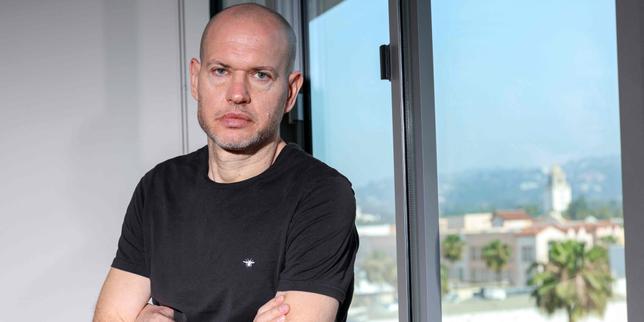
Cultural critics love a good victimization narrative. When filmmaker Nadav Lapid faced a wall of institutional fury after calling a state-sponsored film "vulgar" and "propaganda," the intellectual elite rushed to their desks to pen the same tired essay. They lamented the "inacceptable assignation identitaire"—the unacceptable identity assignment. They argued that forcing a creator into the box of their nationality or demanding they act as a geopolitical diplomat is a modern tragedy.
They are missing the entire point.
The lazy consensus states that Lapid is a victim of a system trying to reduce his complex artistic vision to a simple national label. The reality is far more brutal, and far more interesting. Lapid isn't trapped by identity mechanics. He is actively utilizing them. The outrage machine surrounding his critiques isn't stifling art; it is the very engine that gives his art global currency.
To view the friction between a dissident artist and a nationalist state as a tragic misunderstanding of identity is naive. It is a highly calculated, deeply symbiotic dance.
The Myth of the Universal Artist
The standard defense of directors like Lapid relies on the romantic notion of the "universal creator." This is the belief that an artist exists in a vacuum of pure human emotion, completely detached from the passport they hold. It is a comforting lie told by film festival juries to make themselves feel progressive.
Let's look at the mechanics of international cinema. A filmmaker from a geopolitical hotspot does not get invited to Cannes, Berlin, or Venice despite their contentious relationship with their homeland. They get invited because of it.
When Lapid criticizes the cultural policies of his home country, he isn't fighting against identity assignment. He is lean-manufacturing a specific brand of currency that the Western cultural apparatus craves. The European festival circuit runs on a predictable deficit: it needs to consume localized political trauma to justify its own institutional relevance.
If you strip the national friction away from works like Synonyms or Ahed's Knee, you don't get a purified, universal masterpiece. You get an empty shell. The state's aggressive insistence on a singular national identity is the exact anvil against which the artist hammers out their career.
The Propaganda Paradox
Consider the standard critique leveled against state-backed cultural institutions: they demand loyalty, censor dissent, and weaponize funding to build a sanitized national brand.
Here is the truth nobody admits: artists need censorship mechanisms to remain sharp.
When a state becomes entirely permissive, art becomes soft, self-indulgent, and boring. The friction between Lapid and the political establishments he angers creates a high-stakes environment where every frame matters.
| The Romantic View | The Industry Reality |
|---|---|
| State funding should be unconditional and free of ideological strings. | State funding is always a transaction of soft power; pretending otherwise is professional negligence. |
| Criticism of the state is an act of pure, selfless heroism. | Criticism of the state is the most effective marketing strategy for the global art-house market. |
| Identity assignments limit the scope of an artist's work. | Identity assignments provide the specific context that makes global audiences care. |
I have watched independent producers spend years trying to secure funding for vague, universal human dramas that go absolutely nowhere. Meanwhile, the filmmaker who leans directly into the buzzsaw of their local political reality secures co-production money from France, Germany, and three different cultural funds before the first draft is even finished.
The outcry over "identity assignment" is a distraction from the real economic engine of global cinema.
Dismantling the PAA Fallacies
Whenever a creator clashes with an institutional body, public discourse defaults to a set of fundamentally flawed premises. Let's dismantle them one by one.
Does state censorship destroy artistic freedom?
No. It changes the language of the art. Some of the most visually inventive, narratively complex cinema in history emerged from strict censorship regimes—think of Soviet montage or Iranian New Wave cinema. When you cannot state a premise directly, you are forced to invent a new visual vocabulary. The total absence of boundaries yields the bloated, algorithmically driven content that clogs modern streaming platforms. Boundary enforcement breeds subversion.
Should artists refuse state funding if they disagree with state policy?
This question assumes a moral purity that does not exist in media economics. All capital is dirty. Taking money from a state entity and using it to critique that very entity isn't hypocritical; it is the ultimate subversion of state resources. The artist isn't selling out; they are executing a reverse takeover of the state's marketing budget.
The Danger of the Post-Identity Illusion
The critics who cry foul over Lapid being locked into an identity box are advocating for a dangerous alternative: a homogenized, post-identity landscape where regional specificities are smoothed over for global consumption.
If we accept the premise that assigning an identity to an artist is inherently toxic, we strip art of its texture. The anger, the visceral discomfort, and the heavy, claustrophobic weight of belonging to a specific place are the exact elements that prevent cinema from degenerating into wallpaper.
The downside of this contrarian reality is obvious: it requires the artist to live in a state of perpetual exile, whether literal or psychological. It is a exhausting, high-wire act that often alienates the creator from the very audience they grew up with. But let's stop pretending it's an unfair trap sprung by the state. It is a choice.
Stop looking for a world where artists are free from the burdens of their origin. That world produces nothing but generic content designed to offend no one and please no one. The trap isn't that the state assigns an identity to the creator. The trap is believing that the creator can survive without it.