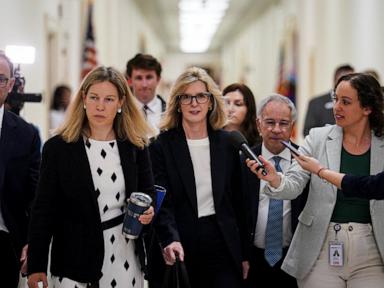
When the former top lawyer for Goldman Sachs stood before congressional investigators and dismissed Jeffrey Epstein as a "masterful liar," he was not just defending his own record. He was deploying the ultimate defense mechanism of the financial elite.
Gregory Palm, the longtime co-general counsel of Goldman Sachs who spent decades shielding the investment bank from existential legal threats, recently told a House probe that Epstein’s deceptive abilities were so profound that they blinded some of the sharpest minds on Wall Street. It is a comforting narrative. It suggests that the multi-million-dollar transactions, the private jet flights, the tax advisory schemes, and the social entanglements were the result of a singular, hypnotic con man who managed to outsmart the world’s most sophisticated compliance systems.
But this defense falls apart under the slightest scrutiny. Wall Street does not get duped.
The financial sector spends billions of dollars annually on forensic accounting, background checks, and due diligence. They investigate the genealogies of foreign oligarchs and verify the supply chains of obscure mining conglomerates before committing a single dollar. To suggest that these same institutions were helpless victims of a smooth-talking college dropout is an insult to the intelligence of the public, and more importantly, to the very compliance officers paid to protect these firms.
The reality is far more transactional. Jeffrey Epstein was not a magician. He was an access merchant who operated with the tacit approval of an industry that chose to look the other way because the revenue was too lucrative to ignore.
The Anatomy of a Convenient Blind Spot
To understand how Gregory Palm and his contemporaries could claim ignorance, one must look at how elite legal defense operates. Palm served as Goldman’s general counsel from 1992 until his retirement in 2018. During his tenure, he oversaw the legal fallout of the 1990s tech bubble, the 2008 financial crisis, and the early stages of the 1 Malaysia Development Berhad scandal. He is, by any definition, a master of corporate survival.
When Palm testified before congressional investigators regarding his interactions with Epstein, his defense relied on a carefully constructed premise. He argued that Epstein presented himself as a highly sophisticated financial adviser and tax strategist, hiding his predatory nature behind a shield of high-society connections and philanthropy.
This argument is designed to shift the focus from systemic negligence to individual villainy. If Epstein is a genius of deception, then the executives who associated with him are merely human, prone to the same vulnerabilities as anyone else.
But this argument ignores a crucial timeline. By 2008, Epstein’s status as a registered sex offender was a matter of public record. He had pleaded guilty in Florida to soliciting prostitution from a minor. Any basic Google search by a junior compliance analyst would have flagged his name in red ink.
Yet, for years after his conviction, Epstein continued to move in the same circles as the leaders of Goldman Sachs, Apollo Global Management, and JPMorgan Chase. He did not hide his past. He simply relied on the fact that on Wall Street, money washes away reputational stains.
The Compliance Theater that Protects the Elite
Every major financial institution boasts a compliance department designed to prevent money laundering, fraud, and reputational damage. These departments use sophisticated software to flag suspicious transactions and politically exposed persons.
Why did these systems fail so spectacularly when it came to Epstein?
The answer lies in the distinction between formal compliance and actual accountability. In theory, compliance is about risk management. In practice, it is often about liability management.
- The Client Onboarding Loophole: Wealthy individuals are often brought into banks through private wealth management divisions. These high-net-worth clients are subject to different standards of scrutiny than average depositors. Their accounts are managed by relationship managers whose compensation is directly tied to the assets under management.
- The Power of Executive Intervention: When a senior executive or a board member introduces a client, compliance officers face immense pressure to approve the account. To deny service to a friend of the CEO is a career-ending move for a mid-level analyst.
- The Redefinition of Risk: For these institutions, the primary risk was never the moral hazard of associating with a predator. The risk was getting caught. As long as the relationship remained out of the headlines, the risk was deemed acceptable.
When Palm and other executives claim they were deceived, they are conflating their awareness of Epstein's criminal activities with their awareness of his character. They knew who he was. They knew what he had done in Florida. What they did not foresee was that the public tolerance for this complicity would eventually expire.
The Tax Loophole Pipeline and the Apollo Connection
The congressional inquiry into Epstein's financial network has consistently returned to his relationships with major private equity founders, most notably Leon Black of Apollo Global Management. Gregory Palm’s testimony is intertwined with this web, as he served on Apollo's board of directors and was part of the conflicts committee that reviewed Black’s massive payments to Epstein.
Between 2012 and 2017, Black paid Epstein $158 million for tax planning and estate advice. To put that figure in perspective, it exceeds the annual budget of many mid-sized law firms.
Investigators have struggled to understand how a man with no formal training in tax law could command such fees from one of the most sophisticated investors in the world. The explanation offered by Black’s defenders is that Epstein possessed a unique understanding of trusts, estates, and tax avoidance strategies, such as Grantor Retained Annuity Trusts.
This is where the "masterful liar" narrative becomes particularly absurd. The tax strategies Epstein allegedly designed are not secret, esoteric magic. They are standard, highly technical legal structures. Every major law firm in New York and Washington has an entire department of Harvard and Yale graduates who specialize in these exact instruments.
The idea that Leon Black needed to pay $158 million to a registered sex offender to access these strategies is highly implausible. The payments were not for unique intellectual property. They were for access, facilitation, and perhaps, discretion.
By labeling Epstein a masterful liar, the executives involved attempt to compartmentalize his financial advice from his personal conduct. They argue that his tax advice was legitimate, even if his personal life was monstrous. This artificial separation allowed billions of dollars to flow through the financial system, enriching Epstein and providing him with the resources to continue his operations.
The Legal Defense Industry Playbook
Gregory Palm’s career was built on protecting institutions from the consequences of their actions. The defense he offered in his testimony is a classic example of the corporate legal playbook.
First, minimize the interaction. State that the meetings were infrequent, professional, and strictly focused on business matters.
Second, claim victimhood. Reframe the institution as the target of a sophisticated deception rather than an active participant in a profitable relationship.
Third, point to the lack of formal red flags. Argue that because no internal compliance system explicitly blocked the transactions, there was no reason to suspect wrongdoing.
This playbook has worked for decades. It worked during the savings and loan crisis, it worked during the subprime meltdown, and it is being used now to clean up the wreckage of the Epstein affair.
The danger of this playbook is that it prevents any real structural reform. If the problem was simply one "masterful liar" who managed to slip through the cracks, then there is no need to change the system. The compliance manuals remain the same, the relationship managers keep their bonuses, and the elite continue to police themselves.
The Price of Willful Blindness
The tragedy of the Epstein saga is not that he was a brilliant deceiver. The tragedy is that his deception was so obvious, yet so tolerated.
He operated in plain sight. He walked the streets of Manhattan and Palm Beach, attended conferences, and hosted dinners with the leaders of global finance. He did not need to lie about his past because his past was not a barrier to entry.
For the legal and financial giants who interacted with him, Epstein was a utility. He was a fixer, a matchmaker, and a facilitator for the ultra-wealthy. As long as the engine kept running, no one wanted to look under the hood.
Gregory Palm’s testimony to the House probe is a reminder of how the financial elite protect their own legacy. By painting Epstein as an mythological figure of deception, they seek to absolve themselves of the fundamental duty of their profession: to ask the hard questions, to investigate the anomalies, and to refuse to do business with monsters.
The congressional investigation may produce reports and hearings, but the culture that allowed Epstein to thrive remains intact. It is a culture that values capital over character, and one that will always find a way to justify its association with the profitable, no matter how corrupt.