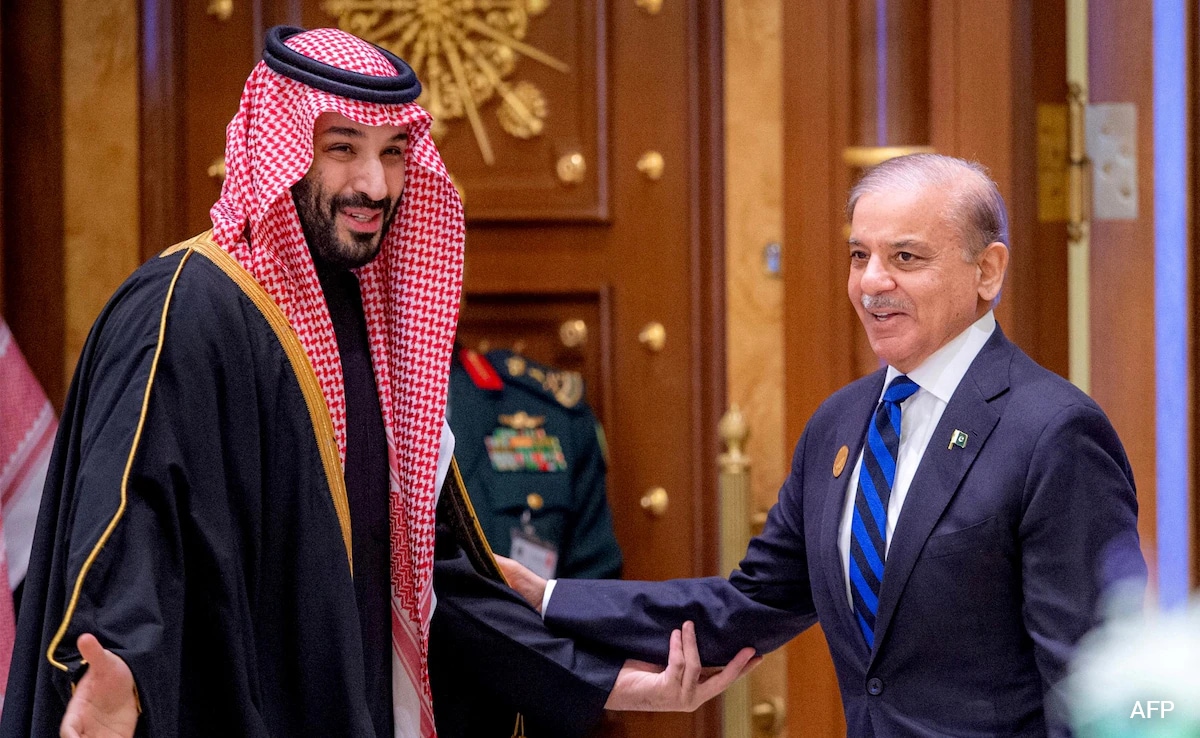
Pakistan is not on the verge of a geopolitical windfall, despite the sudden wave of optimism flowing from Islamabad. The recent diplomatic maneuvering to assemble a quadrilateral security alignment—spanning Turkey, Saudi Arabia, Egypt, and Pakistan—has been heralded by boosters as the birth of a Sunni bloc, an "Islamic NATO" that would alter the balance of power in West Asia. Under this optimistic projection, Pakistan serves as the indispensable nuclear crown jewel, finally gaining the financial insulation and strategic leverage it has craved for decades.
The reality is far more transactional, fragile, and dangerous. What is being sold as a strategic triumph is actually a desperate, defensive alignment born of necessity, and Pakistan is positioned not as its biggest winner, but as its most vulnerable asset.
The core premise of this emerging axis relies on a convenient marriage of disparate capabilities: Turkish defense technology, Saudi oil wealth, Egyptian manpower, and Pakistani nuclear deterrence. Conceived under the shadow of escalating regional conflict involving Israel, Iran, and the United States, the alignment looks formidable on paper. It claims to represent a unified front of 500 million people.
But alliances built purely on shared anxiety rarely survive the friction of competing national interests. To understand why Pakistan's supposed victory is an illusion, one must look past the grand pronouncements of defense pacts and analyze the structural flaws tearing at the seams of this configuration.
The Nuclear Umbrella Trap
The primary currency Pakistan brings to this table is its status as the sole nuclear-armed power in the Muslim world. For non-nuclear partners like Turkey, Saudi Arabia, and Egypt, the appeal of Islamabad's arsenal is obvious. It offers a theoretical strategic shield against both Israeli capabilities and Iranian ambitions.
This arrangement creates a profound asymmetrical risk for Islamabad. A nuclear umbrella is only credible if the state holding it is willing to risk annihilation for its partners. Would a cash-strapped government in Islamabad truly jeopardize its own existence to defend Riyadh from a drone barrage or shield Ankara from a Mediterranean flare-up?
Historically, Pakistan's military establishment has been highly cautious about deploying kinetic power beyond its borders. During the 2015 intervention in Yemen, despite intense pressure and financial inducements from Riyadh, the Pakistani parliament voted unanimously to remain neutral. The military understood that entering a sectarian proxy war would ignite catastrophic domestic unrest within its own significant Shia minority. That internal fault line has not disappeared; if anything, economic degradation has made it more volatile.
Furthermore, providing an implicit or explicit nuclear guarantee to a highly volatile regional bloc invites intense, punishing scrutiny from the international community. The United States, which still holds the keys to Pakistan's financial life support through the International Monetary Fund, looks upon any unauthorized proliferation of nuclear security guarantees with extreme hostility. Islamabad cannot afford to alienate Washington while its economy is running on borrowed time.
The Mirage of Saudi Subsidies
The conventional narrative suggests that Pakistan will trade its military and nuclear prestige for massive Saudi capital injections to revive its moribund economy. This calculation relies on an outdated understanding of Gulf diplomacy.
The era of no-strings-attached financial rescues from Riyadh is over. Under Crown Prince Mohammed bin Salman, Saudi financial policy has pivoted from ideological charity to rigorous economic nationalism. Saudi state capital is now tied strictly to commercial returns, domestic infrastructure development, and structural reforms. While the Kingdom signed a Strategic Mutual Defense Agreement with Islamabad, it expects tangible economic reform, privatization of state-owned enterprises, and asset security in return—not just vague promises of military solidarity.
More critically, Saudi Arabia is simultaneously playing a complex double game. Even as it explores defense consultation with Turkey and Pakistan to hedge against instability, Riyadh has actively pursued tactical de-escalation with Iran. The Kingdom's primary goal is the protection of its massive Vision 2030 economic infrastructure, which remains highly vulnerable to missile and drone strikes.
A permanent, hardline Sunni military bloc directly contradicts this stabilization strategy. If Saudi Arabia achieves a durable regional understanding, or if it is pushed toward expanding the Abraham Accords framework under intense Washington pressure, the strategic utility of a Pakistani military umbrella evaporates overnight. Pakistan risks being left out in the cold, having alienated its neighbors for aid that arrives with suffocating conditions.
Deep Rifts and Historical Rivalries
The assumption that Turkey, Saudi Arabia, Egypt, and Qatar can form a cohesive military alliance ignores decades of deep-seated mistrust. These nations are not natural allies; they are historic competitors for leadership of the broader Sunni world.
| Country | Core Strategic Asset | Primary Regional Vulnerability |
|---|---|---|
| Turkey | Advanced defense manufacturing and drone technology | Economic volatility and overextended foreign deployments |
| Saudi Arabia | Vast sovereign wealth and energy infrastructure | Vulnerability to asymmetric drone/missile strikes |
| Egypt | Massive conventional manpower and geographic control | Severe economic distress and food insecurity |
| Pakistan | Nuclear weapons capability and battle-tested military | Chronic debt crises and internal security instability |
Consider the friction between Ankara and Cairo. Although relations have thawed superficially, Egypt historically views Turkey's regional ambitions through a lens of deep suspicion, dating back to Ottoman dominance and, more recently, Ankara's overt support for political Islamism.
Similarly, the relationship between Saudi Arabia and Turkey has been marred by intense geopolitical rivalry. It was only a few years ago that the murder of journalist Jamal Khashoggi in Istanbul brought relations to a freezing point. Turkey's defense industry is eager to capture Saudi financial investment, but Ankara is unlikely to cede operational control of its strategic vision to Riyadh.
Qatar's inclusion adds another layer of complexity. The bitter diplomatic blockade of Qatar by its Gulf neighbors may be officially over, but the underlying ideological differences regarding regional governance and relationships with various political movements remain unresolved. Pakistan, desperate for consensus, lacks the diplomatic weight to referee these entrenched rivalries.
The India Factor and the West Asian Quad
Islamabad's strategists frequently view every foreign policy development through the prism of its rivalry with New Delhi. The hope within Pakistan is that a powerful Sunni security alignment would provide a diplomatic counterweight to India's rising influence in West Asia.
This hope ignores the formidable architecture of the West Asian Quad, specifically the I2U2 Group comprising India, Israel, the United Arab Emirates, and the United States. This alliance is not a tentative security concept; it is an active economic and technological reality. It pairs Israeli technology and UAE investment capital with Indian manufacturing and market scale.
Saudi Arabia and Egypt cannot afford to sever their economic trajectories from this powerful engine. India is a primary purchaser of Gulf energy and a vital trading partner for the entire region. Neither Riyadh nor Cairo will compromise their deep, lucrative economic partnerships with New Delhi to validate Pakistan's security anxieties. If forced to choose between an economically vibrant partnership with India and a financially draining military alliance with Pakistan, the Gulf states will choose the former every time.
An Interdependent Defense Network
The structural mechanics of the proposed pact also face a severe hardware bottleneck. Turkey wants to position itself as the primary arms provider for this alignment, aiming to replace Western defense dependencies with its own growing defense manufacturing sector.
This transition cannot happen overnight. Saudi Arabia, Egypt, and Pakistan remain profoundly dependent on Western, specifically American, military hardware, supply chains, and maintenance frameworks. A true, integrated security bloc requires deep interoperability—shared communication protocols, synchronized intelligence logistics, and compatible weapon systems. Attempting to build an independent defense network while relying on American fighter jets and radar systems is an operational contradiction.
If this bloc attempts to move toward genuine strategic autonomy, it risks triggering sanctions, hardware embargoes, and a complete cutoff of technical support from Washington. For Egypt and Pakistan, both heavily dependent on U.S. military assistance and financial approval, the cost of such autonomy is prohibitively high.
Pakistan is entering a high-stakes arena with a weak hand. Its economic fragility means it cannot act as an equal partner, but rather as a specialized contractor providing security muscle in exchange for financial survival. When an unstable state trades its military capabilities for economic liquidity, it surrenders its strategic autonomy. If the regional landscape shifts—whether through a grand bargain between the major powers, an expansion of normalization agreements, or a sudden escalation of internal rivalries—Pakistan will find that its supposed victory was merely an invitation to bear the heaviest risks of someone else's security dilemma.