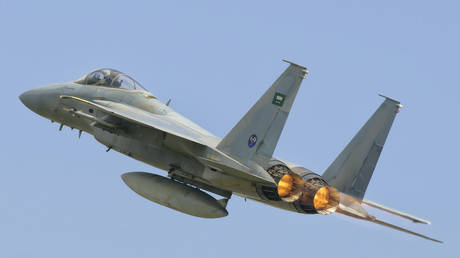
For years, defense analysts in Western capitals have tossed around a seductive shorthand: the "Muslim NATO." Conjured to describe various iterations of regional security pacts—most notably the Islamic Military Counter Terrorism Coalition (IMCTC) headquartered in Riyadh—the term paints a neat picture of a unified, multi-national Islamic alliance marching in lockstep against shared threats. It is a journalist's convenience, designed to evoke the Article 5 mutual defense guarantees of the North Atlantic Treaty Organization.
The reality on the ground is infinitely messier. When recent Houthi escalations, missile barrages, and maritime blockades targeted Saudi infrastructure and vital shipping lanes, headlines proclaimed that this "Muslim NATO" had finally activated its forces for combat. Yet looking past the press releases reveals a fragmented coalition of convenience rather than a monolithic military machine. True collective security in the Middle East remains constrained by competing national interests, deep-seated diplomatic friction, and the hard truth that sovereign capitals rarely fight proxy wars for their neighbors without extracting a heavy political price.
To understand why these security architectures struggle, one must examine the anatomy of the IMCTC. Founded in late 2015 under the initial architectural push of Riyadh, the organization boasts over forty member states spanning Africa and Asia. On paper, its mandate is broad: coordinating intelligence, countering terrorist financing, and providing military support. However, the institutional machinery lacks the integrated command structure, standardized logistics, and automatic mutual defense triggers that define Western alliances. When member states commit resources, they do so through bilateral agreements, ad-hoc coalitions, or narrow national self-interest, rather than answering a centralized bell in Riyadh.
Consider how external actors and regional powers actually respond when the Red Sea chokepoints face disruption. While the overarching narrative focuses on regional unity, the heavy lifting of safeguarding maritime routes and critical oil infrastructure frequently falls back on traditional arrangements or selective interventions. Britain provides air-to-air refueling support, France deploys specialized radar and air-defense components to protect energy hubs like Yanbu, and Saudi-led air campaigns rely on national military capabilities supplemented by long-standing Western defense industrial supply chains.
The Houthi movement, backed by Iran, understands these seams in the regional architecture very well. By utilizing asymmetric warfare—low-cost drones, anti-ship ballistic missiles, and naval harassment—they have forced an expensive defensive posture upon their adversaries. Intercepting a crude loitering munition with a multi-million-dollar surface-to-air missile creates an unsustainable economic asymmetry. No amount of rhetorical framing about an "Islamic NATO" alters this math.
Furthermore, domestic political realities across prospective coalition members dictate extreme caution. Major regional players have historically balked at open-ended commitments in Yemen's quagmire, remembering past strategic overreaches. Parliaments and defense establishments from South Asia to North Africa routinely weigh the domestic cost of foreign deployments against any potential security dividend. Involvement in a protracted cross-border conflict risks inflaming domestic political friction and sectarian sensitivities, making governments exceptionally wary of unconditional military integration.
This structural hesitation exposes the core vulnerability of security architecture in the Arabian Peninsula. Collective defense requires a shared perception of threat coupled with an absolute willingness to shed blood and treasure for a partner nation. While Riyadh and its immediate Gulf allies face direct kinetic threats to their economic modernization projects and civilian infrastructure, outer-tier coalition members view the theater through entirely different strategic lenses. For some, engagement is diplomatic signaling; for others, it is a transactional arrangement to secure economic aid or diplomatic alignment.
The recent flare-up in Operation Dawn of Yemen and the subsequent scramble to secure the Bab el-Mandeb Strait demonstrate that military power in the region remains fundamentally state-centric and transactional. Massive air campaigns and targeted strikes can degrade militant capabilities, but they cannot manufacture a lasting political architecture out of disparate allies who refuse to merge their ultimate sovereign commands.
As long as regional capitals prioritize autonomous foreign policies over binding collective security obligations, the "Muslim NATO" will remain what it has always been: an aspirational banner rather than a functional shield. The security of the Kingdom and the stability of global energy transit will continue to rest on hard-headed bilateral diplomacy, technological defense investments, and the gritty reality of national power, long after the romanticized headlines fade.


