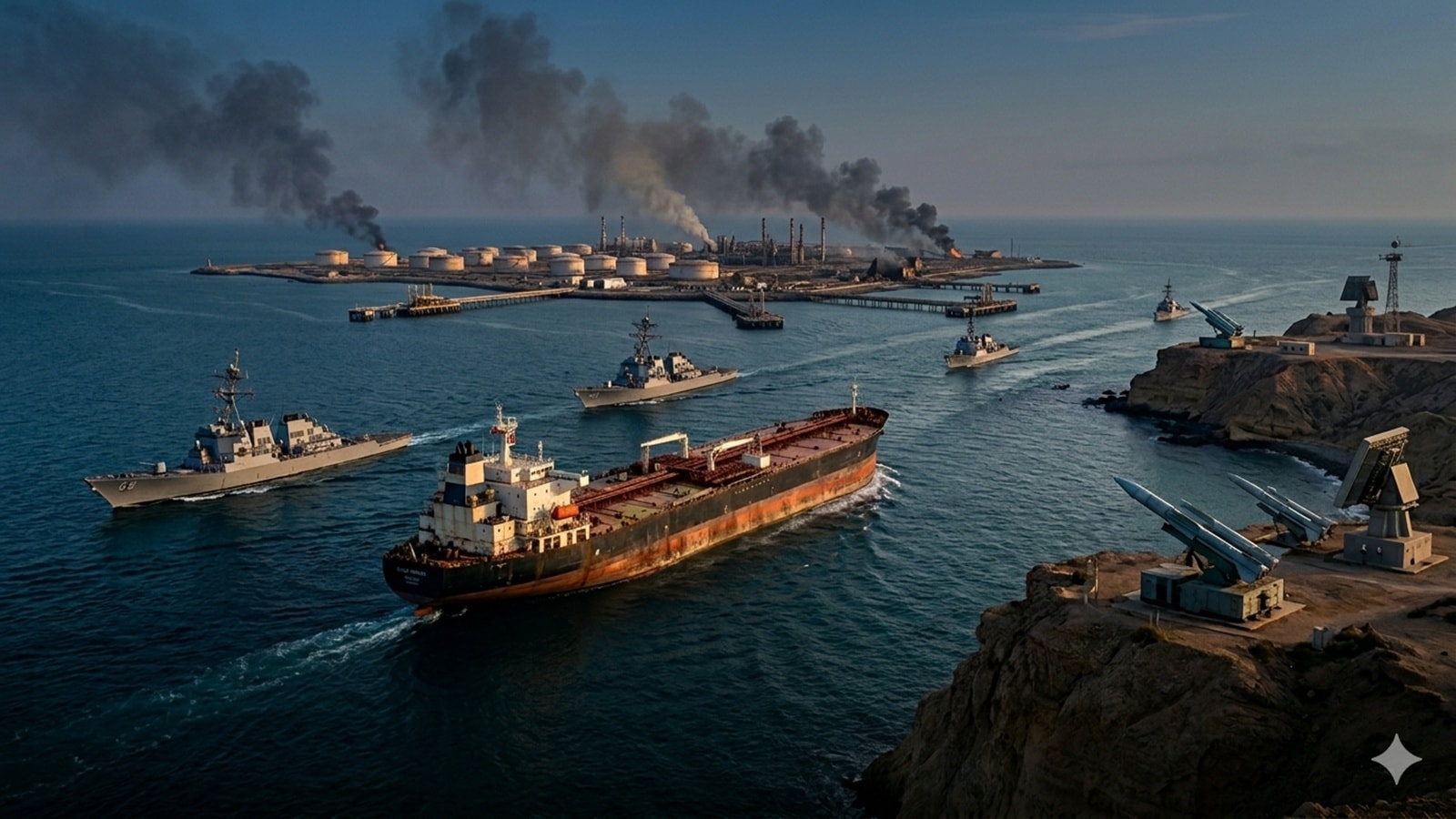
A missile strikes a fuel tanker at the Haifa oil refineries. The headlines scream about supply chain collapses, regional instability, and a looming energy apocalypse. Reuters runs a dry, factual account that implies we should all start hoarding gas. They are wrong. They are looking at the smoke and missing the furnace.
The conventional wisdom suggests that infrastructure strikes of this nature are catastrophic events for global energy security. In reality, they are often little more than expensive fireworks displays that reveal the shocking resilience of modern energy logistics. If you’re panicking every time a tanker catches fire in a conflict zone, you aren't paying attention to how the math actually works.
The Physicality Fallacy
The mainstream media treats a single fuel tanker like it’s a vital organ. It isn't. It’s a fingernail.
The global oil market is not a fragile web; it is a pressurized hydraulic system. When one valve closes, the pressure simply redirects. Israel’s Bazan Group refineries are a convenient target for optics, but hitting a tanker is the tactical equivalent of trying to drain a swimming pool with a thimble.
Most analysts fail to account for the Strategic Petroleum Reserve (SPR) dynamics and the sheer volume of "floating storage" currently idling in international waters. A single hit on a tanker in Haifa doesn't change the fact that the world is currently awash in crude. The price spikes we see following these reports are purely psychological—a "fear premium" harvested by traders who know the physical supply hasn't actually shifted.
The Refinement Trap
We need to stop talking about "oil" as a singular entity. The Reuters-style reporting conflates crude supply with refining capacity. This is a rookie mistake.
Israel has spent decades hardening its infrastructure. The Bazan refinery isn't some exposed Victorian factory; it is a modular, redundant fortress. When a missile hits a tanker at the dock, the "damage" is localized to the vessel and the immediate offloading hardware.
The true bottleneck in energy isn't a lack of oil; it’s the global disparity in Complex Refining Margins. We have plenty of oil. What we have is a localized inability to turn it into Euro 5 diesel or Jet A-1 fuel at the specific moment a missile flies. But here is the kicker: the global market corrects for this in hours, not weeks. The moment a Mediterranean refinery slows down, tankers from the ARA (Amsterdam-Rotterdam-Antwerp) hub are already rerouting.
I’ve watched energy desks move millions based on a grainy video of a fire. It’s theater. The physical reality of the $P = \frac{F}{A}$ (Pressure equals Force over Area) in economics means that the force of a single explosion is spread across such a massive global area that the actual impact on your gas tank is negligible.
Why "Energy Independence" is a Marketing Scam
The immediate reaction to refinery strikes is always a loud, political call for energy independence. This is a fantasy designed to sell domestic drilling permits. No nation is an island in the energy market.
Even if Israel, or any other nation, produced 100% of its own crude and refined every drop locally, a missile strike would still drive up prices. Why? Because oil is a fungible commodity. If a refinery in Haifa goes offline, the global price of refined products ticks up, and the local producer would be an idiot not to sell at that higher global rate.
The "independency" argument ignores the Law of One Price. Unless you plan on nationalizing the entire energy sector and banning exports—which leads to Soviet-style inefficiency—you are always at the mercy of the global margin.
The Insurance Shell Game
What nobody tells you about these "catastrophic" strikes is who actually pays for them. It isn't the consumer, and it often isn't even the refinery. It’s the London insurance market.
War risk premiums are baked into every barrel that moves through the Mediterranean. When a tanker gets hit, the payout is swift, the vessel is replaced, and the "disruption" is essentially a ledger entry. We are witnessing the physical manifestation of a financial hedge.
The Security Paradox
There is a counter-intuitive reality at play here: the more a refinery is targeted, the safer the regional energy supply becomes over the long term.
Constant threats force the adoption of:
- Micro-grid integration: Shifting away from massive, centralized storage.
- Subterranean bunkering: Moving the most volatile assets where no drone can reach them.
- Automated fire suppression: Modern systems can isolate a burning manifold in seconds, preventing the "Deepwater Horizon" style catastrophes the public fears.
The Bazan refinery strike wasn't a failure of security; it was a demonstration of containment. The fire was controlled. The facility didn't vaporize. The lights stayed on.
Stop Asking if the Oil is Safe
People always ask, "Will this strike lead to a shortage?"
That is the wrong question. The question you should be asking is, "Who profits from the perception of a shortage?"
When a missile hits a tanker, the winners are the hedge funds holding long positions on Brent Crude and the politicians looking for an excuse to hike defense spending. The losers are the retail investors who panic-sell their energy stocks.
I’ve sat in rooms where a 2% jump in oil prices was celebrated as a "gift" from a regional skirmish. The industry isn't afraid of these strikes; the industry has commoditized them.
The Actionable Reality
If you want to understand energy security, stop reading play-by-play reports of missile trajectories. Start looking at Days of Forward Cover.
As long as OECD nations maintain stock levels above the 60-day mark, a hit on a refinery is a local tragedy, not a global crisis. The current data shows that despite the rhetoric, global inventories are stable.
The next time you see a "Breaking News" alert about a refinery fire, don't look at the flames. Look at the shipping manifests. If the tankers are still steaming toward the port, the "crisis" is a lie.
The market doesn't care about your fear; it only cares about the flow. And the flow hasn't stopped.
Stop treating every spark in a refinery as the end of the world. It’s just the cost of doing business in a world that refuses to outgrow its addiction to the flame. If you can't handle the heat of the volatility, get out of the trade. The adults are busy managing the pressure.
The fire in Haifa isn't a signal of collapse; it’s a reminder that the system is built to burn and keep moving anyway.