The press release always follows the exact same script. A senior politician is admitted to the hospital. A spokesperson releases a two-sentence update ensuring the public that the statesman is "receiving excellent care." The media immediately spins up the boilerplate analysis machinery, tracking down historical health issues, counting missed floor votes, and speculating on the exact nature of the diagnosis.
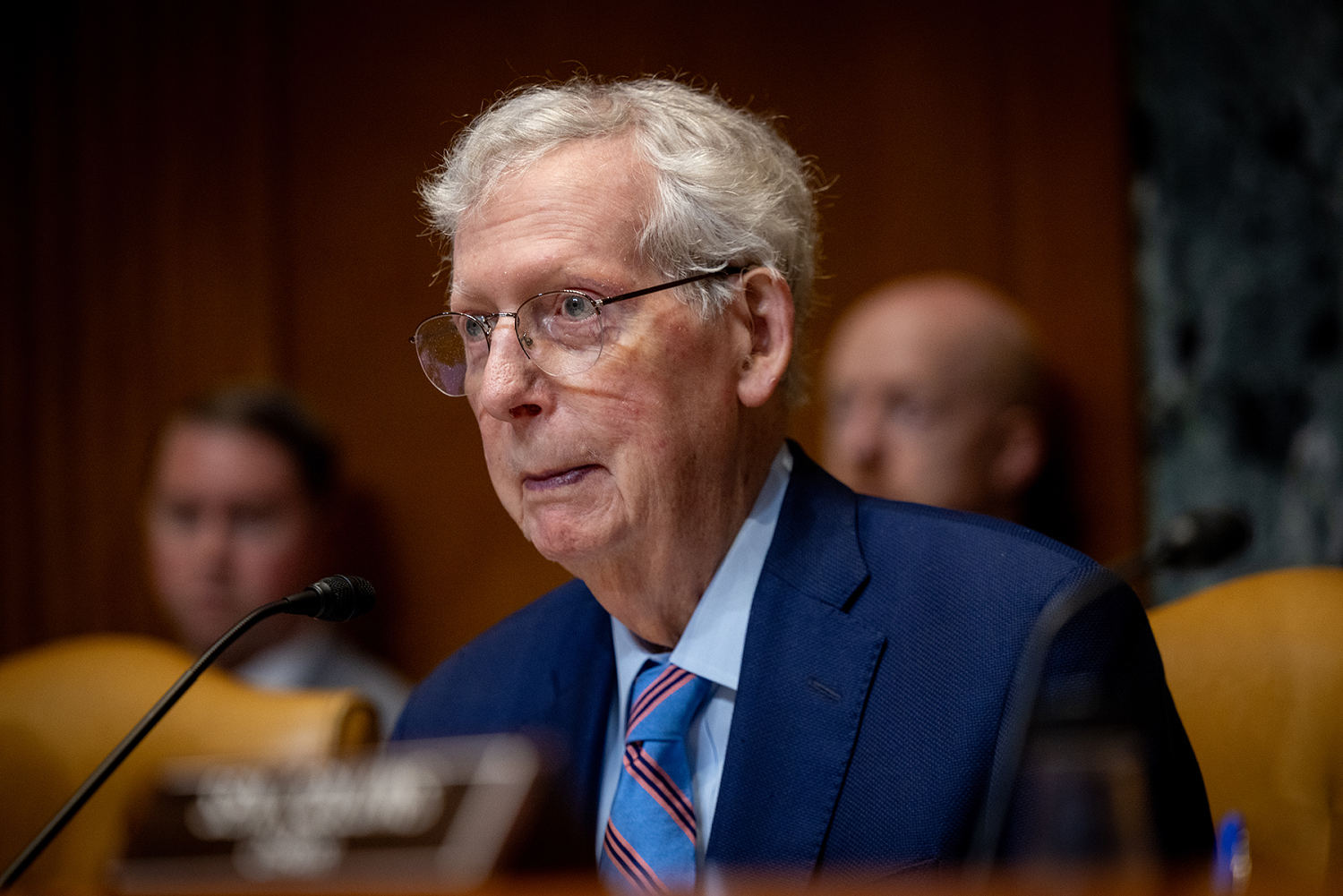
When news broke that former Senate GOP leader Mitch McConnell was admitted to the hospital, the political reporting apparatus did exactly that. They mapped out his history of falls, his childhood battle with polio, his concussion, and his recent bout with flu-like symptoms. They treated the hospital visit as a localized emergency, a sudden breakdown in the machinery of government.
This reaction exposes a profound misunderstanding of how modern political power actually operates.
The media remains trapped in an archaic, romanticized view of governance where power is tied directly to a physical body sitting in a specific leather chair on the Senate floor. They look at an empty desk and see a vacuum.
I have spent decades watching how elite institutions manage crises, resource allocation, and leadership handoffs. The reality is far more clinical, deliberate, and entirely decoupled from the daily legislative calendar. A hospital room is not an interruption of power; it is frequently the very place where the true trajectory of institutional control is codified.
The Illusion of the Indispensable Body
The mainstream press evaluates a politician’s status using basic, highly visible metrics. Did they cast a vote in the latest legislative package? Did they show up to chair the subcommittee hearing?
These are performance metrics designed for public consumption. They do not represent the actual distribution of authority.
In a highly institutionalized political system, power does not vanish when an individual undergoes medical observation. The apparatus of a senior lawmaker's office—the chief of staff, the committee counsels, the legislative directors, and the network of aligned political action committees—continues to run on autopilot. The institutional footprint remains fully intact.
Consider how the Senate actually processes business. The heavy lifting of drafting legislative text, negotiating budget allocations, and coordinating committee strategies happens weeks or months before a bill ever reaches the floor for a public vote. The principal's role is primarily one of final sign-off and strategic alignment.
When a major figure is hospitalized, the daily administrative machinery does not grind to a halt. Instead, it enters a structured holding pattern where the senior staff exercises delegated authority. The public panic over an empty seat is a distraction from the underlying stability of the system.
The Strategic Function of Information Control
The standard media critique demands total transparency during a medical event. Pundits complain when a spokesperson refuses to provide granular details about a diagnosis, an exact prognosis, or the specific name of the medical facility. They frame this silence as a failure of accountability or a sign of weakness.
This perspective misses the tactical utility of controlled ambiguity.
In high-stakes environments, information is a currency that must be managed with extreme precision. A vague statement like "receiving excellent care" is not a clumsy attempt to hide the truth; it is a deliberate administrative firewall. It establishes a controlled perimeter around the individual, cutting off external speculation while giving the internal operation time to assess the situation without market or political volatility.
Imagine a scenario where a private corporation’s chief executive is suddenly sidelined. If the board rushes out a highly specific, panicked breakdown of the medical situation, it triggers immediate market instability, downgrades from credit agencies, and opportunistic moves from competitors. The smart play is always to project absolute structural continuity while managing the internal reality behind closed doors.
Politics operates under the exact same logic. By maintaining a highly disciplined, minimalist communication strategy, an office prevents rival factions from moving prematurely to fill a perceived void. The silence is a tool used to preserve leverage and maintain order.
The Flawed Premise of "Fitness for Office"
Every time a senior lawmaker faces a health scare, the public conversation inevitably shifts to an aggressive debate over physical capacity and mandatory retirement ages. The underlying assumption is that any decline in physical mobility or stamina equates directly to a failure of governance.
This framework relies on a fundamentally flawed definition of competency.
The role of a modern legislative strategist is not one of physical endurance; it is one of institutional memory, network utilization, and raw tactical positioning. A junior lawmaker with perfect physical health and boundless energy cannot replicate the decades of institutional knowledge, procedural mastery, and donor relationships held by a senior statesman.
The value of an elite political operator lies in their ability to navigate complex procedural rules, read the internal dynamics of a caucus, and leverage long-standing alliances to achieve specific outcomes. These capabilities are distinct from physical agility. When the media focuses exclusively on the physical mechanics of aging, they ignore the strategic value that institutional experience brings to the table.
The Reality of Leadership Transitions
The real story during any high-profile hospitalization is never the medical chart. It is the quiet testing of the institutional scaffolding that surrounds the office.
A medical event serves as a stress test for an entire political network. It reveals whether the staff can maintain discipline under pressure, whether the broader caucus remains aligned, and whether the established lines of succession are functional. It is a live-fire exercise in institutional continuity.
While the public watches the hospital door, the real action takes place in quiet rooms where staff members coordinate with committee leadership, update key stakeholders, and ensure that ongoing legislative priorities remain on track. The measure of an effective office is its ability to render the physical absence of the principal completely irrelevant to the execution of daily operations.
The next time a spokesperson issues a brief, uninformative medical update for a major political figure, ignore the temptation to join the speculation mill. Stop looking at the hospital room as a sign of institutional breakdown. The real mechanics of authority do not depend on a physical presence at a microphone. The structure is built to endure the frailty of the individuals who inhabit it, and the true exercise of power continues long after the cameras turn away.