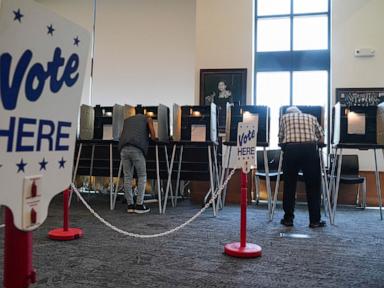
American elections are secure precisely because they are a logistical nightmare. While critics rail against a fragmented voting process, the reality is that the United States does not run a single presidential election. It runs more than 10,000 independent elections simultaneously. This deep decentralization makes widespread, coordinated voter fraud practically impossible. To swing a national contest, a malicious actor would need to infiltrate thousands of localized jurisdictions, each operating with distinct rules, hardware, and bipartisan oversight. The complexity is not a bug. It is the primary defense mechanism.
The structural defense of American voting rests on a foundation laid down in 1787. The U.S. Constitution explicitly delegates the "times, places and manner" of holding elections to individual states. Consequently, there is no federal department that counts the ballots or dictates a uniform ballot design. The day-to-day operations fall to county clerks, local supervisors, and temporary volunteers drawn from the immediate community.
The Logistics of Local Infiltration
Stealing a modern presidential race requires more than a grand conspiracy. It requires flawless logistical execution across state lines. A threat actor aiming to alter the outcome of a national election would face an insurmountable hurdle. They would have to recruit a massive network of local election workers in the most competitive counties across the country.
These workers would have to be willing to risk federal prosecution, heavy fines, and extended prison sentences. More importantly, they would have to execute the fraud right in front of observers from opposing political parties. Bipartisan poll workers sit at the same tables, check the same signature logs, and watch the same ballot boxes. The human element of this system relies on mutual suspicion. It works because neither side trusts the other to hold the pen alone.
Paper Trails and Air Gaps
The technological landscape of American voting is intentionally primitive in key areas. Security experts consistently emphasize that the safest voting system relies on a physical audit trail. Over 90 percent of Americans now cast ballots that feature a verified paper record. This paper trail allows local jurisdictions to conduct post-election audits and manual hand recounts to verify that electronic tabulators functioned correctly.
Furthermore, voting machines are not connected to the internet. This air-gapped configuration means a hostile foreign state cannot launch a remote cyberattack to alter vote tallies. To change the software on a tabulator, an intruder needs physical access to the machine itself. That machine is stored under lock and key, monitored by security cameras, and protected by numbered, tamper-evident seals that are logged by bipartisan teams.
The Reality of Voter Fraud Investigations
Isolated incidents of voter fraud do occur, but they are invariably small-scale and quickly detected. Individuals who attempt to vote twice, sign a ballot for a deceased relative, or register under a false address leave a clear paper trail. Election officials regularly scrub voter rolls by cross-referencing death records and state DMV databases.
Exhaustive investigations consistently bear this out. Following intense scrutiny of the 2020 presidential election, an Associated Press review across six battleground states uncovered fewer than 475 potential cases of voter fraud. In a nation where tens of millions of citizens cast ballots, that figure represents a statistical irrelevance. Even high-ranking officials within skeptical administrations have validated these findings. Former Attorney General William Barr confirmed that federal investigators found no evidence of fraud on a scale that could have altered the election outcome.
The administrative friction of the American voting system can frustrate citizens looking for a swift, uniform process. Different states require different identification, utilize different mail-in deadlines, and deploy different counting timelines. Yet this administrative friction is exactly what prevents a systemic collapse. By forcing the nation to vote in thousands of small, sealed compartments, the system ensures that a breach in one room cannot burn down the house.


