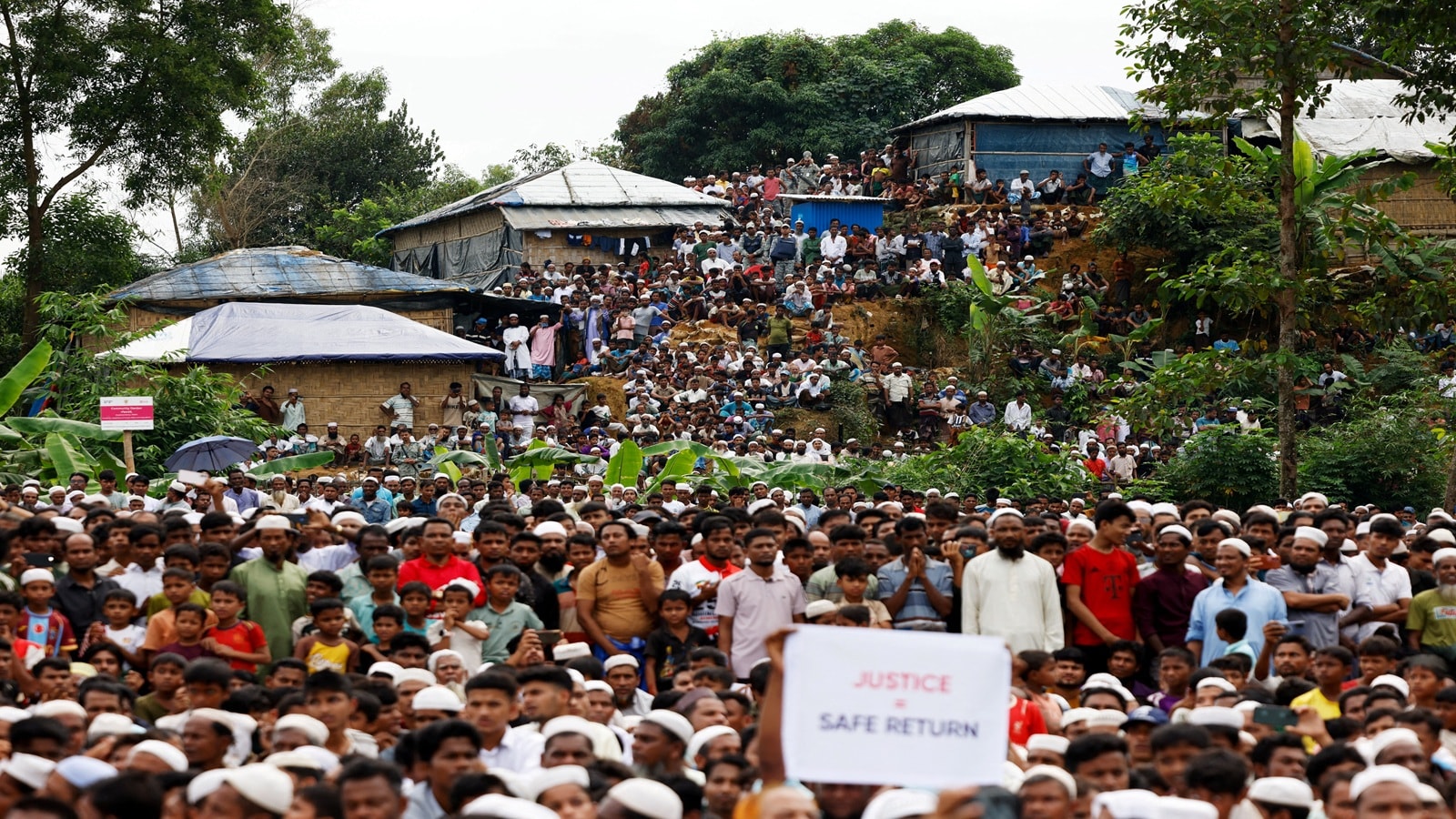
On November 19, 2026, the International Court of Justice (ICJ) handed down a landmark merits judgment in The Gambia v. Myanmar, ruling that Myanmar committed genocide against the Rohingya in northern Rakhine State. For the first time in the Court's history, it held a state directly responsible for committing genocide rather than only failing to prevent or punish it.
Anyone watching South Africa v. Israel over Gaza has to pay close attention. The Myanmar genocide judgment doesn't automatically decide the Gaza case, and it won't settle every political or factual argument in The Hague. Yet doctrinally, it cracks open several defenses that states accused of genocide usually lean on during armed conflict. Also making headlines in related news: Anatomy of a NATO Airspace Breach and Asymmetric Deterrence.
If you've been following international law debates around Gaza, you already know how steep the uphill climb is for proving genocidal intent, known legally as dolus specialis. Historically, judges and commentators have often treated massive, systematic annihilation detached from wartime security operations as the default mental picture of genocide. The ICJ's November 2026 ruling pushes hard against that narrow template.
How the Myanmar Genocide Judgment Shifts Genocidal Intent
Proving specific intent to destroy a protected group "in whole or in part, as such" has always been the sharpest bottleneck in Genocide Convention litigation. In The Gambia v. Myanmar, the Court evaluated the totality of the evidence—including decades of discriminatory laws, state-backed hate speech, mass killings of at least 10,000 Rohingya, sexual violence, village burnings, and the flight of over 700,000 people to Bangladesh—and found genocidal intent established. Further details on this are detailed by BBC News.
Crucially, the Court didn't require proof of a formal written master plan. Instead, it looked at how patterns of conduct and context fit together as a whole.
- Counterterrorism doesn't erase genocidal intent: Myanmar pointed to attacks by the Arakan Rohingya Salvation Army (ARSA) and framed its 2017 "clearance operations" as counterterrorism. The Court ruled that treating a group as a security or terrorist threat doesn't rule out genocidal intent, especially when forces fail to distinguish between fighters and civilians.
- Forcible displacement and genocide can overlap: Earlier jurisprudence on Bosnia and Croatia sometimes treated expulsion or displacement as cutting against genocidal intent. The Court rejected a rigid rule there, holding that intent to forcibly displace and intent to commit genocide can coexist.
- Punishment or retaliation isn't an automatic shield: Myanmar argued its forces may have acted to punish or retaliate against civilians linked to ARSA's actions, yet the Court found that punitive or retaliatory motives can coexist with genocidal intent rather than automatically displacing it.
For South Africa's case against Israel, that's a big deal. Israel's defense centers on fighting Hamas, rescuing hostages, and complying with international humanitarian law (IHL). Following the Myanmar judgment, pointing to a military objective or claiming compliance with IHL won't automatically insulate a state from an inquiry into genocidal intent if the broader factual record points the other way.
Why Numbers and Humanitarian Law Alone Don't Settle It
A common misconception is that genocide requires near-total physical extermination or an astronomical death toll. In the Myanmar judgment, the Court noted roughly 10,000 Rohingya killed—about 1.2% of the targeted population—alongside severe bodily and mental harm and measures aimed at preventing births within the group. Scale matters, sure, but context and impact on the group's survival as a group carry heavy weight.
Another wrinkle involves how international humanitarian law interacts with genocide law. Legal scholars like Prof. Amichai Cohen and Prof. Yuval Shany have pointed out that gross disproportion in warfare isn't identical to genocide, yet the Court treated severe harm and conduct during military operations as evidence from which genocidal intent can be inferred.
At the same time, let's be honest about the limits here. Every conflict has its own facts, geography, military dynamics, and evidentiary record. In The Gambia v. Myanmar, the Court highlighted decades of institutional discrimination and hate speech against the Rohingya, as well as the absence of a safe evacuation route when displacement occurred. Judges in South Africa v. Israel will weigh Israel's specific military operations, humanitarian aid restrictions, official statements, and battlefield evidence on their own record—not copy-paste findings from Rakhine State.
What Changes for Third States and Duty to Prevent
Beyond the merits of accusing a state of committing genocide, the ruling sharpens the duty to prevent and duty to investigate under the Genocide Convention.
- Prevention doesn't wait for a final verdict: The Court's reasoning underscores that a state's legal duty to take reasonable steps to prevent genocide kicks in before a final court judgment ever finds that genocide occurred. Groups like Amnesty International UK have already seized on this point to press governments over arms transfers and diplomatic policy regarding Gaza.
- Investigating war crimes isn't enough on its own: The Court indicated that the duty to investigate arises upon reasonable grounds to suspect prohibited acts—including assessing potential genocidal intent—and that prosecuting lesser offenses or war crimes alone doesn't automatically satisfy the obligation to address genocide.
That creates real friction for military justice systems and foreign ministries. States that supply weapons, intelligence, or political backing to a belligerent face sharper legal pressure to examine whether red flags of genocidal risk are emerging. Still, how far states actually go in practice depends on politics, diplomacy, and enforcement realities—areas where the ICJ lacks a police force of its own.
Where the Court Could Hesitate Next
If you stop at legal doctrine, the path looks straightforward: lower formal hurdles on intent, stronger precedent for plaintiffs. Honestly, real-world judicial behavior is rarely that neat.
Six judges dissented in The Gambia v. Myanmar, showing sharp disagreement over how genocidal intent is inferred from contested facts and what the majority's approach means for future cases. Some observers also note a practical dynamic: having crossed the historic threshold of holding a state responsible for committing genocide for the first time, the Court might be cautious about doing so again quickly in another high-intensity conflict.
In other words, the Myanmar ruling strengthens the legal arguments available to South Africa and intervening states, while leaving plenty of room for fierce evidentiary battles in The Hague.
Practical Steps to Follow Both Cases Accurately
- Read primary ICJ dockets and press releases: Check the International Court of Justice directly for official filings, intervention orders, and judgments in The Gambia v. Myanmar and South Africa v. Israel rather than relying on social media summaries.
- Separate elements of the Genocide Convention: Track prohibited acts (Article II), genocidal intent (dolus specialis), and state duties to prevent, investigate, and punish as distinct legal questions instead of lumping them together.
- Compare legal standards with political enforcement: Watch both the legal reasoning in court opinions and how third states respond through arms policies, sanctions, and diplomatic interventions.



