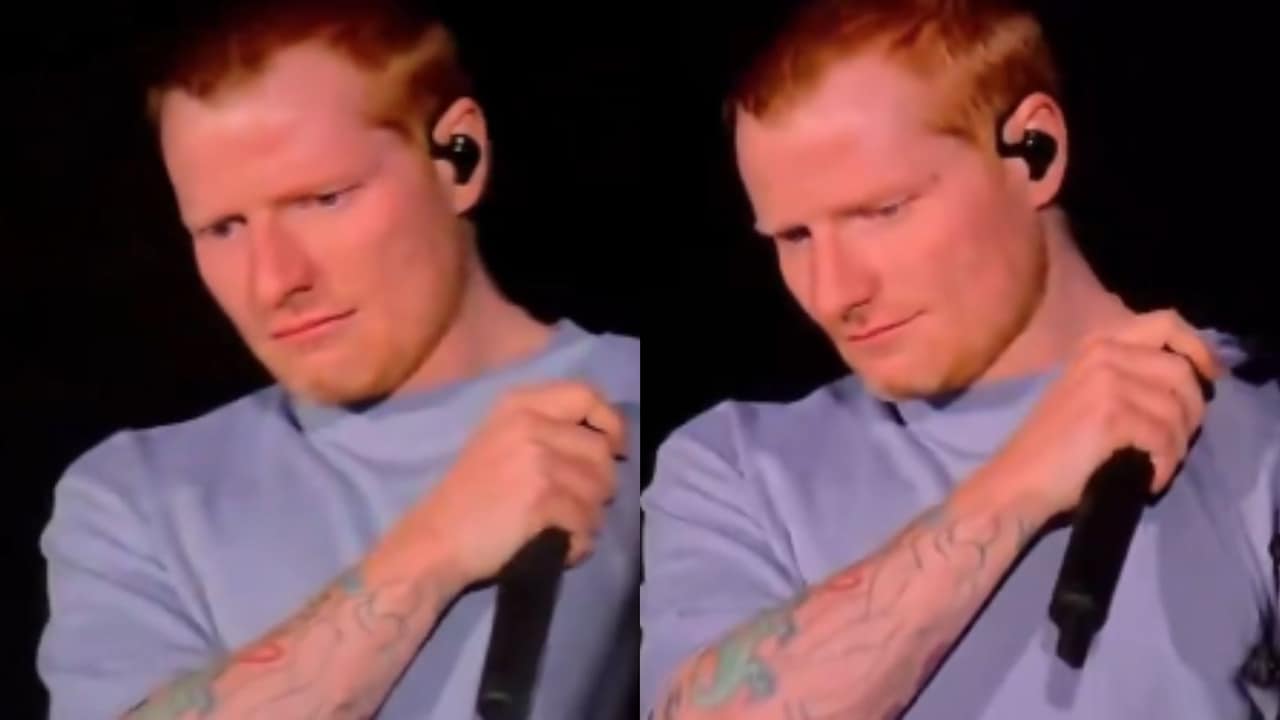
Philadelphia, September 2026. Ed Sheeran stood on the massive stage at Lincoln Financial Field, wiping tears from his face as fifty thousand fans watched a multi-platinum global pop star completely unravel in real time. He described the preceding seven days as one of the worst weeks of his entire life. The emotional breakdown was not triggered by a vocal cord hemorrhage, a broken guitar string, or plummeting ticket sales. Instead, it was the catastrophic fallout of a tour controversy that exposed the profound fragility of modern celebrity neutrality. When rapper Macklemore was abruptly excised from the Loop Tour following pro-Palestinian declarations during a New Jersey concert, the carefully guarded illusion that mega-artists can travel the globe singing about universal love while ignoring geopolitical nightmares shattered permanently.
The incident laid bare the friction between corporate entertainment logistics and real-world suffering. To understand how an acoustic guitar-playing troubadour found himself weeping on stage over a geopolitical fracture, one must examine the invisible machinery that powers modern stadium circuits. A tour of this magnitude is not merely an assembly of concerts; it is an international supply chain involving multinational conglomerates, municipal risk assessments, insurance underwriters, and powerful venue proprietors. When influential stadium owners hold absolute sway over prime real estate, an artist's desire to keep shows apolitical runs headfirst into hard corporate realities. Macklemore's removal was framed by promoters as a commercial necessity to protect bookings, but it immediately triggered an unprecedented rebellion from within the tour's own ranks.
Support acts including Finneas, Lukas Graham, Aaron Rowe, and the Irish folk band Beoga swiftly walked out in solidarity. The message delivered to the mainstream establishment was direct and uncompromising. Fence-sitting is no longer a viable career strategy for artists who share a bill with dissenting voices. For decades, pop stardom operated on a transactional code of sanitized universalism. Icons achieved planetary dominance by sanding down the sharp edges of political controversy, offering anthems broad enough to unite disparate factions under a single stadium roof without friction. Sheeran perfected this model to a science. Armed with loop pedals and an everyman acoustic persona, he built an empire out of frictionless charm, performing effortlessly in conservative strongholds and progressive metropolitan centers alike without ever alienating a paying customer.
Yet, the speed and polarization of current geopolitical flashpoints have eroded that middle ground entirely. The assumption that an artist can pocket millions from global tours while maintaining absolute political silence is colliding with a public that demands ideological accountability. The anatomy of the promoter squeeze reveals a web of ironclad contracts where venue stakeholders view political dissent as an existential financial threat. When Macklemore used his platform to voice opposition to military campaigns and criticize government agencies, the panic among venue stakeholders was immediate. Reports detailed how venue ownership groups pressured promoters to eliminate the liability. High-profile figures connected to scheduled venues applied immense behind-the-scenes pressure on the tour's infrastructure, leaving Sheeran caught between a contractual rock and a hard place.
His subsequent public statement attempting to distance himself from the decision—insisting that dropping Macklemore was entirely the promoter's call while expressing generalized sorrow for the suffering on all sides—pleased virtually no one. Protesters chanted angrily outside the stadium gates, core fans felt disillusioned, and fellow artists viewed his equivocation as corporate cowardice. When Sheeran broke down on stage in Philadelphia, cultural critics watched a masterclass in the weaponization of emotional exposure. Crying in front of a massive audience is a potent public relations tool, shifting the narrative from institutional complicity to personal victimization. By framing himself as a lonely figure caught in the crossfire of a culture war he never asked to join, the singer sought to reclaim public sympathy.
Yet, the reaction from industry veterans remained sharply divided. Some viewed his tears as genuine exhaustion from a machine spinning completely out of control, while others saw a calculated performance designed to salvage a brand experiencing severe reputational damage. The truth lives in the uncomfortable intersection of both interpretations. Mega-celebrities inhabit a gilded bubble where dissent from within their own camp feels like an existential betrayal, even as civilians thousands of miles away face total devastation. The financial architecture of the tour felt immediate shockwaves as well. While streaming numbers for Sheeran remained largely stable, the culture war propelled his displaced opening acts into a massive surge of digital visibility, with Macklemore pledging tour earnings directly to humanitarian aid.
Conversely, Sheeran's tour faced escalating calls for boycotts from international activist groups, threatening upcoming international legs. The calculus of global touring has shifted permanently. Promoters can no longer assume that locking in a multi-platinum headliner guarantees a smooth path through domestic and foreign markets. Every venue booking is now a potential ideological referendum, forcing artists to weigh their commercial exposure against their moral standing. The era of the cleanly packaged, apolitical pop icon is drawing to a definitive close. Audiences no longer accept the excuse that entertainment must exist in a vacuum divorced from global atrocities. When performers attempt to retreat behind tired platitudes about unity and love, the vacuum is filled instantly by public outrage, artist walkouts, and protesting crowds at stadium gates. Ed Sheeran's tearful night in Philadelphia will be remembered as the exact point where the old rules of celebrity diplomacy expired, leaving a fractured industry where neutrality is treated not as neutrality, but as an active choice carrying steep human and commercial consequences