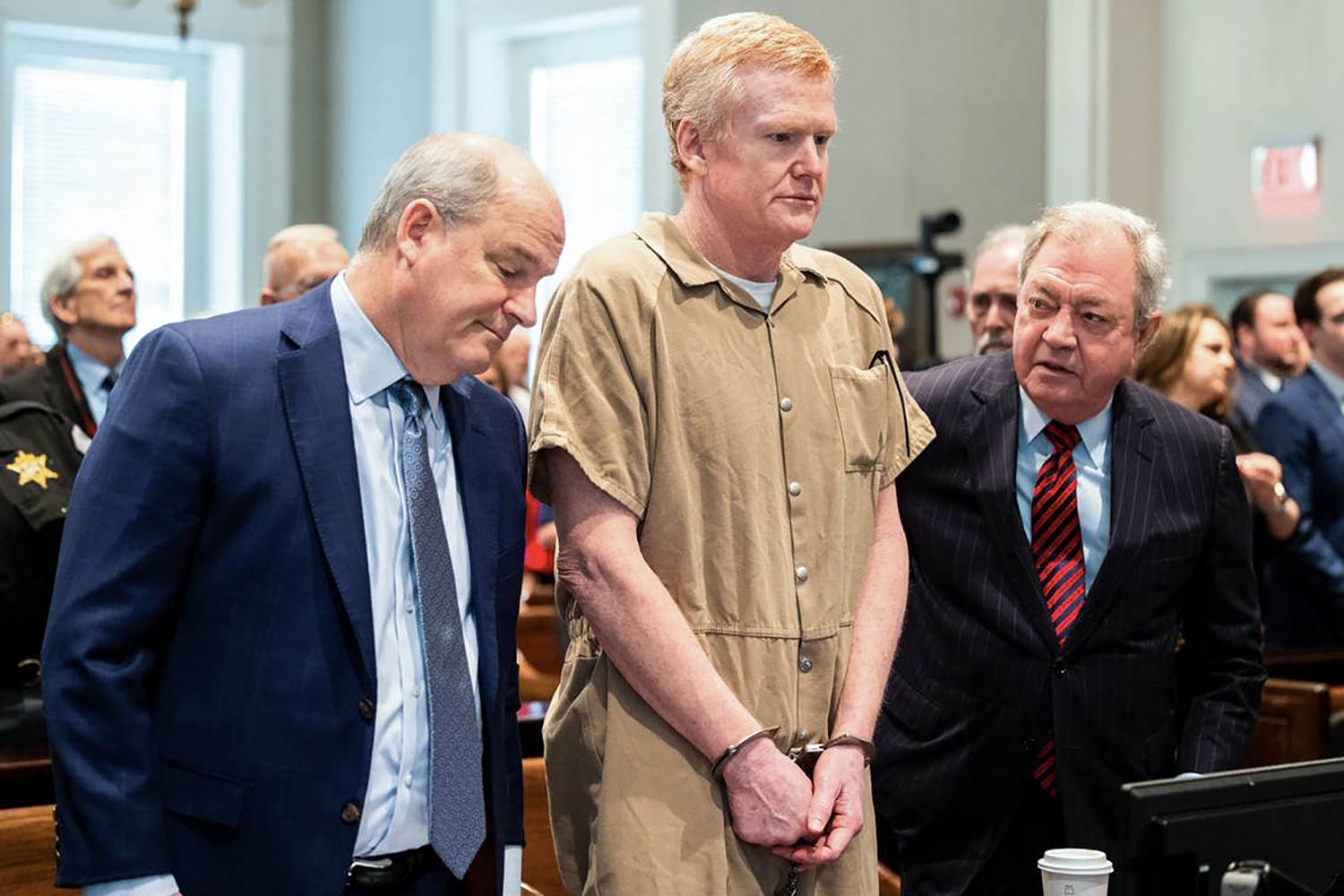
The double murder convictions of Alex Murdaugh have been overturned, sending a shockwave through the South Carolina legal system and handing a massive, if temporary, victory to a man once defined by his absolute proximity to power. While the headlines focus on the jubilation of his legal team and Murdaugh’s own reported sense of vindication, the reality of this reversal is far more clinical and technical than a simple declaration of innocence. Murdaugh is not a free man, nor has he been cleared of the underlying accusations that he executed his wife, Maggie, and son, Paul, at their Moselle estate. Instead, the appellate court has signaled that the process itself—specifically the conduct of the Clerk of Court, Becky Hill—poisoned the well of justice beyond repair.
This decision rests on the fundamental right to an impartial jury. It is a win for the defense, certainly. But more accurately, it is a catastrophic failure of the administrative machinery that governs American trials.
The Breach of the Inner Sanctum
In any high-stakes criminal trial, the jury is a sacred entity. They are insulated from the noise of the media and the pressure of public opinion. They are the only people in the room whose thoughts are not supposed to be influenced by anything other than the evidence presented from the witness stand. When Becky Hill was accused of tampering with that jury—allegedly nudging them toward a guilty verdict to secure a book deal—she didn't just break a rule. She shattered the integrity of the entire proceeding.
Murdaugh’s reaction, relayed by his attorneys Jim Griffin and Dick Harpootlian, was one of quiet relief. To the public, he remains a pariah. To the legal system, he is now a defendant whose constitutional rights were trampled by the very person tasked with protecting the court’s neutrality. This reversal proves that even in a case with mountains of circumstantial evidence, a "guilty" result is worthless if the math used to get there is corrupted by outside influence.
The defense team spent months digging into the logistics of the jury room. They interviewed jurors who claimed Hill told them not to be "fooled" by Murdaugh’s testimony and pressured them into a quick deliberation. This wasn't about the evidence of the "family annihilator" narrative. It was about a court official who saw a trial as a platform for personal gain.
Why the Evidence Matters Less Than the Process
Many observers struggle to understand how a man who admitted to stealing millions and lying about his whereabouts on the night of the murders can have his convictions tossed. It feels like a technicality. It isn't. In the eyes of the law, the process is the product. If a clerk can influence a jury in a triple-murder trial, they can do it in a shoplifting case or a civil dispute.
The appellate court's focus was narrow. They didn't need to decide if Murdaugh was innocent. They only needed to decide if the jury was "tainted." Once that threshold is crossed, the verdict is legally hollow. This puts the state of South Carolina in an impossible position. They must now decide whether to sink millions more into a retrial for a man who is already serving decades for financial crimes.
The Logistics of a Tainted Jury
A jury is a fragile ecosystem. Twelve strangers are locked in a room and told to reach a consensus on the life or death of another human being. It is an exhausting, high-pressure environment. When a figure of authority—like a Clerk of Court—steps into that space and offers even a subtle opinion, it carries the weight of the law itself.
Jurors often look to court staff for cues on how to behave. If the person who manages their lunches and their schedules suggests that a defendant is lying, it bypasses the critical thinking filters that the defense worked so hard to build. The Murdaugh defense team latched onto this because it was their only viable path out of a life sentence. They didn't need to find a new killer; they just needed to prove that the referee was betting on the game.
The Shadow of the Financial Crimes
Alex Murdaugh is currently serving 40 years in federal prison for a litany of financial crimes. He admitted to stealing from his clients, his partners, and even the family of his deceased housekeeper. Even if he were never tried again for the murders of Maggie and Paul, he would likely die in prison. This begs the question of why this reversal matters so much to him and his team.
It matters because of the "Murdaugh" name. For a century, that name meant the law in the Lowcountry. To be a "murderer" is a different stain than being a "thief." For Alex Murdaugh, overturning these convictions is an attempt to claw back some shred of his former identity. He wants to be seen as a flawed, drug-addicted man who stole money, but not as the monster who blew his son’s head off with a shotgun.
The state, however, is not interested in his identity. They are interested in finality. The Attorney General’s office now faces a grueling road. They have to reassemble witnesses, many of whom have moved on or changed their stories. They have to deal with the fact that the "Moselle" crime scene has been sold and altered.
The Burden of a Second Trial
Retrials are rarely carbon copies of the original. The prosecution has now shown its entire hand. The defense knows exactly where the holes are. In the first trial, the "dog kennel video" was the smoking gun—the piece of evidence that proved Murdaugh was at the scene minutes before the murders despite his claims otherwise. In a second trial, that video will still be there, but the defense will have years of expert analysis to counter it.
The state also has to worry about "Murdaugh fatigue." The first trial was a global spectacle. Finding twelve people in South Carolina who haven't formed a firm opinion on Alex Murdaugh is now a statistical impossibility. The jury selection for a second trial would be a nightmare that could last weeks.
The Becky Hill Factor
The fall of Becky Hill is as dramatic as the fall of the Murdaugh dynasty itself. Once a local celebrity who penned a book about the trial of the century, she is now the primary reason that trial has been voided. Her presence in this narrative represents the modern intersection of true crime and justice—where the participants are more interested in their Netflix potential than their legal duties.
The defense's investigative work into Hill was relentless. They tracked her travel, her emails, and her interactions with the media. They painted a picture of a woman who was so eager to see a conviction that she forgot she was a servant of the court. This is the "why" behind the reversal. It wasn't about Alex Murdaugh's innocence; it was about Becky Hill's ambition.
The Lowcountry Power Vacuum
For decades, the Murdaugh family operated with a level of impunity that is hard to fathom outside of the Deep South. They were the solicitors, the prosecutors, and the kingmakers. When the murders happened, that veneer of invincibility began to crack. When the financial crimes came to light, it shattered.
This reversal doesn't put the pieces back together. If anything, it highlights how broken the system remains. If the state can't even manage a clean trial for its most famous defendant, what does that say about the hundreds of cases that don't have cameras in the room? The local community in Hampton and Colleton counties is left in a state of perpetual limbo. They have lived through the murders, the trial, the media circus, and now they face the prospect of doing it all over again.
The Strategy Moving Forward
Murdaugh’s lawyers are already pushing for a bond hearing. They want him out of a maximum-security state prison while he waits for a potential retrial. The chances of him being granted bond are slim, given his federal sentence, but the move is symbolic. It is a declaration that the "Murderer" label has been stripped away for now.
The prosecution must now decide if they have the stomach for "Murdaugh 2.0." If they decline to prosecute, the murders of Maggie and Paul Murdaugh will officially go unsolved. That is a terrifying prospect for a state that spent years building a case against him.
The reversal is a cold reminder that the law doesn't care about the "truth" in a philosophical sense. It only cares about what can be proven within the strict, untainted confines of a courtroom. When those confines are breached, the truth—no matter how obvious it may seem to the public—becomes legally irrelevant. Alex Murdaugh is currently a man without a murder conviction, sitting in a cell for the money he stole, waiting to see if the state has the will to try to convict him all over again.
The state’s next move will define the legacy of the South Carolina judiciary for a generation. They can either admit the first trial was a circus and let the financial sentences suffice, or they can double down and try to prove that they can provide a fair trial even under the most intense scrutiny imaginable.
The gavel has fallen, but the echoes aren't dying down. They are getting louder.