The rain in the valleys does not fall; it arrives like an invading army. It beats against tin roofs with the heavy, rhythmic thud of distant drums, turning dry mountain tracks into churning arteries of mud. I remember standing on a ridge in Kathmandu years ago, watching the Bagmati river swell from a sluggish, memory-choked stream into a roaring, gray leviathan that swallowed bridges as if they were made of matchsticks. You do not forget the sound of a flooding mountain. It is a deep, subterranean groan, the earth itself tearing at the seams.
Behind the dry statistics broadcasted by international news agencies—numbers that reduce human catastrophe to ledger entries—lies a terrifying quiet. The monsoon of that season did not merely rain; it unstitched the Himalayas. Also making waves in related news: The Long Shadow of the Missing Where the Ground Has Swallowed Names.
By the time the skies finally exhausted themselves and began to clear, the ledger recorded an unimaginable toll. Seven hundred and ninety-four human lives, extinguished in the span of a few merciless days. Entire homes folded inward like houses of cards. Families who had shared morning tea while watching the mist lift off the terraced hillsides found themselves, within minutes, clinging to rooftops or swept into the brown, churning chaos below.
Yet, amid that overwhelming devastation, the machinery of survival kicked into gear. While local rescue workers clawed through mountains of debris with bare hands and improvised tools, quiet diplomatic channels buzzed with urgency across borders. For the families of foreign nationals trapped in the high-altitude passes and flooded valleys, the anxiety was a physical weight. Among them, a contingent of 149 Indian citizens—tourists, pilgrims, and workers caught in the wrong place at the very worst time—found themselves stranded in the belly of the disaster. More details on this are explored by NPR.
To understand the rescue of those 149 souls, you have to picture the geography. This is not a landscape of highways and flat plains where helicopters can land at a moment's notice. It is a vertical maze of sheer cliff faces, washed-out roads, and hanging bridges suspended over roaring abysses. When the Indian Ministry of External Affairs confirmed the successful evacuation of those citizens, it represented a logistical miracle born of sheer desperation.
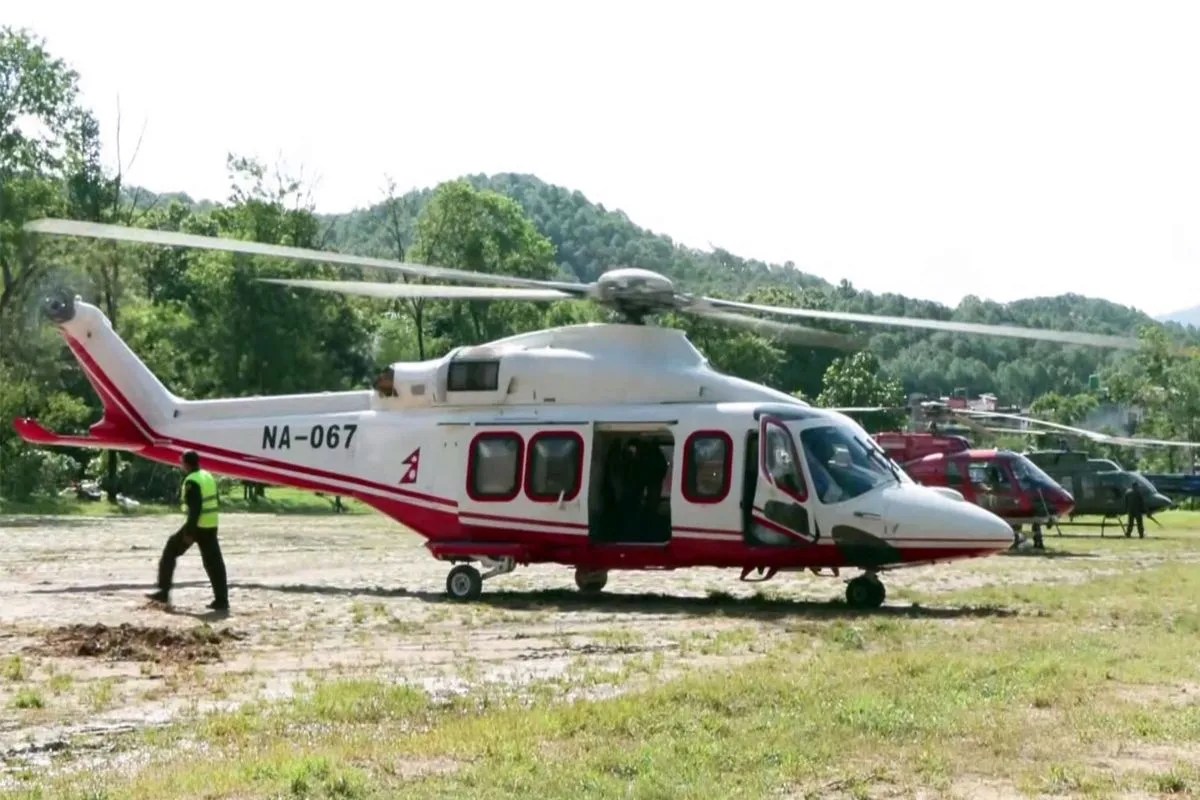
Consider what happens next when foreign governments coordinate disaster relief. It is rarely the smooth, cinematic operation depicted in films. It is messy, frantic, and fraught with miscommunication. Ground teams had to negotiate with blocked arteries where tarmac had slid into canyons. Pilots pushed aircraft to the absolute edge of their operational limits, navigating through turbulent air pockets where visibility was measured in arm-lengths. Every single one of those 149 rescues was a small, defiant victory against overwhelming odds—a pilot risking a downdraft, a local guide leading a frightened family through a treacherous goat path, an official making a midnight phone call to clear bureaucratic red tape.
Numbers like 794 and 149 are shields. They protect our minds from the raw, jagged edges of reality. If we truly allowed ourselves to feel the individual terror of seven hundred and ninety-4 families mourning their dead, the weight would crush us. So we retreat into the numbers. We look at the statistics as if they were weather reports, distant and clinical.
But behind every digit in that grim death toll is a kitchen left empty, a pair of shoes sitting by a doorway that no one will ever tie again, a story cut brutally short by the monsoon's fury. The mountains do not care about borders, visas, or political alliances. When the slopes give way, they take everyone in their path indiscriminately.
As the floodwaters slowly recede and the grim task of rebuilding begins, the scars left on the terrain are matched only by the scars left on the human psyche. The survivors return to homes that are no longer there, staring out at valleys that look fundamentally altered, as if the landscape itself has forgotten how to be safe.
The rain will return next year. It always does. The rivers will swell again, testing the strength of new concrete walls and newly paved roads. But until then, the valleys belong to the memory of the storm—a stark reminder of how fragile our existence is when the earth decides to shift beneath our feet.