Dusk arrives fast near the equator. One moment the Atlantic light is hammering the palms along the coast of Bioko Island; the next, the humidity thickens, the evening breeze drops, and a sound no bigger than a pinhead begins to drift through the open windows.
Whine.
Most people never hear it until their skin itches the next morning. Out here, where the heat clings to your collar by eight in the morning and rain turns red clay into grease before noon, that tiny sound carries centuries of weight. Malaria does not announce itself with trumpets. It slips in through a crack in a screen door, settles into a child's bloodstream, and turns a warm afternoon into a shivering crisis before dinner.
For years, fighting it felt like trying to empty a flooded boat with a thimble. You spray a wall. You hand out a net. You clear a patch of stagnant water behind a clinic. Then a storm rolls off the Gulf of Guinea, pools gather in a discarded tire or a footprint in the mud, and the cycle starts over.
Equatorial Guinea is expanding an ambitious plan to push malaria off the map rather than merely living beside it. Not just a patch here and a clinic there, but a wider, harder push aimed at driving transmission down until the parasite runs out of places to hide.
To understand why that matters—and why it is so devilishly hard—you have to look past the press releases and step into the damp, crowded reality of where vectors breed and families sleep.
When a Fever Stops Being Ordinary
Ask anyone who has spent time in a malaria-endemic zone what fear feels like, and they rarely talk about dramatic disasters. They talk about waiting.
A child gets quiet after lunch. Not cranky—just quiet, leaning her head against a forearm while the rest of the yard keeps shouting. Her palms feel dry, then hot. By nightfall, her teeth are clicking together under a sheet even though the air is heavy and warm.
In places where malaria is part of the furniture of daily life, a fever is never just a fever until someone proves otherwise. A parent has to calculate in seconds: Is this a passing virus? Is it a bacterial infection? Is it Plasmodium falciparum, the species that can turn a routine illness into cerebral malaria or severe anemia while you are still deciding whether to walk to the nearest health post?
That uncertainty is exhausting. It steals sleep from mothers and fathers. It pulls older siblings out of school to watch younger ones. It drains household savings on transport and medicine before a diagnosis even comes back.
Let's use a hypothetical scenario to make that calculation concrete. Picture a fictional health worker named Mateo—not a real person, just a composite drawn from the daily realities of rural clinics across Central Africa. Mateo works a small outpost outside Malabo or on the mainland stretch of Río Muni. By mid-morning, his waiting bench is full. A grandmother holds a toddler wrapped in a faded cloth. A young man sits hunched with a splitting headache and joint pain that makes his shoulders ache. Mateo has rapid diagnostic tests, medicines, and a ledger book, yet he knows a sobering truth: treating every single fever after it strikes is like mopping up water while the tap is wide open.
Treatment saves lives in the moment. Nobody who has watched a pale, listless child perk up a day after starting antimalarial therapy doubts the power of fast care.
Yet care alone never ended malaria on an island or a coastal plain. If the mosquitoes keep biting, the parasite keeps traveling. Every cured patient who walks back out into an unshielded evening can be bitten again within days, resetting the clock on both the body and the community.
Why Islands Tempt Planners and Punish Shortcuts
Geography has a way of looking simple on a map and stubborn on the ground.
Bioko Island sits off the coast of Cameroon in the Bight of Biafra, lush, volcanic, green to the ridges, and home to Equatorial Guinea's capital, Malabo. Because it is an island, public health planners have long looked at it with a mix of hope and caution. An island has borders. Water surrounds it. In theory, if you drive transmission low enough on an island and guard against new cases arriving from outside, you can achieve something continental stretches struggle to hold onto.
That logic is not wishful thinking; it is grounded in hard history. Island and semi-isolated campaigns around the world—from parts of the Mediterranean to smaller tropical islands—have shown that bounded geography can help break chains of transmission when interventions are sustained.
Still. Nature hates neat boundaries.
Mosquitoes do not respect customs checkpoints. Boats move between the mainland and the island carrying passengers, cargo, and sometimes an infected traveler running a low-grade fever or carrying parasites without feeling acutely ill. Heavy rains swell streams and leave puddles in shaded hollows. Dense vegetation holds moisture long after the sun comes up.
Worse, the Anopheles mosquitoes that transmit malaria are adaptive little survivors. Push them with indoor residual spraying, and some learn to rest outdoors or bite earlier in the evening before people tuck themselves under bed nets. Treat one generation with an insecticide or drug, and evolutionary pressure favors whichever individuals tolerate it a little better.
That is why half-measures fail so reliably. Stop spraying six months early because budgets tighten or fatigue sets in, and the mosquito population rebounds. Let bed-net coverage slip from near-universal to "most houses," and the gaps become highways for the parasite.
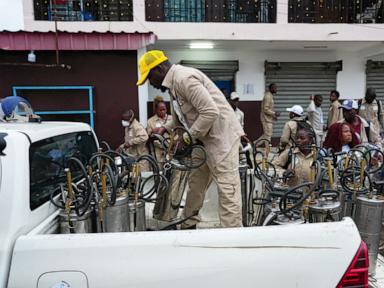
Expanding an elimination plan is an admission that timid containment leaves too much room for malaria to regroup. You have to hit multiple weak spots at once—vector control, rapid testing and treatment, surveillance that spots small sparks before they become brushfires, and community trust that makes people welcome sprayers and testers into their homes rather than viewing them as strangers with clipboards.
The Invisible Ledger of a Preventable Disease
When people read about malaria elimination, the numbers often blur together. Cases per thousand. Percentage reduction. Funding tranches. Campaign phases.
Numbers matter. Without honest counts, you are flying blind.
Yet numbers can also hide what malaria actually costs a place over decades. Think of it as a quiet tax levied on human potential. If we use a metaphor—and let's be clear, this is strictly a metaphor, not an accounting term—malaria acts like a slow leak in a battery. A car with a slow leak doesn't always die on the driveway; it starts a little slower on cold mornings, dims the headlights on dark roads, and forces the driver to carry jumper cables everywhere.
Multiply that slow leak across thousands of households year after year.
A child who has three or four bouts of malaria before age five does not just lose days of play. Repeated infections can contribute to chronic anemia, fatigue, and missed weeks of school. When school falls behind, reading lags. When reading lags, confidence drops. A bright kid who might have breezed through secondary school ends up struggling just to stay even.
Adults pay the tax too. A fisherman who misses two weeks of calm weather because of chills and bone-deep exhaustion loses income he cannot easily make back. A market vendor who cannot stand in the heat for a week loses regular buyers. A clinic nurse pulled away from routine vaccinations and maternal care to manage a seasonal spike of febrile illness leaves other vulnerabilities exposed.
That is the hidden tragedy of an endemic disease: people get used to carrying a weight they were never meant to bear. When something hurts every season for generations, folks start calling the ache normal.
Breaking that habit is half the battle. Elimination requires a psychological shift as much as a technical one. Communities have to believe—really believe—that zero local transmission is not a fairy tale told by distant experts, but a realistic target worth the effort of changing routines, sleeping under nets even on sticky nights, and getting tested even when a fever feels mild.
What Expanding Actually Demands on the Ground
Scaling up a malaria campaign sounds clean on paper. Add more districts. Train more teams. Distribute more supplies.
In reality, expansion tests every seam in a health system.
Consider what happens when you move from holding ground to pushing for elimination. When malaria is widespread, finding cases is almost too easy; walk into a clinic and half the fevers might be positive. As transmission drops—the exact success every elimination program wants—the job gets trickier. You have to hunt down smaller pockets of infection, including people who carry low levels of parasites without dramatic symptoms and can still pass them along if bitten.
Surveillance becomes detective work. Where did this new case come from? Did the person travel to the mainland recently? Is there a cluster of cases near a particular stream, construction site, or neighborhood with poor drainage? Every positive test becomes a clue rather than just another tally mark in a column.
At the same time, supply chains have to stay tight. A campaign stalls fast if diagnostic kits run out in one clinic while sitting in a warehouse fifty miles away, or if larvicides and nets arrive right before rains rather than ahead of them.
Let's be honest: public health work can be messy, frustrating, and slow. Even well-funded, well-intentioned programs run into weather delays, staffing gaps, and moments where the data looks confusing. Anyone who claims eliminating malaria in a humid tropical setting is straightforward has probably never stood in a downpour watching a schedule slip.
Uncertainty belongs in the story. Progress in disease elimination rarely moves in a straight line. There are plateaus where numbers stubbornly refuse to fall further until you figure out what gap you missed. There are flare-ups that test morale.
Yet the alternative to trying—settling for permanent management, accepting that children will keep getting sick every rainy season until some distant future—has a steep moral price. If tools exist to drive transmission down toward zero, leaving them half-used is hard to justify.
The Human Thread Between Policy and Pillow
At the end of the day, an elimination plan lives or dies in ordinary rooms at ordinary hours.
It lives in whether a net is tucked neatly under the mattress before the mosquitoes start feeding, or bunched up in a corner because it traps heat. It lives in whether a father brings a sick child in early instead of waiting to see if the fever breaks by morning. It lives in whether local community health workers are respected neighbors who know everyone's name rather than outsiders passing through once a quarter.
Trust is earned slowly. People remember past promises—programs that arrived with fanfare, ran for a while, and vanished when attention shifted elsewhere. If a campaign wants lasting buy-in, consistency speaks louder than slogans. Show up when you say you will. Explain what you are doing and why. Listen when residents point out standing water or clinic bottlenecks that outsiders might overlook.
There is also something deeply human about collective effort against a shared nuisance. Everyone knows the sound of that mosquito in the dark. Everyone knows the heavy, sluggish feeling of a fever coming on. When a neighborhood, a district, and a national program pull in the same direction, reducing malaria stops being an abstract government metric and becomes something personal: safer nights, fewer worried vigils by lamplight, more mornings where kids wake up ready to run.
Equatorial Guinea's push to expand its malaria elimination effort sits right at that intersection of science, logistics, and daily life. It is a wager that disciplined, wider action can shrink a centuries-old threat down to nothing—one screened window, one treated fever, one tracked transmission chain at a time.
Outside, the tropical dark settles over the leaves, thick with rain and warmth, while somewhere a tiny insect beats its wings against the mesh and finds no way in.