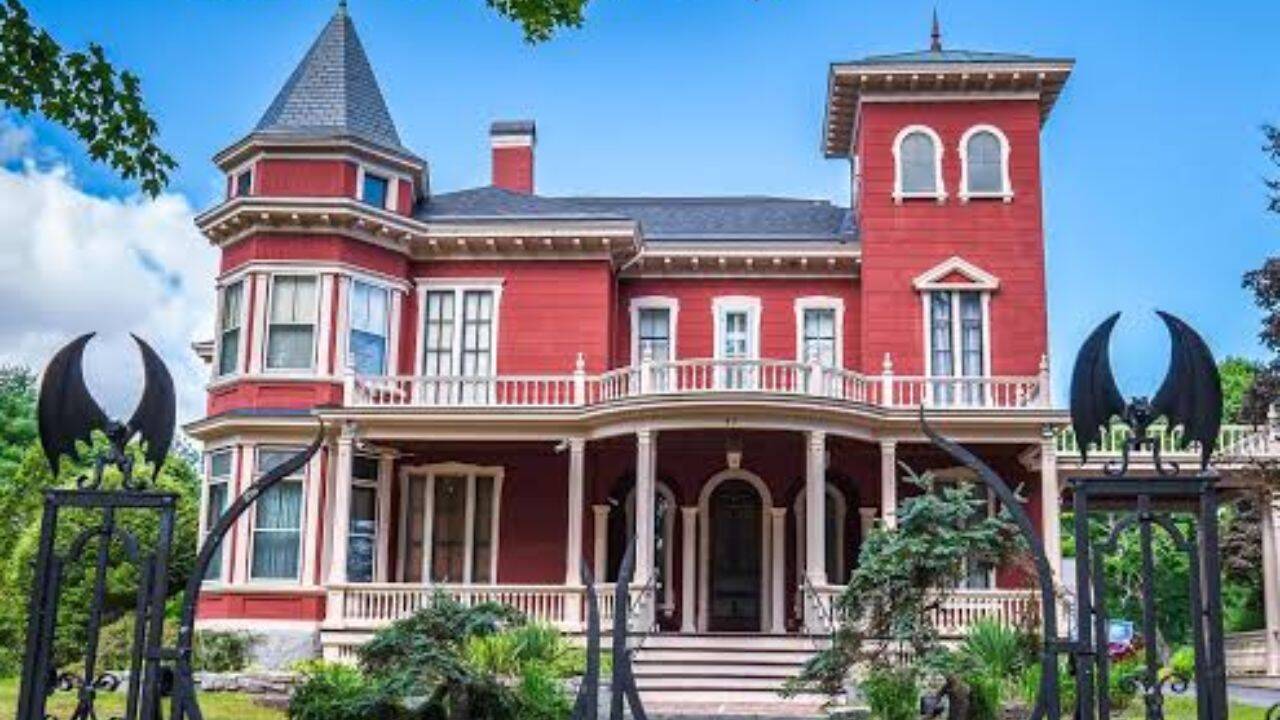
Converting a famous author’s private residence into a dual-purpose literary archive and commercial writers' retreat solves the primary economic failure of traditional house museums: negative cash flow subsidized entirely by charitable endowments. By splitting physical real estate into a restricted-access preservation vault and an adjacent high-margin hospitality asset, the Stephen and Tabitha King Foundation establishes a self-sustaining operational architecture in Bangor, Maine.
The Structural Deficit of Traditional Literary Landmarks
Standard historic house museums operate on broken unit economics. When a notable figure dies or vacates a culturally significant property, the default preservation strategy involves opening the doors to the general public for low-margin, high-volume foot traffic.
This standard model triggers three compounding operational failures:
- Physical Degradation: High daily visitor volume accelerates wear on flooring, climate-control systems, and fragile paper artifacts. Maintenance costs rise linearly with ticket sales, neutralizing revenue gains.
- Zoning and Municipal Friction: Residential neighborhoods lack the infrastructure for tour buses, commercial parking, and constant pedestrian congestion. Local zoning boards routinely block or restrict public museum conversions in residential zones like West Broadway in Bangor.
- Revenue Ceiling: Admission fees for house museums typically cap between $15 and $30 per visitor. Generating sufficient revenue to cover specialized archival climate control, security, and property taxes requires tens of thousands of annual visitors—a volume incompatible with preserving delicate manuscripts.
The Bangor model rejects public tourism entirely. Instead of monetizing volume, the asset structure separates preservation from revenue generation across two distinct physical footprints: the primary Victorian mansion at 47 West Broadway and the neighboring property at 49 West Broadway.
The Bifurcated Asset Architecture
To understand the efficiency of this operational setup, we must examine how the two properties function as complementary nodes within a single economic system.
Node 1: The Controlled-Access Archive (47 West Broadway)
The primary residence—famous for its wrought-iron fence adorned with spiders and bats—does not function as a tourist attraction. Following zoning approvals from the Bangor City Council in 2019, the property was rezoned to operate strictly as a non-profit literary archive and foundation headquarters.
Access is restricted to vetted scholars, researchers, and archival staff. Eliminating public walk-ins reduces security overhead, stabilizes interior humidity and temperature levels for paper preservation, and placates neighboring residents by keeping neighborhood traffic near zero. The asset's output is academic and cultural preservation, not direct cash flow.
Node 2: The High-Ticket Commercial Engine (49 West Broadway)
Directly next door, the adjacent property operates as a curated writers' retreat. Priced at approximately $2,500 per attendee for multi-day residencies, this facility captures the high-willingness-to-pay segment of the literary market.
Rather than selling passive observation (looking at a desk behind a velvet rope), the retreat sells proximity, prestige, and structured creative output. The pricing model shifts the revenue curve from low-margin mass tourism to high-margin experiential education.
The Economics of Proximity and Scarcity
The $2,500 price point is not arbitrary; it reflects specific supply-and-demand mechanics inherent to cultural branding.
- Artificial Supply Constraints: By capping retreat cohorts to small, intimate groups (typically fewer than a dozen participants per session), the operators create extreme scarcity. High scarcity eliminates the need for aggressive customer acquisition spending; organic demand from Stephen King’s global readership and aspiring horror/thriller writers fills spots without paid marketing.
- Brand Halo Transfer: Attendees are not merely paying for room, board, and writing workshops. They are paying for the psychological utility of writing immediately adjacent to the physical site where Pet Sematary, It, and Misery were conceived. The main mansion acts as a silent marketing engine that justifies a luxury hospitality price point for the house next door.
- Predictable Cost Structures: Unlike open-ended tourism, fixed-date retreats allow operators to forecast exact food, staffing, and utility expenses months in advance. Cash flow arrives upfront via registration fees, eliminating seasonal liquidity crunches.
Risk Mitigation and Governance Mechanics
Transferring private luxury real estate into a non-profit foundation framework introduces complex tax, governance, and community-relations variables. The Bangor blueprint manages these through deliberate structural separation.
Municipal Alignment
Residential neighbors frequently oppose celebrity landmarks due to privacy invasion and declining quality of life. By explicitly banning general public tours of the main mansion and restricting retreat participants to small, quiet cohorts of working writers, the foundation aligned its operational footprint with neighborhood expectations. The Bangor City Council approved the zoning variance precisely because the business model penalized foot traffic rather than incentivizing it.
Estate and Tax Optimization
High-net-worth creators face severe estate tax liabilities upon death, often forcing heirs to liquidate intellectual property or real estate to cover tax bills. Donating the real estate and archival materials to a registered 501(c)(3) non-profit foundation during the creators' lifetimes removes the appreciating physical assets from their taxable estate. Simultaneously, it locks in permanent institutional control over how the literary archive is cataloged and accessed, preventing future commercial exploitation by third-party buyers.
Operational Limitations and Failure Points
While superior to the traditional house museum, the bifurcated archive-and-retreat model carries distinct vulnerabilities that limit its universal application.
- Key-Person Dependency: The economic viability of a $2,500 retreat relies heavily on the living cultural relevance of the primary author. While Stephen King’s commercial footprint remains massive, lesser-known authors cannot command luxury retreat pricing based solely on real estate proximity. Once the founding author passes away, the retreat must transition its value proposition from living aura to historical prestige—a shift that historically compresses pricing power over a 20-to-30-year horizon.
- Instructor Quality Bottlenecks: High-ticket retreats fail rapidly if the educational programming does not match the price point. Because the famous author rarely teaches every session personally, the retreat must continuously recruit high-caliber guest instructors, editors, and literary agents. If attendees perceive the experience as a glorified bed-and-breakfast rather than a serious career accelerator, refund requests and reputational damage will erode demand.
- Capital Intensity of Archival Preservation: Digitizing, cataloging, and climate-controlling decades of physical manuscripts, correspondence, and first editions requires specialized archival labor. Even with high-margin retreat revenue next door, a single retreat property cannot fully fund a world-class research archive without supplementary endowment yields or intellectual property royalties.
Strategic Execution for Cultural Asset Holders
Foundations, estates, and institutions managing high-profile creative properties must abandon the 20th-century house museum playbook. Opening doors to mass tourism destroys the physical asset while generating insufficient capital to maintain it.
Instead, estate planners and foundation directors should execute a three-step asset restructuring:
- Isolate the Primary Artifact: Lock down the core historic property under strict zoning and climate controls. Restrict physical access exclusively to credentialed researchers and high-tier donors to preserve structural integrity and minimize municipal friction.
- Acquire Adjacent Buffer Real Estate: Purchase neighboring residential or commercial properties before announcing preservation plans, avoiding speculative price inflation.
- Deploy High-Margin Experiential Programming: Convert the adjacent buffer property into a low-volume, high-ticket residency, workshop, or fellowship venue. Use the brand equity of the restricted main property to subsidize operational overhead, ensuring the archive remains solvent independent of fluctuating charitable donations.