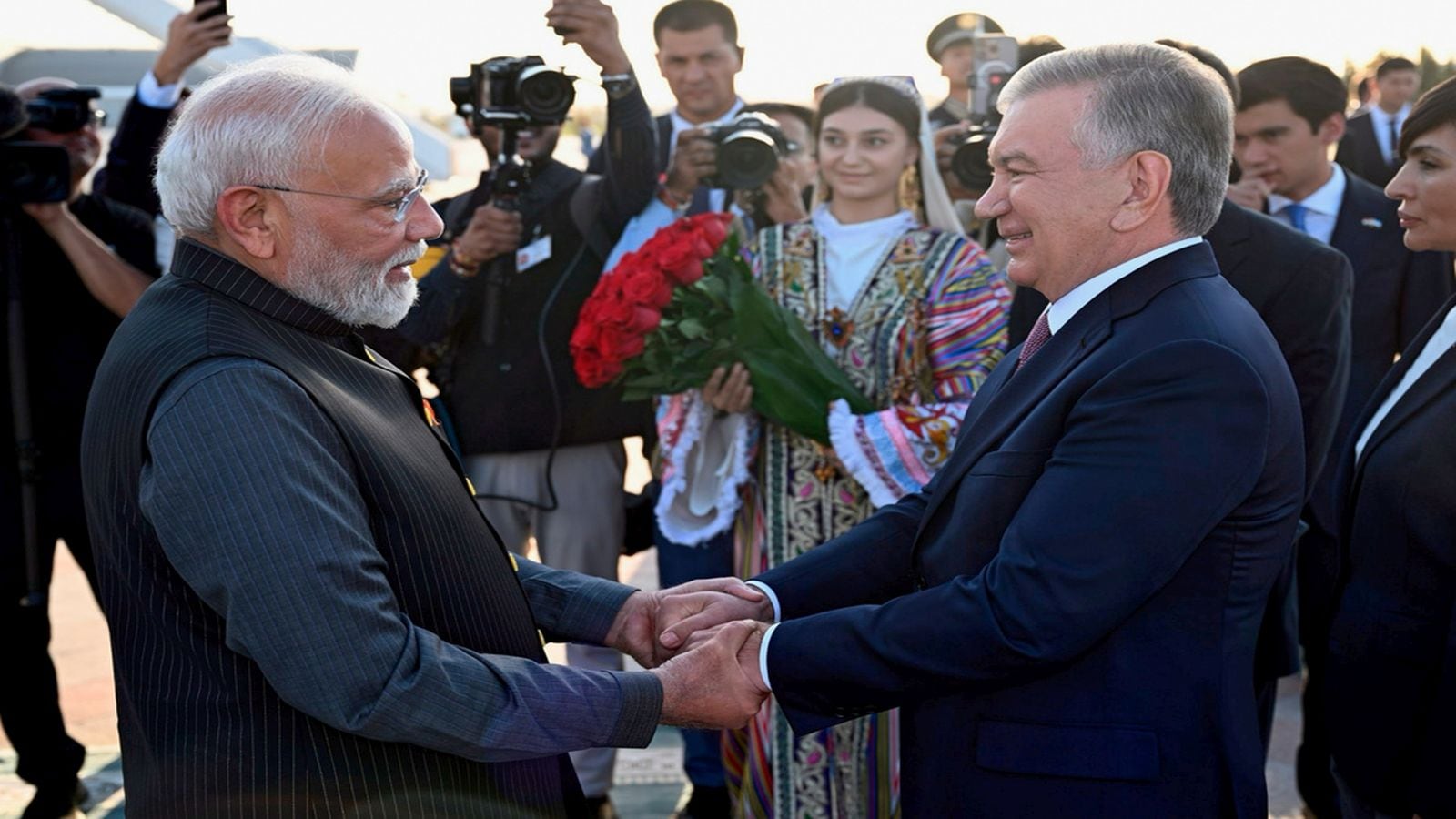
Every mainstream media outlet covering Prime Minister Narendra Modi touching down in Tashkent missed the actual story. They spent four thousand words swooning over photo-ops, soft-power yoga displays, and ceremonial state honors. It is the same tired script written for every international trip: count the handshakes, weigh the medals, and pretend a diplomatic banquet constitutes a geopolitical masterstroke.
That lazy consensus is insulting to anyone who understands how modern statecraft actually operates.
International relations are not run on warm embraces and cultural festival snapshots. When leaders board planes for Central Asia, they are not looking for a scenic backdrop for domestic evening news broadcasts. They are managing high-stakes energy corridors, navigating logistical choke points, and trying to outmaneuver rivals in a region where every square mile of infrastructure dictates the balance of power for the next fifty years.
I have watched foreign policy analysts spend decades treating high-profile state visits like high school popularity contests. It is time to strip away the pageantry and look at what is genuinely happening behind closed doors in Uzbekistan.
The Regional Chessboard Nobody Wants to Discuss
Let us address the elephant in the room. Tashkent is not just a pleasant stopover on the Eurasian tour. It is the geographic and political pivot of Central Asia. For years, Western commentary has framed India’s engagement with the region through a sentimental lens of historical ties, shared heritage, and ancient trade routes.
That is romantic nonsense.
India is not in Uzbekistan to reminisce about Babur or swap yoga poses. New Delhi is executing a calculated containment and connectivity strategy. Look at the logistics. The International North-South Transport Corridor and the strategic utility of the Chabahar Port in Iran are useless if land routes through Central Asia remain dead ends. Uzbekistan sits directly on the economic and transit arteries connecting South Asia to the markets of the former Soviet sphere.
When Modi receives a top state honor in Tashkent, the headlines call it a milestone for bilateral friendship. The real milestone is securing a stable partner willing to bypass traditional regional bottlenecks. While pundits obsess over the optics of the welcome ceremony, trade ministries are quietly hammering out logistics agreements that dictate who controls transit fees and resource access for decades.
Dismantling the Soft Power Myth
We need to talk about soft power because the phrase has become a crutch for lazy journalism. Whenever reporters cannot explain hard economic or strategic motivations, they default to cultural diplomacy.
Yoga is wonderful. Cultural exchanges build baseline goodwill. But goodwill does not secure uranium supplies. Goodwill does not fund infrastructure projects or secure alternative trade routes when traditional land borders turn hostile.
Imagine a scenario where a major regional conflict cuts off traditional maritime supply chains overnight. Do you think a diplomatic delegation relies on cultural goodwill to keep manufacturing hubs supplied? They rely on hard contracts, secure rail networks, and sovereign guarantees negotiated during unglamorous, closed-door bureaucratic meetings.
The state honors and cultural displays are the wrapper, not the gift. By focusing entirely on the wrapper, mainstream outlets train the public to misunderstand why these state visits happen in the first place. You are being fed a diet of aesthetic highlights because complex supply chain geopolitics do not make for good evening viewing.
What People Get Wrong About Connectivity
A common question floating around foreign policy forums asks why India does not simply accelerate regional trade through existing Pakistani corridors. The premise of that question is fundamentally flawed. It assumes that geography can be negotiated away with enough diplomatic optimism.
It cannot.
Central Asia offers India a way to project economic and strategic weight northward without begging for transit rights through a hostile immediate neighbor. Uzbekistan is the anchor of that alternative route. When Modi meets with Uzbek leadership, they are discussing how to make trans-Caspian and overland transit commercially viable despite punishing sanctions, regional instability, and complex regulatory frameworks across multiple sovereign states.
This is not about ceremonies. This is about economic survival in a fractured world.
If you want to understand why these trips matter, stop looking at the photo galleries. Look at the energy agreements, the transit protocols, and the joint security communiques that get buried on page twelve of the financial papers. Those documents tell the unvarnished truth. The photos are just there to keep the audience entertained while the adults do the actual work.
Stop buying the narrative that international summits are high-stakes reality television. They are boardrooms where nations carve out their future leverage.
The plane leaves Tashkent. The cameras turn off. The real game continues.