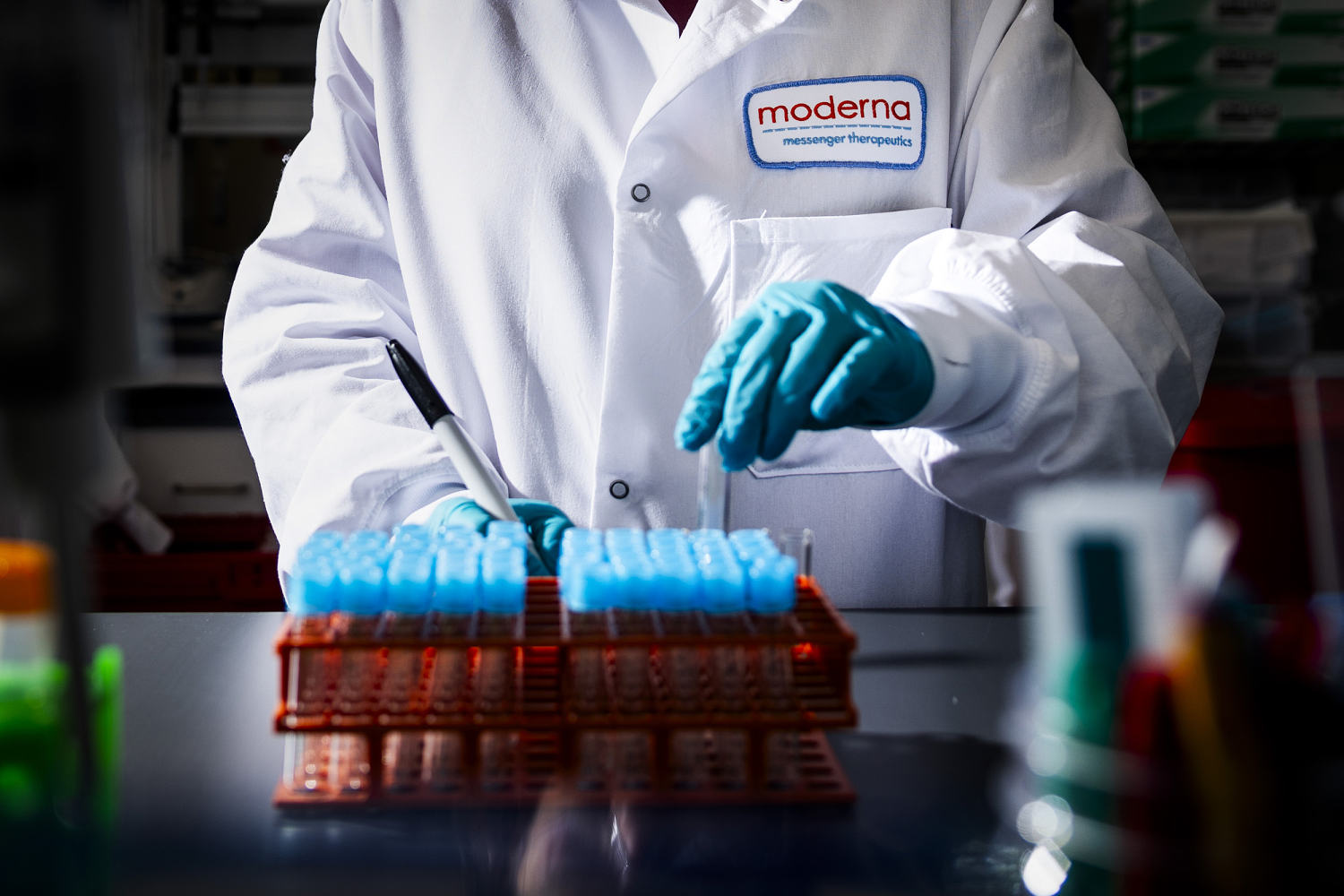
The headlines hit the wires with predictable worship. Moderna and Merck announced that their personalized mRNA cancer vaccine, paired with KEYTRUDA, slashed the risk of melanoma recurrence or death. The mainstream financial press and medical cheerleaders lost their minds. Patients heard a cure. Investors heard a goldmine.
I have watched biotech marketing departments spin straw into gold for two decades. I have seen venture capital incinerated on promising mouse models that withered in human tissue. The lazy consensus surrounding this vaccine trial is that we have finally cracked personalized oncology using messenger RNA.
We haven't. We have built an extraordinarily expensive, hyper-customized Ferrari and pointed it down a dirt road with missing tires.
The Data Gap Nobody Wants To Discuss
Let us look past the corporate press releases and examine what the mid-stage clinical trials actually showed. Yes, the combination reduced recurrence-free survival risk compared to checkpoint inhibition alone. But let us talk about the math that Wall Street conveniently glosses over.
Personalized neoantigen therapy means sequencing a patient's tumor, identifying unique mutations, and manufacturing an entirely bespoke mRNA batch for one single human being. Every dose is a lot-of-one production nightmare.
- The turnaround time: Generating these vaccines takes weeks, sometimes months, during which the patient sits in a volatile window of micro-metastatic risk.
- The failure rate of manufacturing: A non-trivial percentage of patient biopsies fail the sequencing or manufacturing quality control before a single dose ever reaches an arm.
- The cost barrier: We are looking at a pricing structure that will make traditional CAR-T therapies look like generic aspirin.
Imagine a scenario where a hospital system approves this treatment for thousands of stage three melanoma patients. The cold-chain logistics, the genomic sequencing bottlenecks, and the sheer manufacturing overhead mean that the healthcare infrastructure will buckle long before efficacy reaches population-level significance. We are celebrating a therapy that is functionally impossible to scale for the global burden of skin cancer.
The Mechanism Fallacy
The fundamental misunderstanding in public discourse is how these vaccines work. People assume the mRNA teaches the immune system to hunt down melanoma cells universally. It does not. It targets specific neoantigens unique to that specific patient's resected tumor.
Tumors evolve. That is their core survival mechanism.
When you apply selective pressure via a neoantigen-specific T-cell response, you create an evolutionary sieve. The cancer cells presenting those specific neoantigens die off. What survives? The subclones that mutated past your bespoke vaccine's targeting parameters. You do not eradicate the cancer; you force it to mutate into a more elusive, aggressive phenotype.
I have sat across from oncology researchers who whisper this exact fear behind closed doors while smiling for the cameras on CNBC. The biological reality of clonal heterogeneity means that a personalized vaccine targeting twenty neoantigens is playing whack-a-mole against a billion-dollar evolutionary machine.
The Real Cost Of The Hype Cycle
Let us address the financial toxicity. When biotech giants trumpet success in phase two trials, they are priming the pump for reimbursement approvals and market dominance. They are not talking about the patients who dropped out of the trial due to immune-related adverse events.
Combine a potent checkpoint inhibitor with a hyper-stimulated neoantigen vaccine, and you dial up immune toxicity to eleven. Autoimmune side effects are not minor inconveniences; they are debilitating, permanent organ-destroying conditions that land patients back in intensive care units.
When you push a therapy that costs hundreds of thousands of dollars per patient into the mainstream before solving manufacturing scalability or long-term escape mutations, you starve funding from simpler, more robust preventative approaches. We throw billions at high-tech bespoke mRNA while basic metabolic and immunological drivers of cancer persistence are ignored because they cannot be patented with a high-margin wrapper.
Stop waiting for the miracle jab to save a broken system. The future of oncology belongs to those who understand that cancer is an ecological problem, not just a genetic typo you can code away with synthetic nucleotides.
Build better distribution networks. Solve the evolutionary escape problem. Or stop pretending a phase two surrogate endpoint is the end of skin cancer.