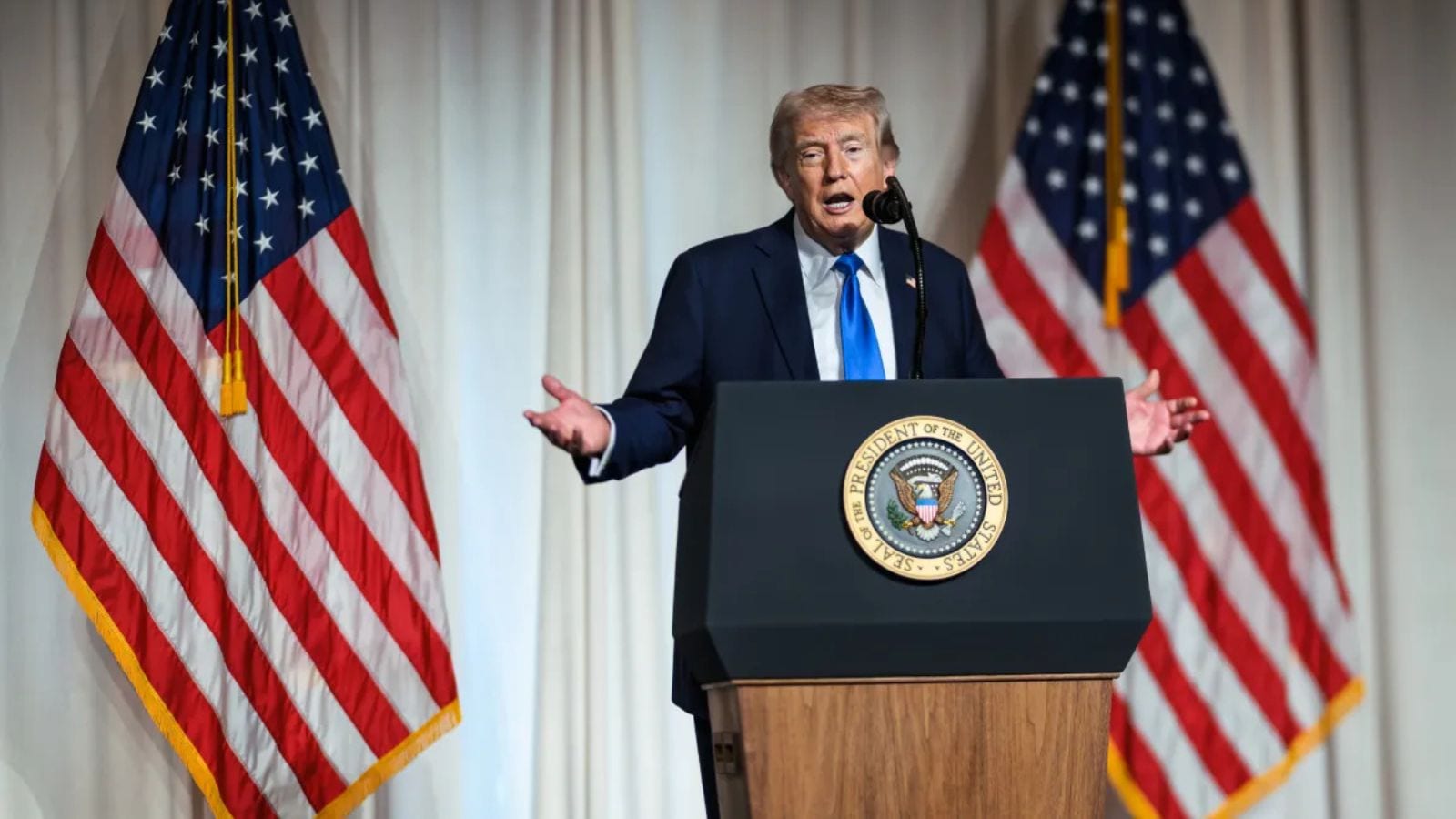
Follow the money trail out of Venezuela and you hit a wall of presidential double-talk. Donald Trump recently stood before reporters on Air Force One and casually dropped a staggering claim. The United States has raked in more than thirteen billion dollars from Venezuelan oil revenues since the dramatic January operation that detained Nicolás Maduro.
According to Trump, the country paid for that war many times over.
When pressed on where those billions are actually sitting, the answers get messy. White House statements and Treasury documents originally promised that proceeds from state-run oil sales would act as temporary custody funds for the benefit of both American and Venezuelan citizens. Reality looks completely different. Economists, investigative journalists, and even members of Congress are staring at a massive financial void. Out of over thirteen billion dollars generated through crude shipments tracked by platforms like Kpler, only a meager three hundred million dollars has surfaced on official Venezuelan transparency portals.
So, where is the cash?
The Disappearing Thirteen Billion Dollars
Financial Times data shows that the U.S. government took total charge of managing oil sales and funds after lifting unilateral export controls on Venezuelan energy assets. Shipments of heavy crudes like Merey, Boscan, and Hamaca continued to flow. Yet, the expected economic recovery inside Venezuela stalled out completely. First-quarter gross domestic product crawled upward by a mere two and a half percent, marking the slowest economic velocity in five years despite a twenty-five percent surge in oil exports.
Francisco Rodríguez, an economist with the Center for Economic and Political Research, points the finger directly at Washington's tight fist. The money is generating on paper, but Caracas isn't collecting it. Instead, the billions remain locked away in U.S. Treasury-controlled accounts or routed through offshore channels.
When reporters cornered Trump on Air Force One about the exact destination of these funds, he didn't pretend it was all going back to South American humanitarian aid anymore.
"It goes toward running the country," Trump stated plainly. "It can go to the military. Congress has to approve it."
That admission caught lawmakers completely off guard.
Capitol Hill Is Kept in the Dark
Bipartisan friction is heating up fast. Both Democratic and Republican representatives are demanding answers about the missing oil revenue. House committees have received zero official breakdowns regarding fund execution or structural safeguards.
Even staunch administration allies are raising eyebrows. Florida Representative María Elvira Salazar has publicly called for absolute transparency, arguing that stakeholders deserve a clear ledger of transactions. When Congress is kept out of the loop, accountability evaporates.
The administration insists that financial monitoring is active and that third-party auditors like KPMG are looking at bank accounts. But audit results remain hidden from public view. Meanwhile, basic infrastructure needs in Venezuela—compounded by recent natural disasters like earthquakes—go severely underfunded while massive oil checks clear abroad.
What This Means Moving Forward
Trump’s recent comments also came with a warning shot aimed at the Middle East, suggesting that the exact same financial playbook awaits Iran. If military interventions can be directly self-funded by seizing energy exports and redirecting proceeds into domestic government coffers, the precedent changes modern foreign policy forever.
Right now, the numbers don't add up. Thirteen billion dollars in oil wealth has entered the pipeline, but the people who produce it have little to show for it. Until the Treasury Department opens the books and congress gets a genuine accounting of every single barrel sold, these missing billions will remain one of the biggest financial mysteries in modern geopolitics. Keep a close eye on upcoming congressional budget hearings, because the pressure on the White House to audit these offshore accounts is only getting louder.