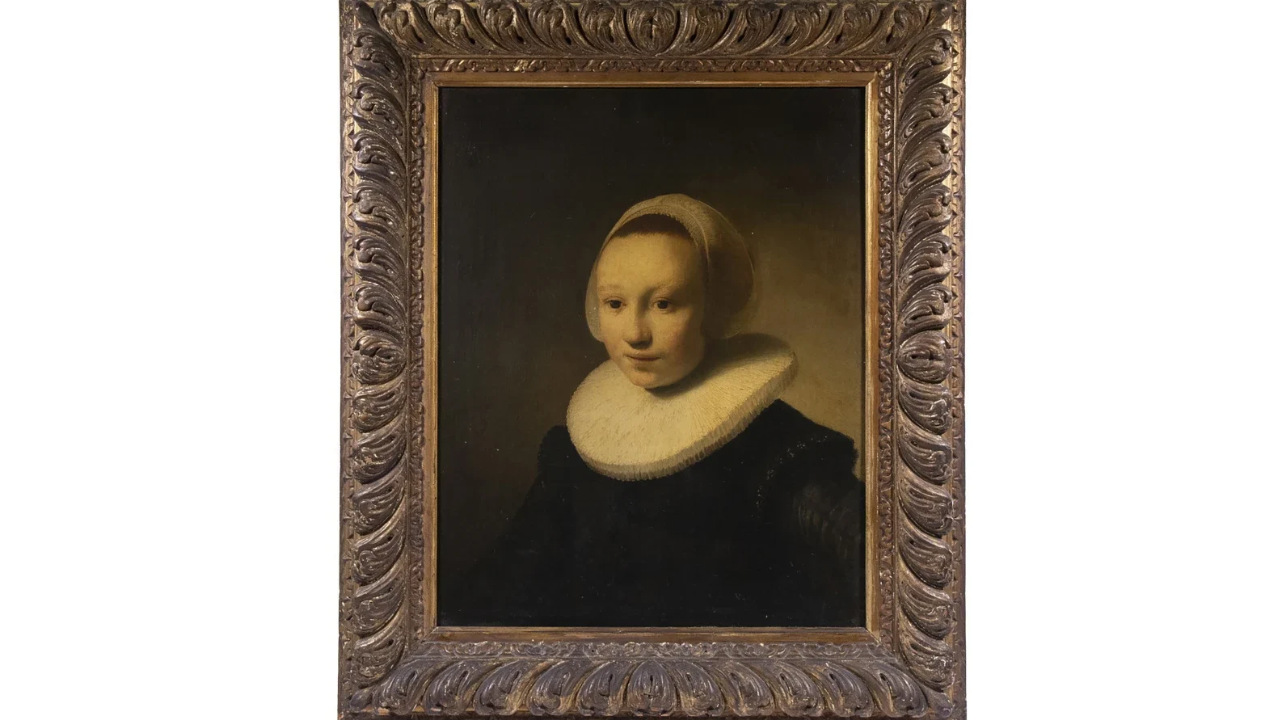
A dusty 17th-century panel painting tucked away in a Camden, Maine attic recently shattered expectations by fetching $1.41 million at auction after carrying a modest pre-sale estimate of just $10,000 to $15,000. Marketed as a work "after Rembrandt", the portrait of a young girl captured the imagination of aggressive phone bidders who recognized that the auction house's valuation was an astronomical miscalculation. This sensational transaction is more than a dusty-att
The Million Dollar Dust Collector How an Attic Rembrandt Exposes the Broken Art Market
business, news, entertainment Learn more on a related issue: this related article.
A forgotten portrait gathering dust in a Maine attic for generations recently fetched a staggering $1.41 million at auction, vastly outperforming its modest $15,000 pre-sale estimate. This remarkable discovery of a painting attributed to Rembrandt van Rijn highlights the wild anomalies of the fine art market. It also exposes how deeply flawed institutional authentication processes have become. When a masterpiece can sit unrecognized beneath decades of grime, it raises a troubling question about the experts tasked with protecting and valuing cultural heritage.
For decades, the painting remained tucked away, dismissed by casual observers as a worthless antique or a cheap reproduction. The family who owned it treated it with the casual indifference reserved for flea-market furniture. Yet, when it finally crossed the auction block, the fierce bidding war proved that high-stakes art investing relies less on absolute scientific certainty and more on speculative frenzy. More reporting by Financial Times explores related perspectives on this issue.
The Anatomy of a Misattribution
How does a multi-million-dollar seventeenth-century Dutch masterwork hide in plain sight? The answer lies in the structural inefficiencies of regional estate appraisals. Most local estate liquidators are trained to spot mid-century modern furniture, sterling silver, and signed porcelain. They are not forensic art historians equipped with ultraviolet light, infrared reflectography, or deep archival databases.
When local auctioneers evaluated the Maine estate, they defaulted to safety. A $15,000 estimate is the universal code for an item that looks old and interesting, but lacks immediate provenance or signature verification. It functions as a placeholder. It invites speculative buyers to take a gamble without scaring them off with high minimums. In this instance, that caution backfired spectacularly on the seller, who left millions on the table while the winning bidder struck gold.
This dynamic reveals a systemic vulnerability in the secondary art market. The infrastructure of inheritance is decentralized and fragmented. Treasures constantly slip through the cracks because the gatekeepers of provenance are spread thin across major metropolitan hubs like New York, London, and Paris. Rural estates are effectively a dark pool of untracked cultural assets.
The Speculative Gamble of the Old Masters
The buyer who walked away with the Rembrandt portrait did not purchase a guaranteed investment. They bought a lottery ticket backed by art history. In the upper echelons of the art world, attribution is a moving target.
The Rembrandt Research Project spent decades trying to establish a definitive catalog of the artist's authentic works, frequently upgrading and downgrading paintings based on shifting stylistic criteria and technical analysis. When an unsigned or disputed canvas enters the market, buyers are essentially betting against the collective wisdom of academic scholarship. If subsequent analysis confirms the piece is a genuine product of Rembrandt's studio or his own hand, the valuation multiplies exponentially. If it is demoted to the work of an anonymous seventeenth-century pupil, the asset sheds eighty percent of its value overnight.
This high-risk environment attracts a specific breed of collector. They are gamblers who utilize art as an alternative asset class, treating historical canvases much like volatile cryptocurrency tokens or venture capital startups. The thrill is not purely aesthetic. It is the arbitrage opportunity created by institutional ignorance.
Why the Auction Houses Won Protect Sellers
The Maine attic discovery underscores a bitter truth for everyday families clearing out ancestral homes. Major auction houses like Sotheby's and Christie's possess the elite scholarship necessary to flag rare pieces, but they rarely deploy their top-tier specialists to comb through ordinary suburban or rural basements. Their intake pipelines rely on families reaching out to them with pre-vetted items.
If an ordinary person has no reason to suspect their inherited portrait is worth more than the frame holding it together, they will never seek out a specialist. They rely on local generalists. Consequently, a hidden wealth transfer occurs continuously, moving high-value cultural artifacts from unsuspecting heirs into the hands of sophisticated dealers and elite collectors who know exactly how to navigate the risks of attribution.
The $1.41 million sale price is not a celebration of democratic discovery. It is a symptom of a market where expertise is hoarded by the wealthy, leaving everyday citizens vulnerable to catastrophic undervaluation of their own inherited assets. Until regional estate networks integrate better technological screening tools and access to centralized art databases, attic treasures will continue to serve as lottery tickets for the few who know where to look.