Money usually talks in whispers. It arrives in audited statements, quiet wire transfers, and neat stacks of restricted funds designated for specific line items: new textbooks with uncreaked spines, or asphalt patched over playground cracks. Schools operate on scarcity. Every dollar is a calculated sacrifice.
Then came the envelope.
Or perhaps it was an encrypted wire, routed through a foundation with a name that sounded like a quiet law firm. The details do not matter as much as the sheer weight of the number. One million dollars. Unrestricted.
In the bureaucratic machinery of public education, a windfall that large usually triggers a stampede of committees. Administrators scramble to plug budget deficits. School boards debate long-term liabilities. Maintenance supervisors eye leaking roofs. But in Delaware, at a school whose name became secondary to the magnitude of the gesture, something extraordinary happened instead.
They did not spend it. They multiplied it.
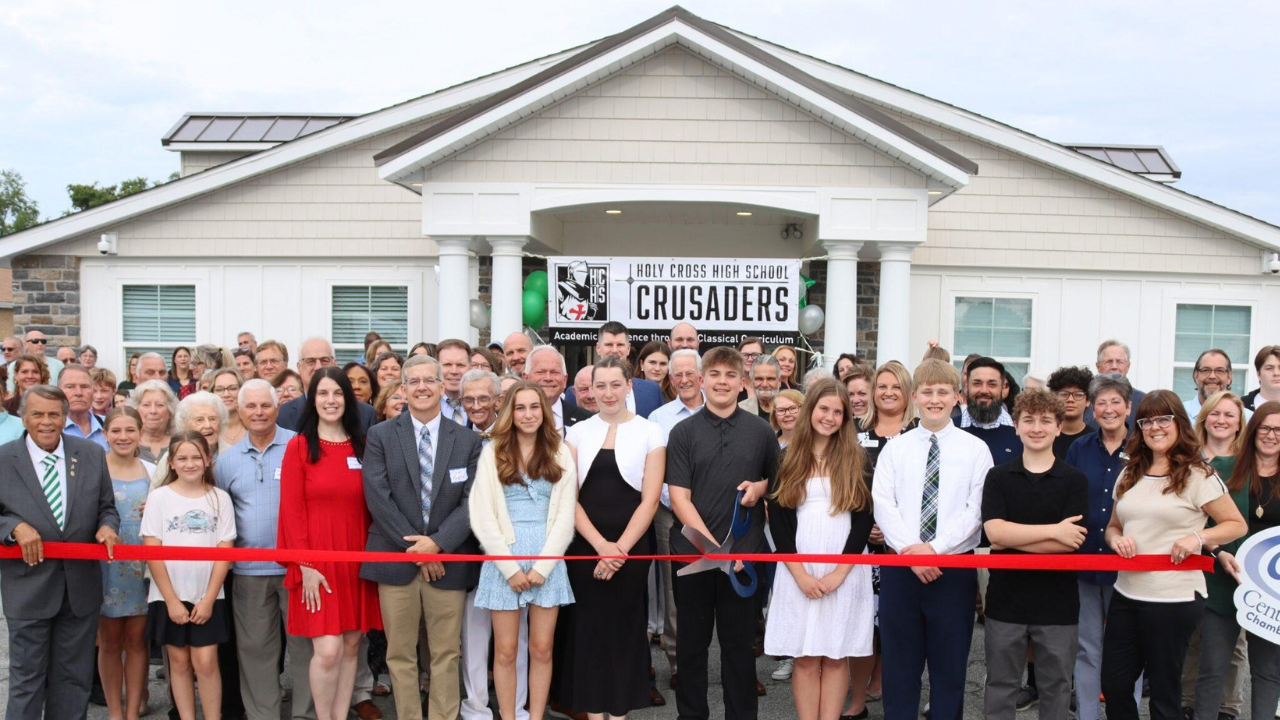
Twelve months after an anonymous donor dropped a seven-figure check into their accounts, that same school community managed to turn that million into two. Not through venture capital bets or municipal bond schemes, but through an alchemy that schools rarely master: trust, contagion, and the stubborn belief that a community can fund its own salvation.
Walk through the hallways of a typical struggling school on a Tuesday morning in November. You smell damp coats, floor wax, and cheap cafeteria pizza. You hear the sharp screech of locker doors slamming shut and the dull hum of fluorescent lights vibrating just above the threshold of human hearing.
Scarcity has a sound. It sounds like a teacher paying out-of-pocket for dry-erase markers. It sounds like a gymnasium floor with dead spots where the wood has rotted from beneath.
When you tell a teacher, a principal, or a parent that a million dollars has just landed in the vault, their eyes do not light up. They narrow. They have seen windfalls before—federal grants with a hundred strings attached, emergency relief funds that must be spent by Friday on items nobody asked for. They have learned to mistrust miracles.
So when the anonymous gift arrived, the initial reaction was not euphoria. It was hesitation.
Imagine sitting at a kitchen table at midnight, staring at an unexpected medical bill while the house is freezing because the furnace pilot light went out again. You do not plan a vacation when a relative hands you a hundred-dollar bill. You pay the gas company, buy groceries, and hold your breath.
Schools operate with that exact posture of survival. Every administrator is a triage nurse.
Yet, this anonymous donor understood something fundamental about human psychology that accountants miss. Restricted money stifles imagination. It tells the recipient: We do not trust you to make decisions. Unrestricted money whispers something else entirely: We believe in your vision.
The leadership team in Delaware did something brave. They decided not to absorb the million dollars into the operating budget to patch over the structural leaks of underfunding. If they had done that, the money would have vanished into the great maw of fixed costs, swallowed by heating bills and step-scale salary increases. By next year, the million would be gone, and the school would be right back where it started, addicted to a fix that could not be repeated.
Instead, they treated the million dollars as a match. A dare.
Consider what happens when a stranger walks into a room and places a massive bet on your future.
In behavioral economics, this is known as the reciprocity of belief. If someone thinks you are worth investing in, your own estimate of your worth shifts. You stop asking how to survive the semester and start asking what the next decade could look like.
The school established a challenge fund. They went to local businesses, alumni who had long since moved away, and families who had scraped together tuition or property taxes for generations. They did not ask for charity. They asked for partnership.
Look, they said, holding up the anonymous check. Someone who doesn't even have children in this district believes in us enough to risk a million dollars. Are you going to sit this one out?
Pride is a powerful engine. But hope is stronger.
At first, the phone lines were quiet. Local business owners shook their heads, citing inflation, property taxes, and supply chain fatigue. The early donations were modest—fifty dollars here, five hundred there. Teachers chipped in from their meager stipends. A retired math teacher who had spent thirty-four years in the same classroom mailed in a check for two thousand dollars, his life savings wrapped in a handwritten note that simply read: About time someone noticed.
Then, the narrative shifted.
A local manufacturing firm stepped up with twenty-five thousand. A group of alumni, galvanized by a social media campaign that traced the school's history back through decades of state championships and Friday night lights, pooled their resources.
Money attracts money, but momentum attracts belief.
By month six, the fund had crossed the quarter-million mark in matching donations. By month nine, it was breathing down the neck of the original gift. By the time the one-year anniversary of the anonymous wire arrived, the total had breached the two-million-dollar mark.
The original donor had not just given money; they had unlocked a dormant vault of civic pride.
There is a temptation to look at this story as a fairy tale about philanthropy. It is easy to write headlines about anonymous angels and doubled fortunes, as if wealth is a magic wand that cures institutional fatigue.
That is the wrong lesson.
The real story is not about the money. It is about what happens when an institution is given the breathing room to transition from defense to offense.
For decades, public and semi-private schools have been forced into a posture of perpetual defense. They defend their test scores, their graduation rates, their aging boilers, and their stretched-thin staffs. Defense is exhausting. Defense breeds cynicism. When you are constantly blocking blows, you cannot build anything new.
With two million dollars in hand, the Delaware school did not buy gold-plated fixtures or launch vanity projects. They built a modern STEM lab that looked less like a high school science dungeon and more like a Silicon Valley incubator. They created permanent endowments for tutoring programs targeted at kids who were falling through the cracks during the pandemic recovery years. They funded mental health initiatives that didn't rely on stretched county resources.
They changed the horizon.
When a student walks into a building where adults are actively investing in their future—not out of legal obligation, but out of a ferocious, communal desire to see them win—something changes in their posture. The slump in their shoulders straightens. The cynical joke about the broken ceiling tile turns into a conversation about robotics competitions.
We drastically underestimate the psychological toll of institutional decay. Peeling paint and outdated textbooks send a constant, silent message to children: You are an afterthought.
Money, when deployed with intention, acts as a megaphone for dignity.
We live in an era obsessed with scale, metrics, and algorithmic efficiency. We want to know the return on investment for every emotional and financial expenditure. We want spreadsheets that prove goodness works.
Sometimes, goodness defies the spreadsheet.
The anonymous donor remains anonymous. We will likely never know if they are a Wall Street titan seeking redemption, a former student who remembered a teacher who saved their life, or a local eccentric who simply happened to cash out at the right moment.
Their identity is irrelevant. What matters is the echo they created.
They threw a stone into a pond of institutional fatigue, and the ripples hit shores they will never see. They proved that philanthropy is not merely about balancing a ledger; it is about breaking a spell. They showed that when you hand a community the tools to transform their own reality, they will not just use them—they will double down.
The school bell still rings at 7:45 AM. The buses still line up along the curb in the gray morning mist, exhaling diesel exhaust into the damp air. The hallways still smell of floor wax.
But beneath the surface, the math has changed forever. They started with a million dollars from a ghost. They finished with two million dollars from each other. And in the ledger of human resilience, that is the only kind of addition that truly matters.


