The traditional military logistics truck is a loud, gas-guzzling liability on the modern battlefield. It demands a massive fuel supply chain, gives away its position with heavy thermal and acoustic signatures, and requires human drivers who are exposed to constant danger. That's why the latest move from California-based vehicle manufacturer Harbinger is turning heads in the defense sector.
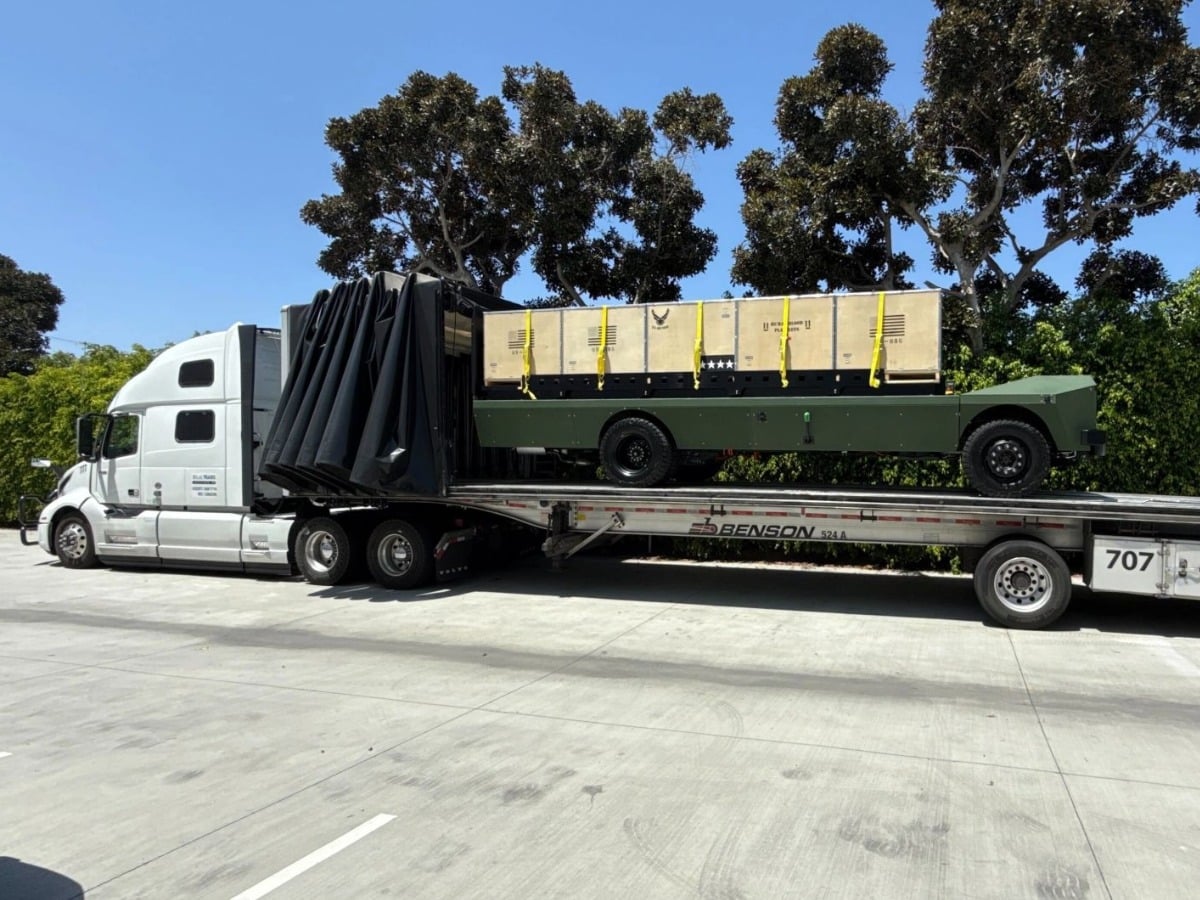
Harbinger just launched a dedicated defense vertical called Harbinger Praesidia, backed by a fresh strategic investment from In-Q-Tel (IQT), the non-profit venture capital arm of the U.S. intelligence community. Instead of building armored trucks from scratch, Harbinger is bringing its commercial medium-duty hybrid electric chassis directly into the national security space. They've teamed up with defense giant American Rheinmetall to turn these stripped commercial frames into uncrewed, modular tactical platforms.
This isn't about saving the environment with electric vehicles. It's about tactical survivability, massive exportable power, and keeping soldiers away from front-line logistics risks.
The Logistics Crisis in Contested Environments
Modern warfare in places like Ukraine has shown that traditional supply lines are highly vulnerable. Convoys of loud diesel trucks are easily spotted by drones and targeted by precision artillery. The Pentagon is staring down the reality of "contested logistics," meaning every mile traveled with food, ammunition, and fuel is a high-risk mission.
Harbinger’s approach strips the driver out of the equation entirely. Built from the ground up to be autonomous-ready, the Praesidia platform utilizes full drive-by-wire technology—including steer-by-wire, brake-by-wire, and accel-by-wire systems. Combined with a built-in six-camera system providing a 360-degree bird's-eye view, the chassis can be operated via remote teleoperation or integrated into autonomous convoy architectures.
When you eliminate the cab, the steering wheel, and the driver's seat, you completely change the vehicle's form factor. The platform can be upfitted as a flat-deck cargo carrier, a mobile battlefield communications hub, a troop transport, or even a counter-unmanned aerial systems (C-UAS) platform.
Hybrid Power is a Tactical Asset
Pure electric vehicles don't make sense for long-range military operations yet. The charging infrastructure isn't there, and waiting hours for a charge in a combat zone is a death sentence. Harbinger solved this by deploying a series hybrid powertrain.
An electric motor handles the high-torque demands of off-road driving, while a compact internal combustion engine acts strictly as an onboard generator to keep the battery pack topped off.
Performance and Range Specs
- Total Range: Over 500 miles in hybrid mode.
- Pure EV Range: Roughly 105 miles of completely silent, battery-only operation.
- Charging Flex: Charges from 10% to 80% via AC in four hours, or via DC fast charging in one hour.
- Mobility Metrics: Capable of handling over a 30% grade, a 20% side slope, and a tight 21-foot turning radius.
- Climate Tolerance: Fully operational from a freezing -30°C up to a scorching 55°C, at altitudes reaching 12,000 feet.
The 105 miles of pure electric range provides a critical advantage: silent maneuvering. A hybrid vehicle can approach a forward operating position without the loud rumble of a diesel engine or the massive heat signature that heat-seeking missiles and thermal drones track.
Turning the Truck into a Mobile Power Plant
The most significant bottleneck for modern military units isn't just fuel; it's electricity. Command posts, radar arrays, anti-drone jammers, and communication systems require immense amounts of power. Traditionally, this meant towing heavy, maintenance-prone diesel generators behind trucks.
The Harbinger platform acts as a massive rolling battery. It can export up to 350 kilowatts of power to external systems, featuring 48 kilowatts of continuous power directly from the gasoline generator and an onboard inverter for split-phase AC output. You can park this vehicle at a hidden outpost, shut off the main engine, and run high-draw mission equipment silently for days purely off the battery reserve. If the battery runs low, the compact onboard engine kicks on briefly to recharge it, minimizing the thermal footprint.
Commercial Tech Scaled for National Security
The U.S. military has historically struggled with sluggish procurement cycles. Developing a bespoke tactical vehicle can take a decade. By the time it hits the field, the onboard computing architecture is completely outdated.
Harbinger’s leadership understands this gap. CEO John Harris previously ran hardware engineering and manufacturing at defense tech unicorn Anduril, where he led the development of the Sentry Tower. The strategy with the Praesidia platform is to take a commercially proven, medium-duty chassis manufactured right in California and scale it rapidly for military buyers.
Because the underlying frame, battery systems, and software stack are already being produced for commercial delivery fleets, manufacturing can scale instantly. This commercial commonality drastically lowers the unit cost, making the platform what the defense industry calls "attritable"—cheap enough to risk losing in high-threat environments without breaking the bank.
Moving Past the Prototyping Phase
This isn't just a paper concept or a rendering. Harbinger and American Rheinmetall have already submitted a joint autonomous tactical wheeled vehicle built on this chassis to an active U.S. Army program. Joint field demonstrations are scheduled to begin this summer.
If you are a defense program manager, procurement officer, or prime contractor looking to integrate modular payloads onto an autonomous, high-export-power frame, the next step is tracking these summer field trials. The transition from heavy diesel platforms to agile, hybrid-electric, uncrewed ground vehicles is no longer a future projection. It's happening right now on the factory floor in Garden Grove.