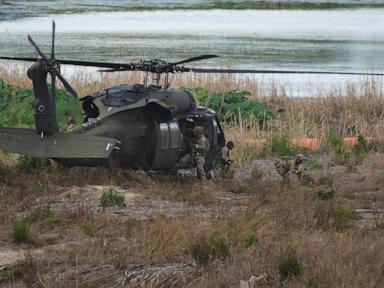
The media laps up the spectacle every single time.
Thousands of troops deployed, heavy hardware rolled out, and glossy press releases trumpeting a secure, quiet Rio Grande. The narrative pushed by mainstream outlets is neat, reassuring, and fundamentally dishonest. It assumes that physical bodies in uniform stamping along a riverbank equate to operational control. It treats border management like a medieval siege where more shields equal more safety.
I have spent years analyzing federal deployment logistics and watching billions evaporate into bureaucratic theater. The lazy consensus says that surging forces to the border creates stability. The reality is far uglier: militarizing a dynamic waterway is an expensive magic trick designed to make politicians look decisive while completely missing how modern cross-border systems actually function.
The Geography of Illusion
Water moves. It carves new channels, shifts silt, and ignores geopolitical lines drawn on 19th-century maps. When you plant battalions along a shifting natural boundary, you are not securing a frontier; you are staging an expensive photo shoot.
The standard reportage focuses on the optics of quiet. A calm river sector is framed as a victory of deterrence. But anyone who understands trade routes and illicit supply chains knows that water is porous. When you choke off one visible crossing point with armored vehicles and razor wire, you do not stop the flow. You merely subsidize innovation underground and downstream.
Economics dictates that supply finds the path of least resistance. Squeeze the surface, and capital migrates to subterranean tunnels, drone logistics, or corrupt maritime shipping lanes. The military deployment treats a structural market demand like a localized riot. It is a tactical response to a strategic failure.
The Cost of Performative Dominance
Let us talk about resource allocation. Every million dollars burned on idle transport trucks, per diems, and temporary command tents in south Texas is capital stripped from actual infrastructural efficiency.
Imagine a scenario where federal agencies redirected that exact defense budget into modernizing commercial cargo processing bottlenecks, upgrading non-intrusive imaging tech at legal ports of entry, and streamlining legal economic transit. The friction at the border would drop, wait times would plummet, and cartels would lose their monopoly on illegal transit speed.
Instead, we get the theatrical posture. Troops standing in the desert heat next to idling Humvees. It looks tough on the evening news. It plays well in campaign ads. But it is an institutional placebo. It gives taxpayers the warm feeling of security while bleeding public funds into an eternal holding pattern.
Dismantling the Myth of Deterrence
The core error in conventional defense analysis is assuming that human beings fleeing economic devastation or organized violence care about the presence of a rifle. They do not. Desperation scales inversely to the severity of a deterrent.
When border hawks claim that troop surges act as a wall of deterrence, they ignore basic behavioral economics. If your alternative is starvation or extortion by gangs, a row of camouflage uniforms is just an obstacle to navigate around, not a wall that stops you from trying.
The experts cheering for these deployments are usually desk-bound strategists who have never watched a logistics network adapt in real time. They think in terms of static lines. The actors moving across these sectors think in terms of liquid networks. A static force can never defeat a fluid network. You cannot garrison a coastline of sand and scrub brush into submission.
The Real Agenda
Why do governments keep doing this? Because quiet is marketable.
When the cameras capture a stretch of the Rio Grande devoid of crossing activity for forty-eight hours, the administration of the day claims success. They do not care that three miles downriver, a new logistical bottleneck has formed, or that the price of moving contraband has simply adjusted upward to absorb the risk premium. The metric of success is public perception, not systemic resolution.
Stop buying the press releases. Stop mistaking a massive concentration of idle military hardware for operational mastery.
The Rio Grande is not a battlefield to be won. It is a dynamic economic membrane. Until policymakers understand that you cannot shoot your way out of a structural supply and demand mismatch, we will keep paying for the same expensive illusion, year after year, while the underlying problem adapts and grows around us.