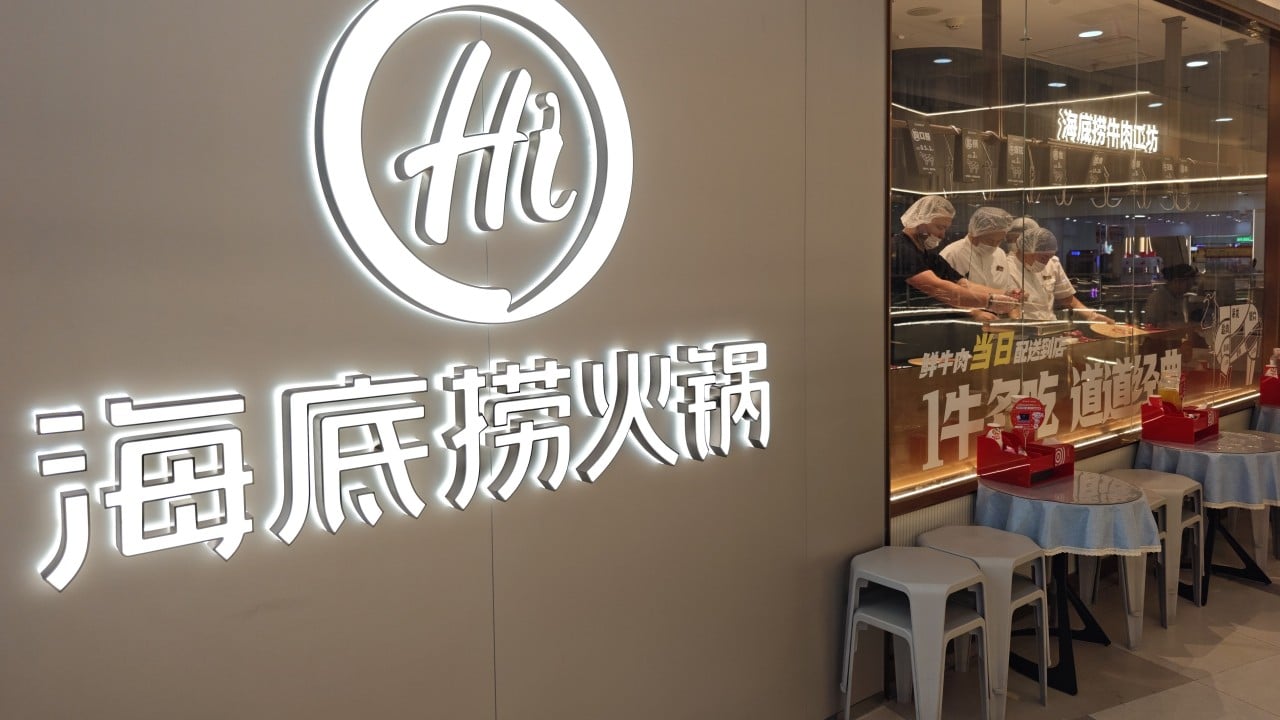
The steam hits your face before you even push open the heavy glass door. Outside, the Beijing winter cuts through wool coats like a razor, but inside, the air is thick with the scent of fermented bean paste, Sichuan peppercorns, and the low, collective roar of a thousand conversations.
For twenty years, this was the empire that Haidilao built. It was never just about the food. It was about the frantic, joyful theater of waiting for a table—the noodle dancers spinning dough like ribbons in the air, the manicurists filing nails in the corner, the quiet miracle of a server sliding a warm towel into your hands before you even realized your fingers were cold. They sold a feeling of extravagant hospitality, transforming a basic bowl of boiling broth into an elite social ritual.
Then, the world stopped.
Consider what happens next: the dining rooms emptied, the leases came due, and the brilliant theater suddenly looked terrifyingly expensive to maintain.
Management stared at the spreadsheet. The obvious answer was panic. The smarter, harder answer was a quiet, radical reinvention.
The Anatomy of a Pivot
In corporate boardrooms, strategy is usually discussed in sterile geometry. Executives talk about market penetration, vertical integration, and logistical optimization. But behind the cold math of Haidilao’s recent maneuvers lies a much more desperate, human truth. Growth had slowed in the polished urban flagships. The golden goose was tired.
To understand their next move, you have to look away from the glittering downtown avenues and out toward the sprawling, dusty fringes of China's smaller cities. Third-tier and fourth-tier cities. Places where disposable income is growing, but where a ninety-dollar dinner for two is still a rare luxury rather than a casual Tuesday night habit.
Haidilao made a bet. They decided to shrink.
Not in ambition, but in format. They began scaling down their massive dining halls, introducing smaller footprints that could slip into regional markets with less overhead and sharper efficiency. They created entirely new sub-brands to capture demographics that found the original restaurant too formal or too pricey. They stopped waiting for customers to brave the traffic and cross their threshold. Instead, they packed the broth into insulated containers, secured the sliced lamb, and sent it straight to the living room floor.
Takeaway. Delivery. Convenience.
It sounds mundane. Almost boring. But when a titan of dine-in hospitality aggressively chases the delivery scooter, it signals a fundamental shift in how people want to experience comfort.
The Kitchen Behind the Curtain
Imagine Chen. He is a hypothetical regional manager who has spent twelve years inside the Haidilao machine, starting as a busboy in Xi'an and working his way up to overseeing four locations. Chen remembers the old days. He remembers the mandatory smile drills, the competition among servers to see who could clear a table fastest, the fierce pride of the brand.
When headquarters announced the push into lower-tier cities and the heavy investment in off-premise dining, Chen felt a familiar knot in his stomach.
"We are losing our soul," he muttered to an assistant manager over instant noodles one Tuesday night. "If they eat our beef in their pajamas in front of a television, do they even remember us?"
It is a fair fear. The magic of Haidilao was always atmospheric. Strip away the dancing noodles, the chaotic birthday celebrations sung by enthusiastic strangers, and what are you left with? Just beef, cabbage, and red oil.
Yet Chen’s anxiety misses the larger economic current. The urban centers are saturated. Every street corner boasts a challenger brand, a local upstart, a trendy new concept designed to steal away younger diners who crave novelty over legacy. Meanwhile, the smaller cities are hungry. They want the prestige of the brand without the intimidating price tag or the three-hour wait.
So Chen adapted. He learned to manage smaller kitchens that pumped out delivery orders with military precision while still keeping a handful of tables buzzing for walk-ins. He watched the delivery revenue tick upward, month by agonizing month, until the numbers told an undeniable story. The future wasn't just physical. It was fluid.
The Calculus of Survival
Behind every corporate expansion strategy is a human calculation of risk.
For years, restaurant chains operated under a simple premise: build a magnificent temple, and the pilgrims will arrive. But post-pandemic consumer behavior shattered that rulebook. People learned how to cook. They learned how to order-in. They grew protective of their wallets.
Haidilao’s leadership realized that clinging exclusively to the mega-restaurant model was a form of slow suicide. Growth required diversification. It required spinning up new culinary concepts that could test the waters of different price points and distinct taste profiles. It meant treating the menu not as a sacred text, but as a living, breathing laboratory.
Lower-tier reach is not charity. It is a land grab. While competitors fought tooth and nail over the hyper-competitive turf of Shanghai and Beijing, Haidilao quietly planted flags in hundreds of smaller municipalities where real estate was cheaper and brand loyalty was waiting to be claimed.
And the takeaway market? That was an acknowledgement of a modern truth. Sometimes, people do not want an experience. They just want dinner.
The Last Embers
Back in the Beijing flagship, the steam still rises. The noodle dancers still spin their golden ribbons through the air, and the manicurists still work their quiet magic in the corner.
Nothing has truly been lost; it has simply been multiplied.
The company survived the storm not by digging its heels into the past, but by scattering its seeds across terrain it once ignored. They traded absolute uniformity for calculated flexibility, proving that even the biggest giants must occasionally learn how to crawl through narrow spaces if they want to keep standing.
Outside, the snow begins to fall again, blanketing the streets in a quiet, heavy white. Somewhere across the city, a delivery driver zips past on an electric scooter, a warm box strapped securely to the back, carrying a piece of an empire straight to someone's front door.