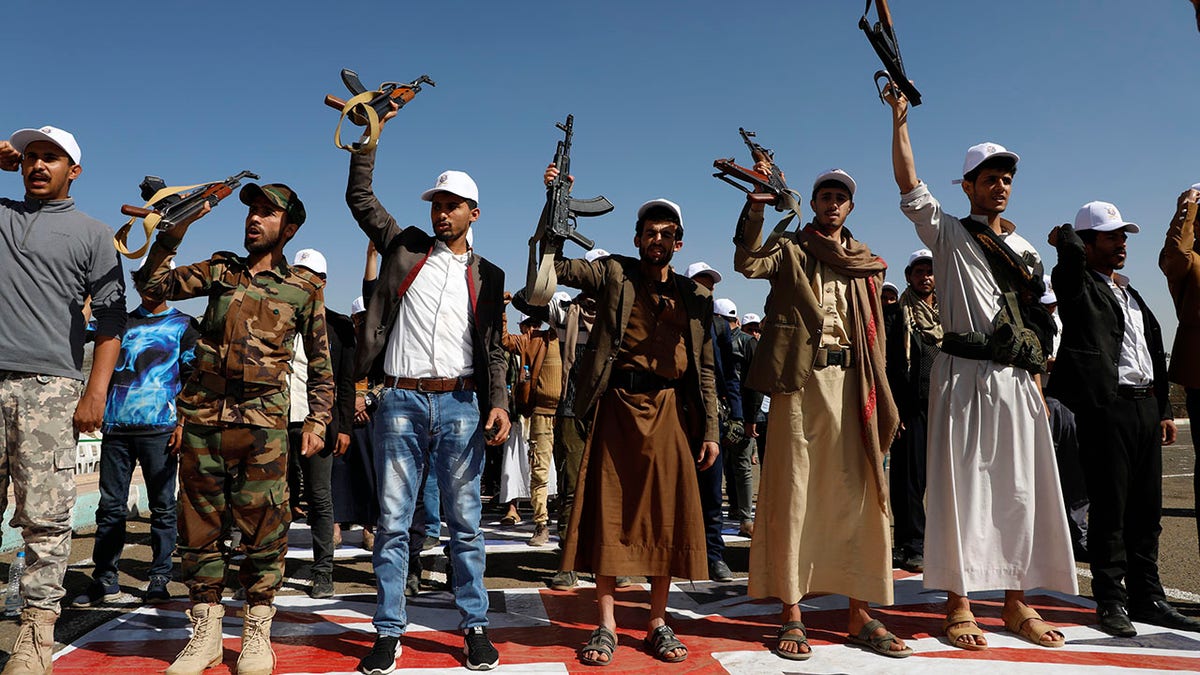
The Red Sea isn't just a stretch of water anymore. It's a pressure cooker. When the Houthis say their fingers are on the trigger, they isn't just using flowery rhetoric for a Friday sermon. They’re signaling a shift in a conflict that has moved far beyond the borders of Yemen. We're looking at a multi-front reality where the line between a regional skirmish and a global economic cardiac arrest has disappeared.
You've probably seen the headlines about drones and destroyers. But the real story is how the Ansar Allah movement—the formal name for the Houthis—has effectively integrated itself into a broader strategy that links Gaza, Tehran, and the maritime arteries of the world. They aren't acting as a simple proxy. That’s a common mistake analysts make. They’re a motivated, autonomous player that finds its strength in chaos. If the US-Israel friction with Iran keeps heating up, the Red Sea becomes the primary lever for pressure.
Why the Houthi Threats Aren't Just Bluster
Critics often dismiss Houthi statements as propaganda. That’s a dangerous gamble. Since late 2023, they’ve proven they can hit commercial shipping with surprising precision using relatively cheap tech. When they warn of "fingers on the trigger," they’re talking about a sophisticated arsenal of anti-ship ballistic missiles and sea-skimming drones.
They’ve seen that the US-led Operation Prosperity Guardian hasn't stopped the attacks. It’s only raised the stakes. The Houthis feel they have nothing to lose. Yemen has already endured years of devastating war. To them, taking on the "Great Satan" or the "Zionist entity" is a win-win. If they succeed, they’re heroes of the "Axis of Resistance." If they get hit, they’re martyrs in a struggle their base already supports.
The military reality is messy. Western navies are using million-dollar interceptor missiles to down drones that cost as much as a used sedan. That math doesn't work long-term. The Houthis know this. They're playing a game of attrition, waiting for the political will in Washington or London to snap under the weight of rising shipping insurance costs and diverted oil tankers.
The Invisible Thread to Tehran
You can't talk about the Houthis without talking about Iran, but it's not a master-slave relationship. It’s more like a venture capital firm and a very aggressive startup. Iran provides the blueprints, the components, and the satellite intelligence. The Houthis provide the boots on the ground and the local launch sites.
As the shadow war between Israel and Iran moves into the light, the Houthis serve as the southern pincer. Whenever Israel strikes an Iranian interest in Syria or Lebanon, the response often echoes in the Bab el-Mandeb strait. It’s a way for Iran to retaliate without triggering a direct, head-on war that might jeopardize the regime in Tehran.
The "trigger" the Houthis mention is connected to the temperature in Gaza. They’ve tied their maritime campaign directly to the cessation of hostilities there. By doing this, they’ve captured the imagination of the Arab street, making it politically difficult for neighboring countries like Egypt or Saudi Arabia to openly join the military coalition against them.
What’s in the Houthi Arsenal
- Samad Drones: Long-range loitering munitions that can fly for hundreds of miles.
- Quds Missiles: Cruise missiles based on Iranian designs that can bypass some traditional radar.
- Unmanned Surface Vessels: Remote-controlled boats packed with explosives. These are the real nightmare for commercial ships because they're hard to spot in choppy water.
- Anti-Ship Ballistic Missiles: A capability almost no other non-state actor on the planet possesses.
The Economic Toll No One Wants to Pay
The Suez Canal is basically the windpipe of global trade. About 12% of all world trade goes through there. When the Houthis pull the trigger, shipping companies like Maersk or MSC have to decide: do we risk a missile strike, or do we go around the Cape of Good Hope?
Going around Africa adds ten days and millions in fuel costs. Those costs don't just vanish. They show up in the price of your coffee, your electronics, and your gas. The Houthis understand global macroeconomics better than we give them credit for. They're hitting the West where it hurts most: the pocketbook.
Inflation is a political killer. If the Red Sea remains a no-go zone, central banks have a much harder time keeping prices stable. This gives the Houthis—and by extension, the Iranian-led alliance—enormous leverage in any behind-the-scenes diplomatic negotiations.
The US Dilemma in the Red Sea
Washington is stuck. If they hit the Houthis too hard, they risk a full-scale regional war that drags in Iran. If they don't hit hard enough, they look weak and the global shipping lanes remain unsafe. It’s a classic "no-win" scenario.
Current strikes on Houthi launch sites are like playing a game of Whac-A-Mole. The launchers are mobile. They’re hidden in mountains or urban areas. You can't just bomb your way out of this problem without a massive ground invasion, and absolutely nobody in the Pentagon wants a ground war in Yemen.
The Houthis are essentially betting that the US will eventually blink. They’re watching the political divisions in America and the mounting international pressure on Israel. Every day they keep the Red Sea closed is a day they win the PR battle.
Navigating the New Reality
Don't expect this to settle down soon. Even if a ceasefire happens in Gaza tomorrow, the Houthi movement has now tasted global relevance. They’ve seen that they can go toe-to-toe with the world's most powerful navies and stay standing. That kind of confidence doesn't just go away.
The regional "trigger" is pulled. To understand what happens next, watch the shipping insurance rates and the movements of Iranian spy ships in the Gulf of Aden. If those ships move, a strike is usually coming.
If you’re tracking this for your business or just to stay informed, stop looking at Yemen as an isolated civil war. Start looking at it as the frontline of a new kind of decentralized warfare. The old rules of maritime security are dead. The new ones are being written in the smoke of burning tankers and the defiant speeches coming out of Sana'a.
Stay updated on the specific vessel tracking data through providers like MarineTraffic to see how many ships are actually braving the strait. Check the latest circulars from the International Chamber of Shipping. The gap between what politicians say and what the captains on the water actually do tells the real story.