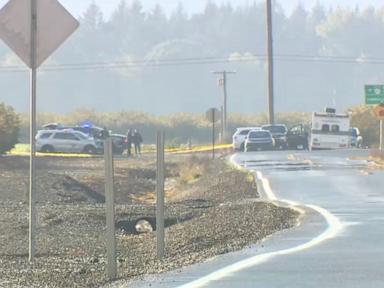
Mid-air collisions near regional airports rarely stem from mechanical failure; they are almost universally the result of cognitive saturation and the structural limitations of the "see-and-avoid" doctrine in uncontrolled airspace. When the Federal Aviation Administration (FAA) reports that two helicopters have collided in mid-air near an Oregon airport, the surface-level narrative typically focuses on the immediate emergency response and the pending National Transportation Safety Board (NTSB) investigation. That framing misses the operational reality. A mid-air collision between rotary-wing aircraft in a terminal environment represents a predictable breakdown in spatial deconfliction, where high-workload flight regimes intersect with unstandardized traffic patterns and the physical blind spots inherent to rotorcraft airframes.
To understand why two helicopters occupy the same coordinates in space despite clear weather and functional avionics, one must analyze the mechanics of terminal airspace management, the physiological limits of human visual acquisition, and the regulatory gaps governing rotary-wing operations at non-towered or peripheral fields.
The Structural Vulnerability of Terminal Rotary-Wing Operations
Airports across Oregon—ranging from busy general aviation hubs like Aurora State (KUAO) and Hillsboro (KHIO) to smaller municipal fields like McMinnville (KMMV) or Independence State (7S5)—share a common operational friction point: the mixing of fixed-wing and rotary-wing traffic within compressed vertical and horizontal boundaries.
Unlike commercial airliners operating under positive radar control in Class B or Class C airspace, helicopters operating near smaller regional airports frequently transition through Class E or Class G airspace. In these environments, separation is not guaranteed by Air Traffic Control (ATC). Even when a tower is present, Visual Flight Rules (VFR) place the primary burden of collision avoidance directly on the pilot in command under 14 CFR § 91.113, which mandates vigilance to see and avoid other aircraft.
This regulatory framework creates three distinct operational vulnerabilities:
- Divergent Flight Profiles and Speed Differentials: Fixed-wing aircraft adhere to rigid, predictable rectangular traffic patterns at standardized altitudes (typically 1,000 feet Above Ground Level) and airspeeds. Helicopters operate on different aerodynamic principles. They fly lower (often 500 feet AGL to avoid fixed-wing traffic), execute steeper approach angles, hover-taxi across active movement areas, and decelerate rapidly. When two helicopters converge, neither is bound to the predictable geometry of a standard runway centerline, exponentially increasing the number of potential conflict vectors.
- Frequency Congestion and Radio Discipline: At non-towered airports, pilots rely on a Common Traffic Advisory Frequency (CTAF) to broadcast their position and intentions. In high-density training or commercial environments—common in Oregon's Willamette Valley, which hosts major flight training academies, agricultural spraying operations, and heavy-lift logging/utility operators—the CTAF often becomes saturated. Stepped-on transmissions, non-standard phraseology, or pilots monitoring the wrong frequency entirely remove the auditory layer of situational awareness.
- Training and Operational Compression: Many regional airports serve as primary training grounds for ab-initio helicopter pilots practicing autorotations, confined-area landings, and hovering maneuvers. Pairing a low-time student and a distracted instructor in one cockpit with a commercial utility pilot or a second training crew in another compresses the margin for error. Both crews are frequently task-saturated inside the cockpit, managing rotor RPM, manifold pressure, and checklist items precisely when their eyes need to be scanning the horizon.
The Physics and Physiology of the See-and-Avoid Failure
The foundational assumption of VFR flight is that a competent pilot scanning the sky will spot a converging aircraft in time to execute an evasive maneuver. Decades of aviation human factors research and NTSB accident reconstructions prove that this assumption fails under specific, mathematically predictable geometric conditions.
The Constant Bearing, Decreasing Range (CBDR) Trap
When two aircraft are on a collision course at constant speeds and headings, the bearing angle from one aircraft to the other remains completely stationary in the pilot's windscreen. Because the human visual system is evolutionarily tuned to detect lateral motion across the retina rather than gradual changes in object size, a converging aircraft appears as a motionless speck against the background clutter.
At a closure rate of 150 knots (a conservative combined speed for two light helicopters), a target aircraft remains sub-threshold in size until seconds before impact. By the time the target "blooms" in the pilot's field of view—expanding rapidly enough to trigger a threat response—the remaining time is often less than the minimum human reaction-and-execution loop.
The 12.5-Second Reaction Loop
FAA Advisory Circular 90-48D breaks down the cognitive and mechanical sequence required to avoid a mid-air collision:
- See the object: 0.1 seconds
- Recognize the aircraft: 1.0 second
- Become aware of collision course: 5.0 seconds
- Decision to turn left or right: 4.0 seconds
- Muscular reaction: 0.4 seconds
- Aircraft lag time: 2.0 seconds
This totals 12.5 seconds from initial visual detection to the moment the aircraft physically alters its trajectory. If two helicopters are closing at 120 knots (roughly 202 feet per second), they cover over 2,500 feet during that 12.5-second window. If visual acquisition is delayed by a windscreen post, glare, or a three-second glance at an instrument panel, the collision becomes physically unavoidable before the pilot's hand even moves the cyclic control.
Rotary-Wing Airframe Blind Spots
Helicopter cockpits are designed for downward and forward visibility to facilitate vertical landings and sling-load operations, yet they possess severe structural blind spots:
- The Overhead and Aft-Quarter Blind Spot: The transmission housing, main rotor mast, and cabin roof completely obscure the upper hemisphere behind the pilot. A helicopter descending from above and behind onto a slower or hovering helicopter is entirely invisible to the lower crew.
- The Chin-Bubble Illusion: While lower chin windows aid in ground reference, the door pillars, magnetic compass mounts, and glare shields create thick angular obstructions directly in the forward-quarter scan zone—precisely where converging traffic on base-to-final turns sits.
- Background Camouflage: Operating at 500 feet AGL places the helicopter against complex terrain rather than a uniform blue sky. In Oregon, the dense Douglas fir canopies, river valleys, and urban sprawl create high-contrast visual noise that absorbs the silhouette of a small rotorcraft, particularly if the aircraft lacks high-visibility paint schemes or pulsing LED recognition lights.
Deconstructing the Investigation Matrix: FAA vs. NTSB
When an incident occurs, initial news reports cite the FAA because the agency manages the National Airspace System (NAS) and dispatches inspectors to secure the site and verify airworthiness certificates. However, the FAA does not determine probable cause. Understanding the investigative bifurcation is necessary to evaluate subsequent regulatory data:
- The FAA Role (Compliance and Airspace): FAA Flight Standards District Office (FSDO) investigators immediately audit pilot certificates, medical currency, aircraft maintenance logs, and airspace classifications. Their primary mandate is identifying regulatory violations (e.g., failure to yield right-of-way, operating without required transponders) and issuing emergency airworthiness directives if a mechanical defect contributed to the loss of control.
- The NTSB Role (Systemic Root Cause): The NTSB leads the safety investigation, operating under a mandate to prevent recurrence rather than assign legal liability. Investigators reconstruct the flight paths using three primary data streams:
- ADS-B Out/In Logs: Automatic Dependent Surveillance-Broadcast data recorded by FAA ground stations provides second-by-second GPS coordinates, altitude, groundspeed, and vertical rate.
- Radar Track Playback: Primary and secondary radar returns from nearby approach control facilities (such as Portland TRACON) fill in gaps where low-altitude ADS-B coverage drops off due to terrain masking.
- Cockpit Avionics Non-Volatile Memory: Even in light helicopters lacking formal flight data recorders ("black boxes"), modern GPS navigators (such as Garmin GTN series units) and engine monitoring systems store granular track logs on internal flash memory that survive impact.
The Technological Gap: Why ADS-B Alone Does Not Prevent Terminal Collisions
Following the 2020 FAA mandate requiring ADS-B Out in controlled airspace, many observers assumed mid-air collisions would become obsolete. That assumption ignores critical technical limitations in low-altitude rotary-wing environments:
- Airspace Exemptions: Under 14 CFR § 91.225, aircraft operating in Class G airspace or below the floor of Class E/B/C airspace without an electrical system—or simply outside the designated Mode C veils—are not legally required to broadcast ADS-B Out. If one helicopter is equipped with ADS-B In (traffic display) and the other is not broadcasting ADS-B Out, the system fails completely unless active radar interrogation bridges the gap.
- Traffic Information Service-Broadcast (TIS-B) Latency: Ground stations rebroadcast radar targets to ADS-B In receivers, but this process introduces latency of up to several seconds. In a tight airport traffic pattern where two helicopters are executing rapid turns, a three-second position lag renders the cockpit display inaccurate during the critical final seconds of convergence.
- Alert Fatigue and Nuance Suppression: Traffic Advisory Systems (TAS) and ADS-B displays frequently generate nuisance alerts in the airport environment because aircraft are intentionally flying in close proximity to land on parallel taxiways or adjacent helipads. Pilots conditioned to ignore constant "Traffic, Traffic" audio alerts during pattern work experience desensitization, delaying their response when a genuine collision threat materializes.
- Absence of TCAS: Unlike commercial airliners equipped with Traffic Alert and Collision Avoidance System (TCAS II)—which actively interrogates nearby transponders and issues coordinated, opposing vertical resolution advisories ("Climb" to one aircraft, "Descend" to the other)—light helicopters rely on passive traffic displays that show relative position without calculating avoidance trajectories.
Systemic Mitigations for High-Density Rotorcraft Environments
Eliminating mid-air collisions at regional airports requires shifting away from passive reliance on individual pilot vigilance toward engineered procedural barriers. Aviation operators, flight schools, and airport authorities must implement four structural controls to break the error chain:
- Segregated Rotary-Wing Flight Corridors: Airport managers must publish formal Letters of Agreement (LOAs) and local airport advisories that establish dedicated helicopter approach and departure corridors physically separated from fixed-wing traffic patterns. These corridors must mandate strict altitude floors and ceilings (e.g., fixed-wing at 1,000 feet AGL, helicopters at 500 feet AGL on the opposite side of the runway) to eliminate vertical overlap.
- Mandatory Fleet-Wide ADS-B Out/In and FLARM Integration: Flight schools and commercial operators cannot rely on minimum FAA regulatory compliance. Every rotorcraft operating in high-density training or utility corridors must be equipped with dual-band ADS-B Out/In paired with active traffic alerting systems (such as PowerFLARM) that detect both transponders and non-transponder gliders or ultralights, minimizing single-point sensor failure.
- Standardized Arrival/Departure Gates and Micro-Reporting: Rather than generic radio calls ("Helicopter 123, five miles south"), operators must utilize charted visual reporting points—specific highway intersections, river bends, or industrial landmarks—paired with mandatory altitude readbacks. This transforms vague spatial estimates into precise, shared mental models for every crew on the frequency.
- High-Visibility Lighting Protocols: All rotorcraft operating within 10 nautical miles of an airport must operate high-intensity, pulsing LED anti-collision and recognition lights continuously from engine start to shutdown, regardless of daylight conditions. Pulsing lights exploit the human retina's sensitivity to flicker, cutting through terrain camouflage and breaking the stationary illusion of a Constant Bearing, Decreasing Range trajectory.
For regional airport authorities and commercial helicopter operators, the immediate mandate is clear: audit local CTAF congestion and publish segregated low-level helicopter routing charts before traffic density forces another catastrophic convergence.